Why Is the Sagrada Família Called a “Stone Bible”?
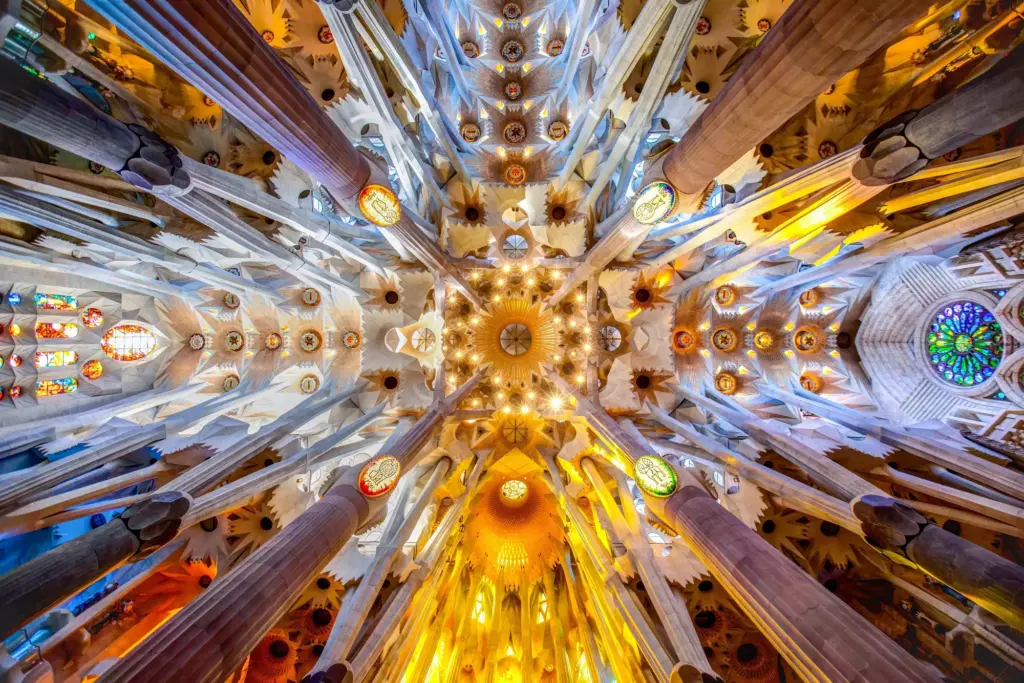
The Sagrada Família is often called a “Stone Bible” because Antoni Gaudí designed the basilica to teach the Christian faith through architecture,…
Read moreBarcelona · Catalonia · Spain
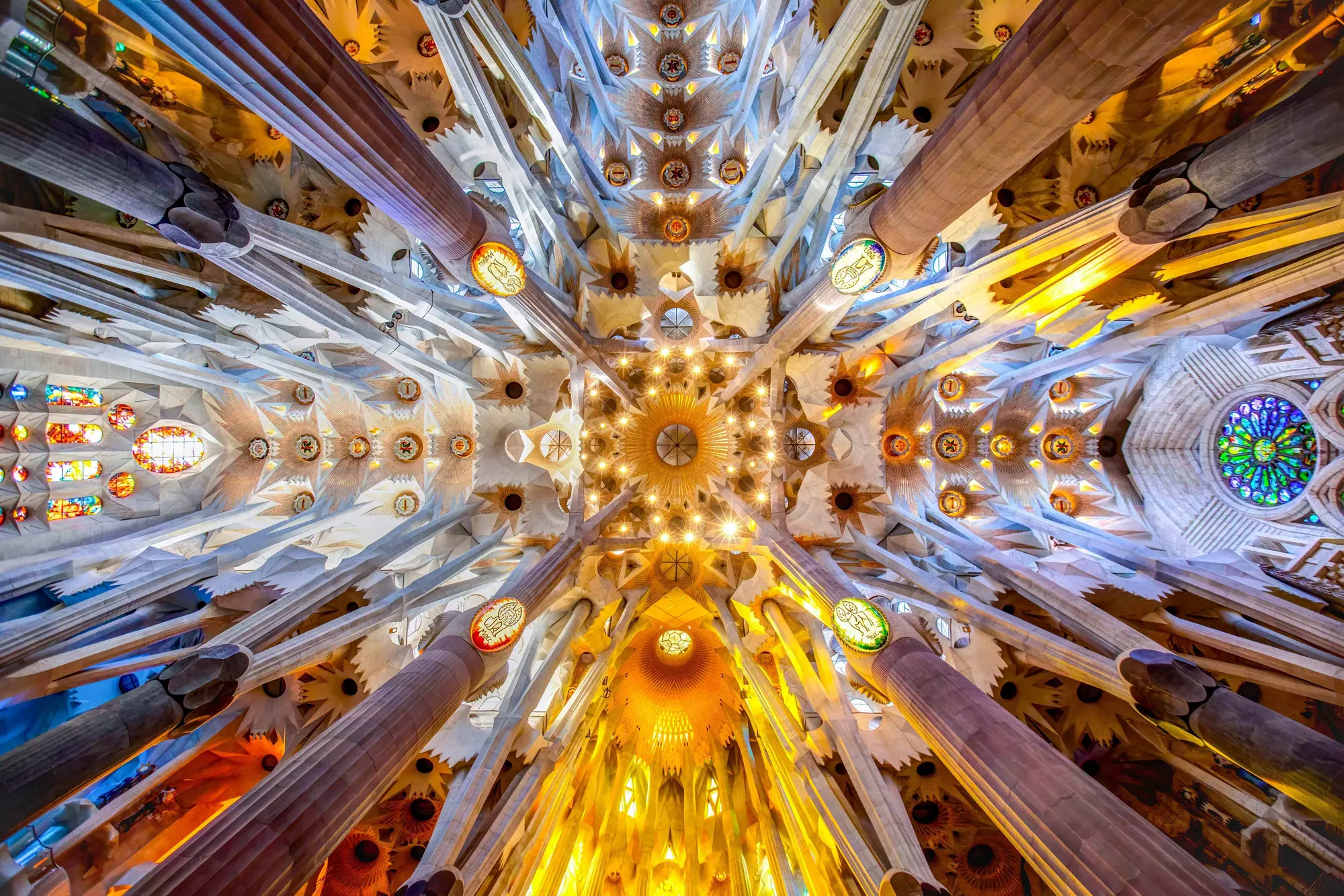
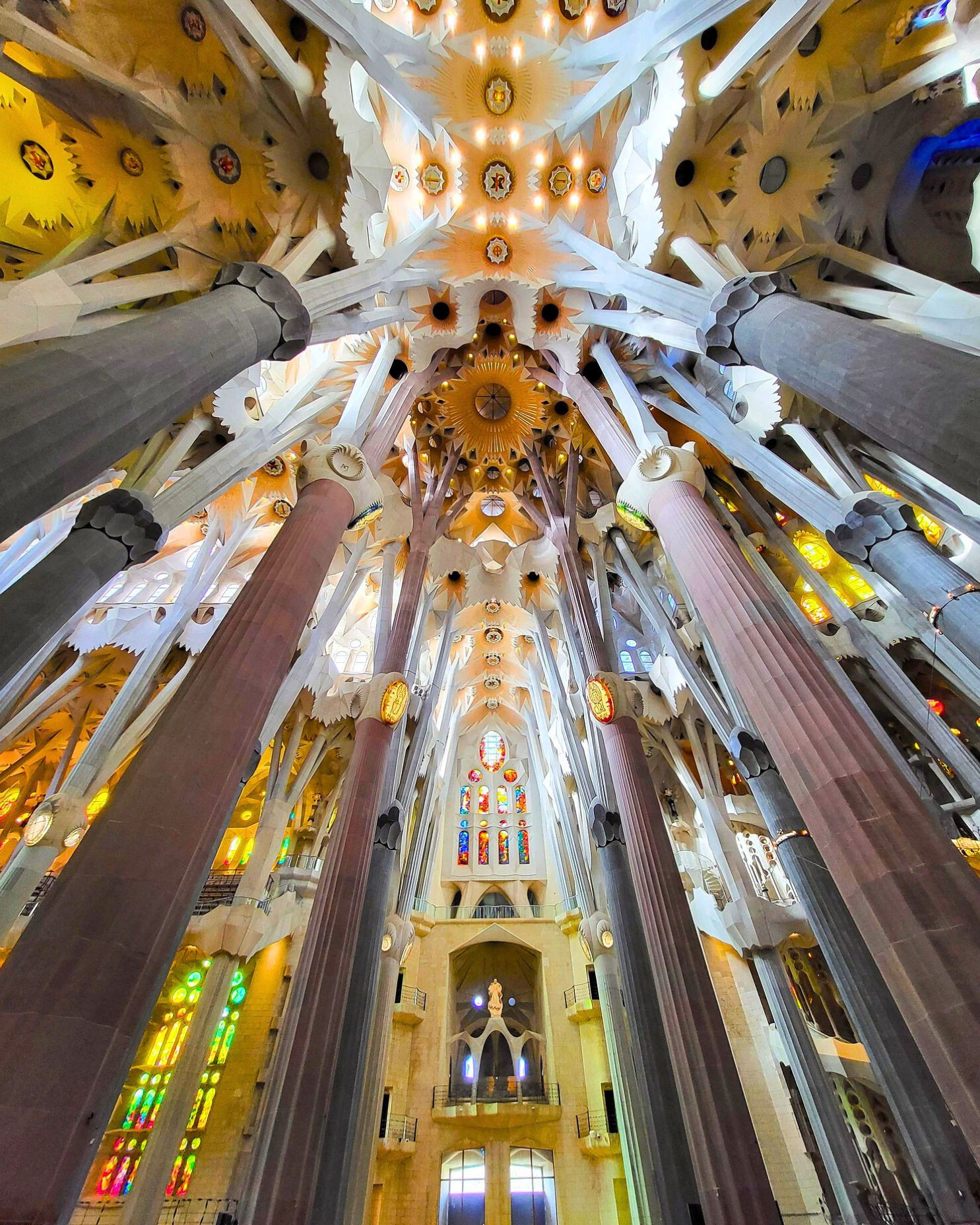
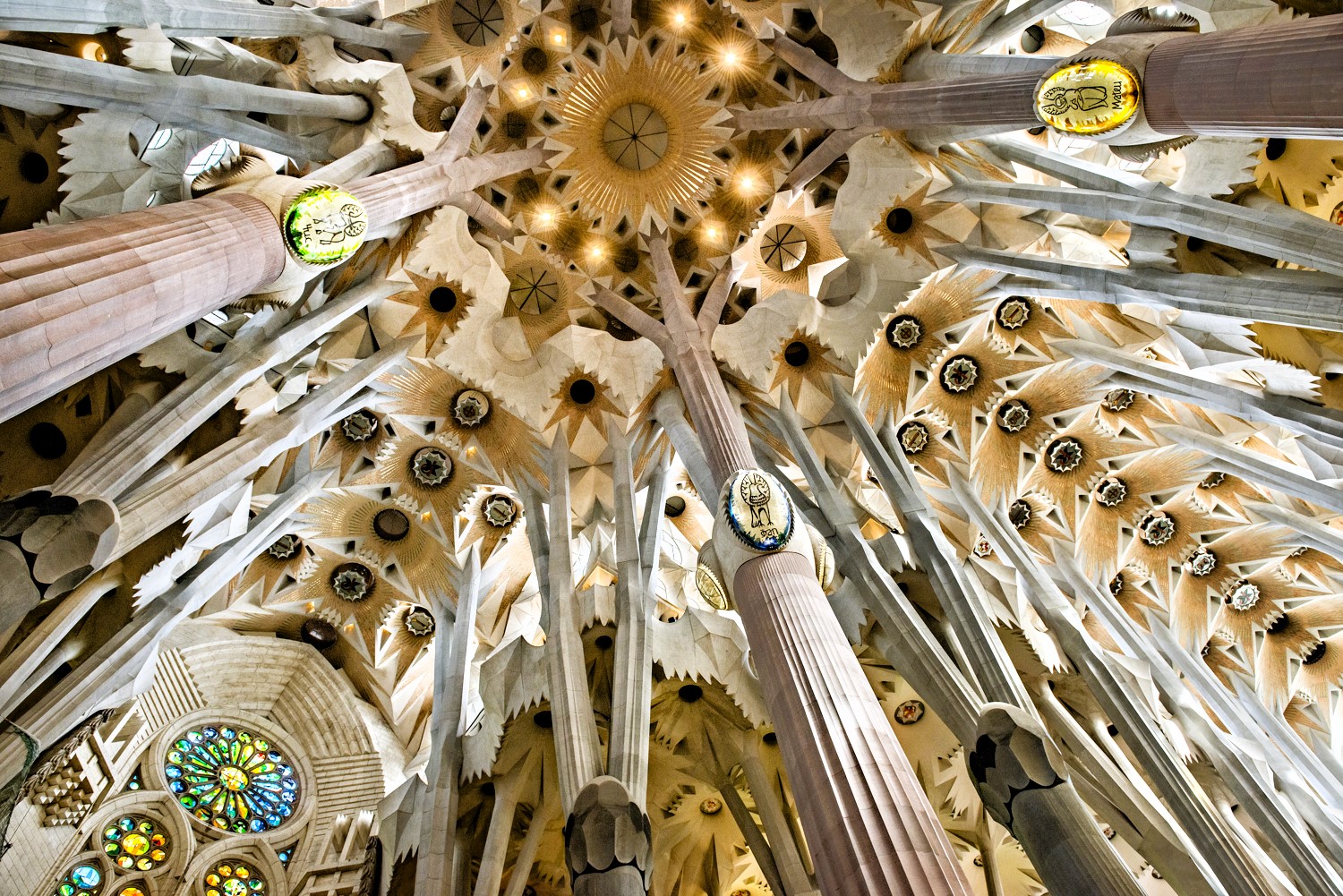
The Basílica de la Sagrada Família is the great unfinished masterpiece of Antoni Gaudí — under construction since 1882, and unlike any church on earth. Step inside and the architecture disappears: branching stone columns become a forest, and the stained glass pours blue light across one side and burning red across the other, changing by the hour.
01 · The Basilica
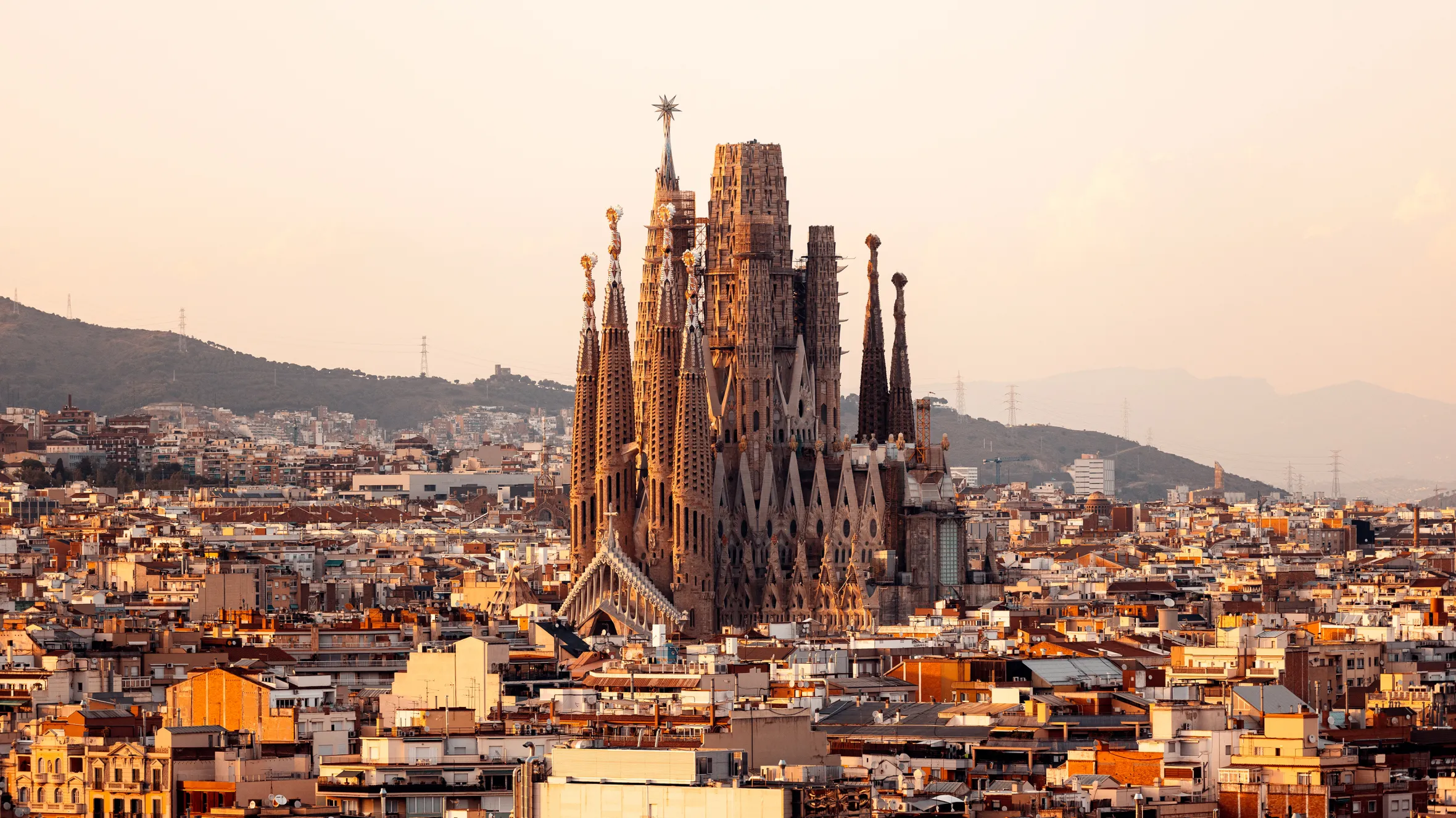
When the first stone was laid in 1882, Barcelona could not have imagined what Gaudí would begin here. He devoted his final decades to the project, and when asked about the pace famously replied that his client was not in a hurry. Nearly a century and a half later, cranes still rise above the towers — and the basilica remains the most visited monument in Spain.
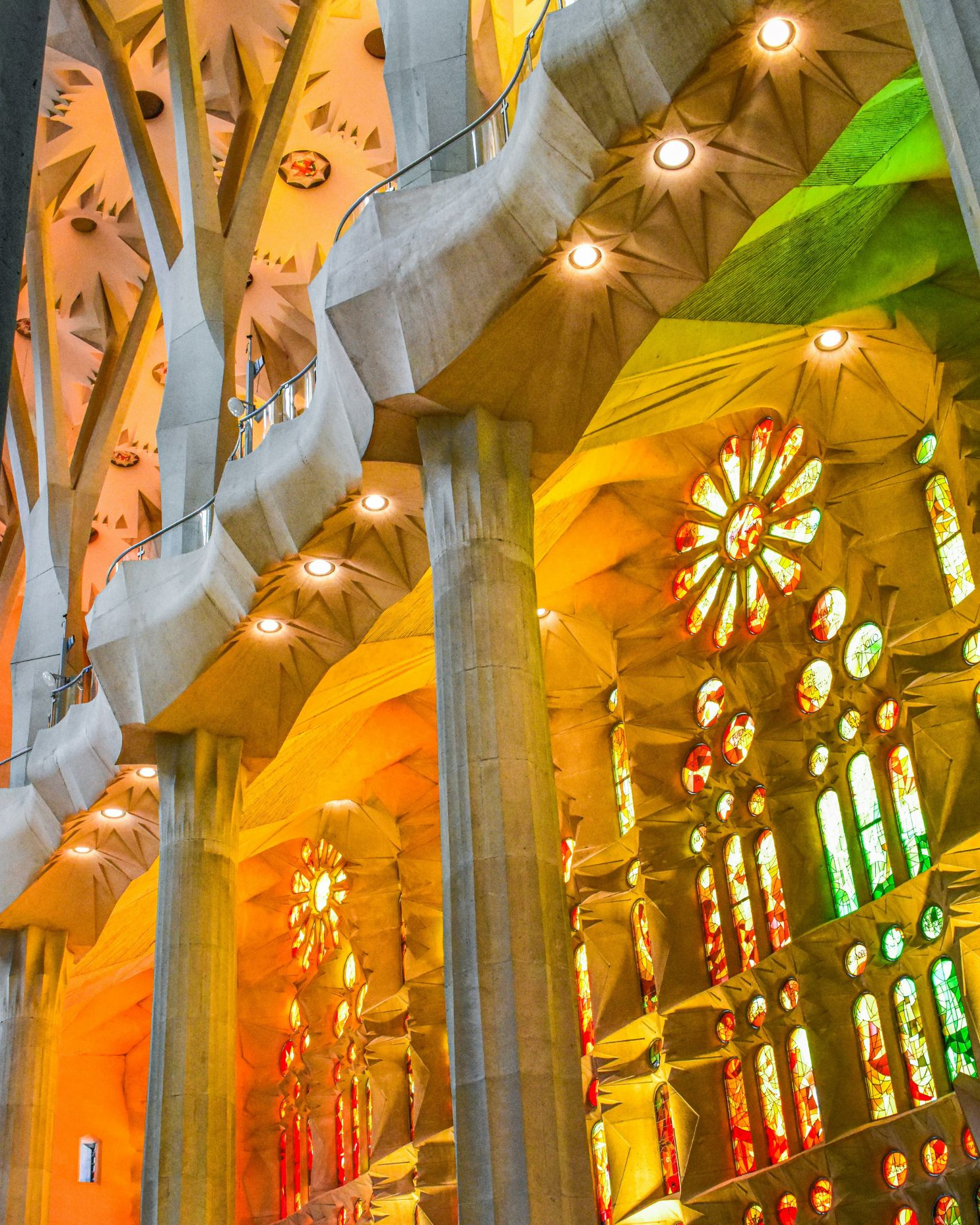
What surprises first-timers is that the Revolution here is emotional, not just architectural. Gaudí inverted the Gothic cathedral: columns branch like trees, weight dissolves upward, and color — not stone — is the true building material. Morning light pours through the blue-green glass of the east, and by late afternoon the west windows set the nave on fire. Visit twice a day and you have seen two different churches.
02 · The light guide
The stained glass is the show, and the sun is its director. Drag through the day to see how the interior changes — morning belongs to the cool blues of the east, evening to the burning reds of the west.
The blue hour
The first slots catch the Nativity-side windows at their coldest, clearest blue — light falling in long panes across the stone. The nave is at its quietest, the photographs at their most ethereal, and the forest of columns reads like moonlight made permanent.
Early slots · coolest colors, smallest crowds
Drag the dial, tap an hour, or use the ← → arrow keys.
03 · What awaits
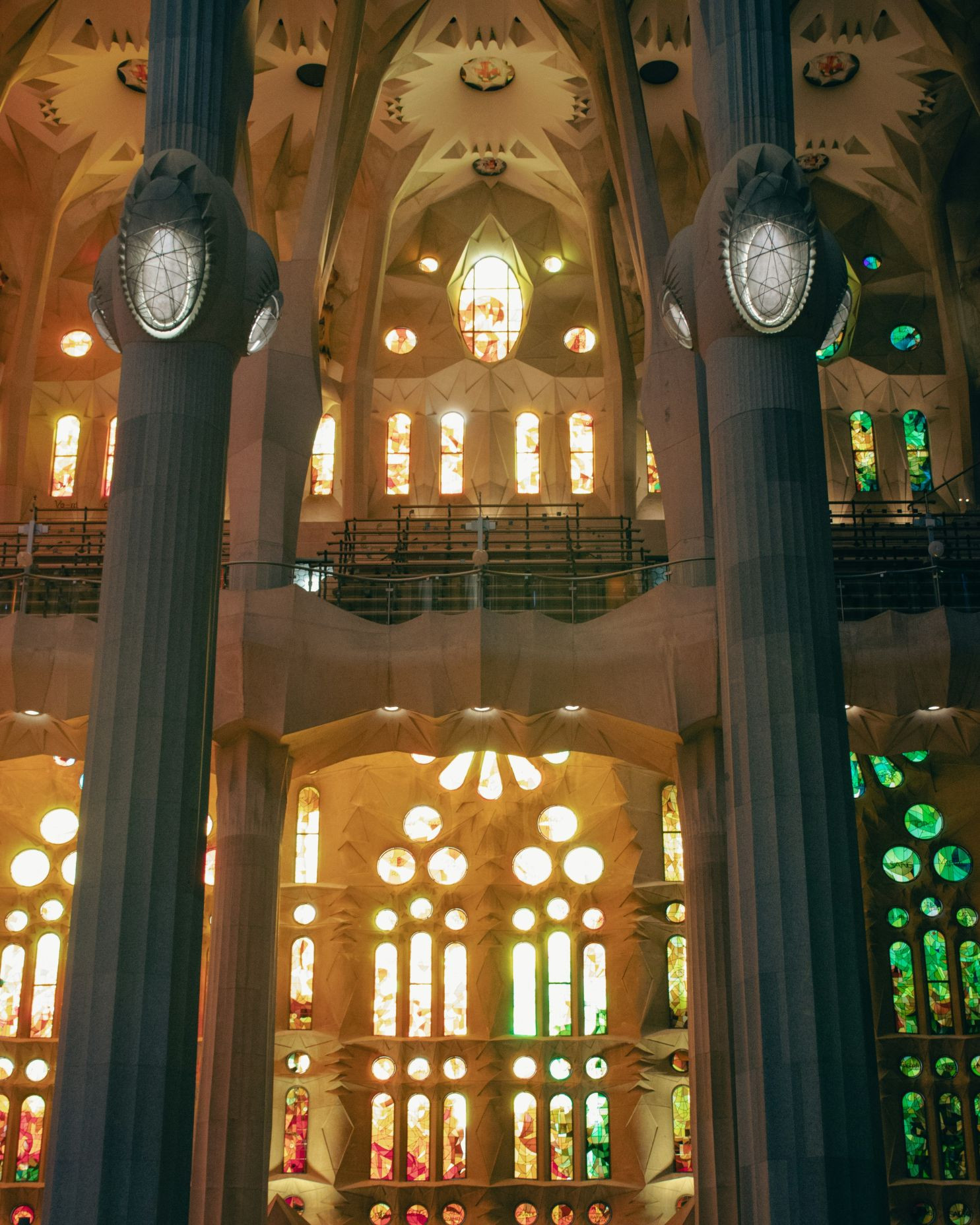
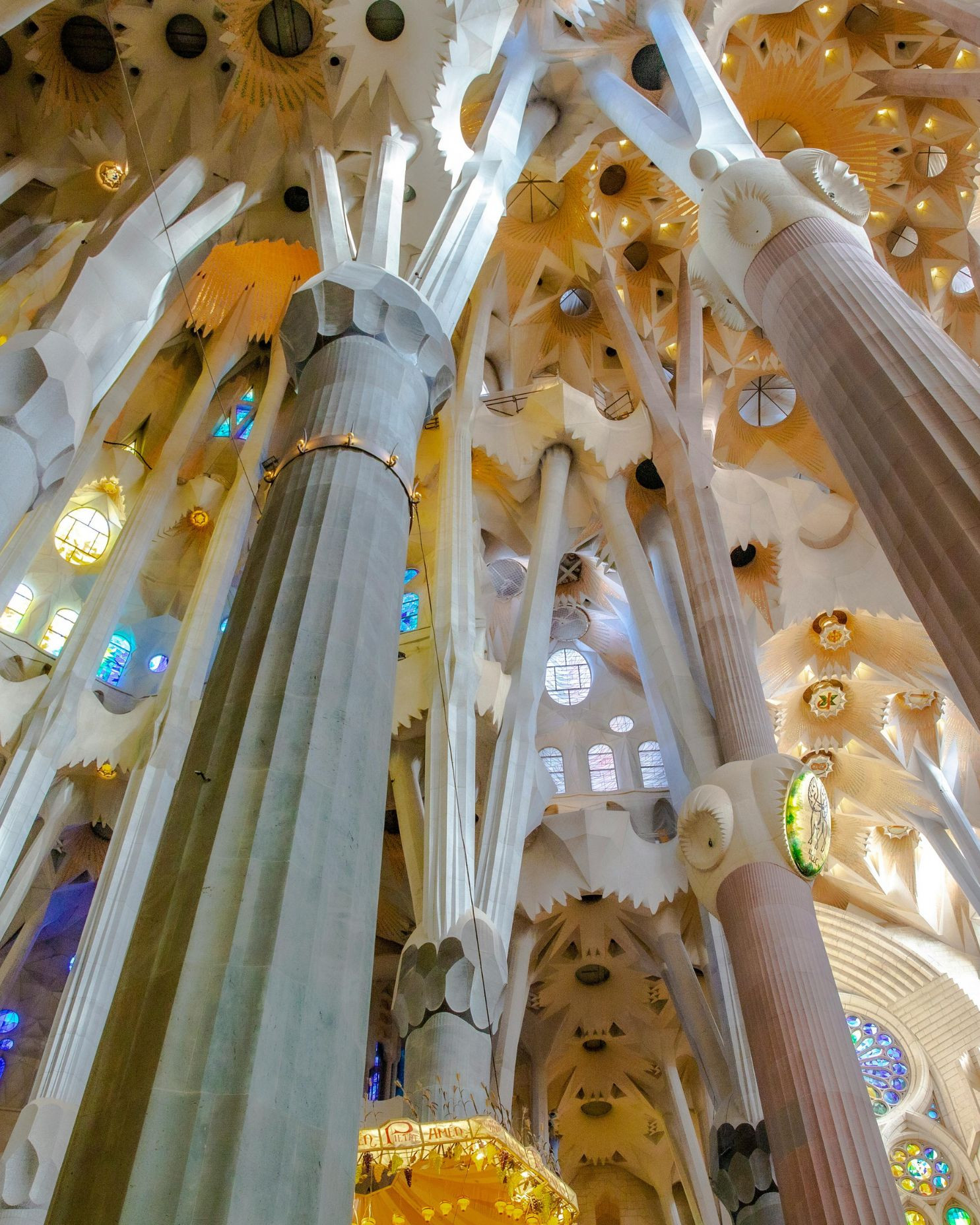
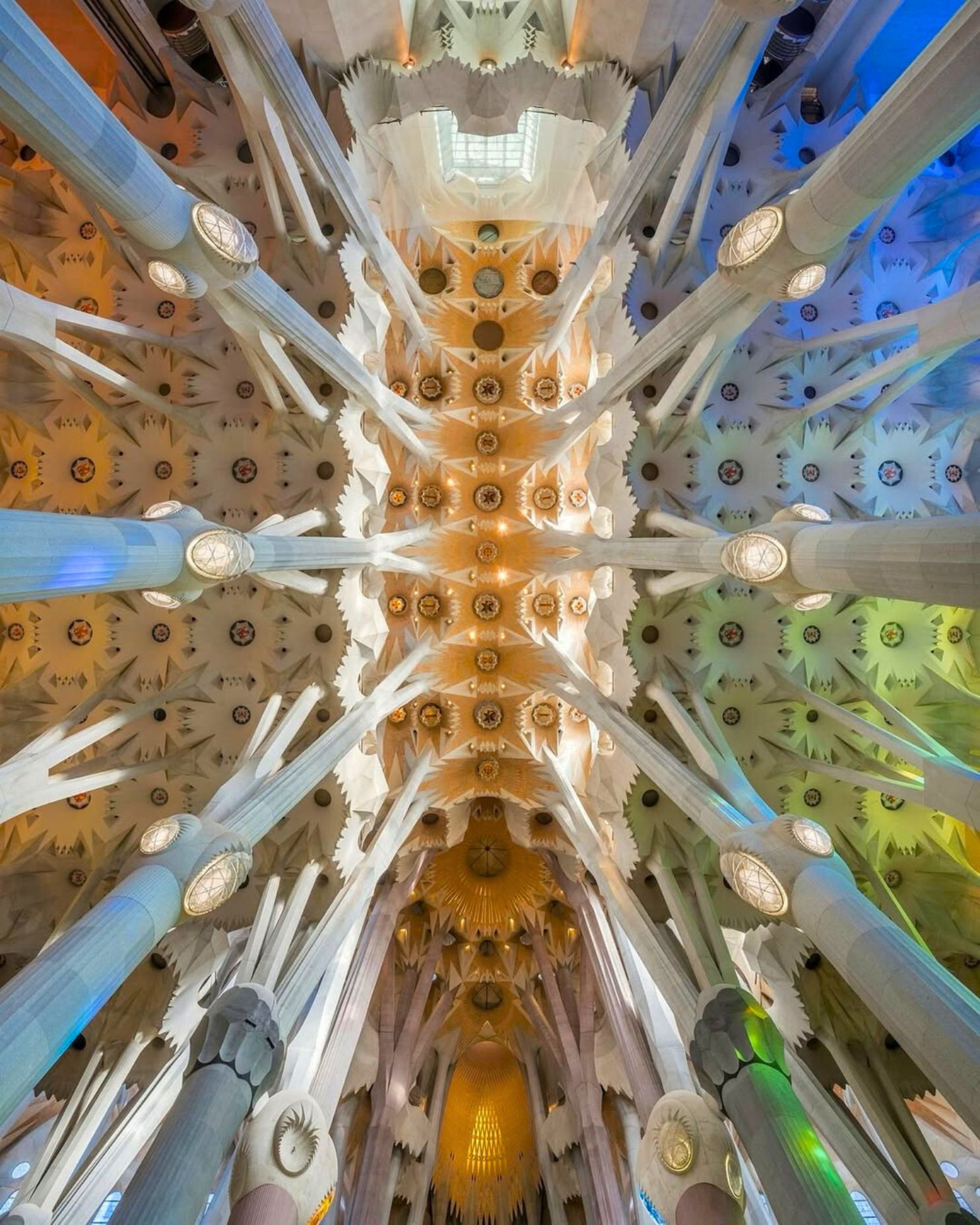
Gaudí studied trees, then taught stone to grow like them. The columns branch near the ceiling, splitting into boughs that carry the roof in a canopy of geometry — no flying buttresses, no gloom. Stand in the center, look straight up, and give your eyes a minute to accept it.
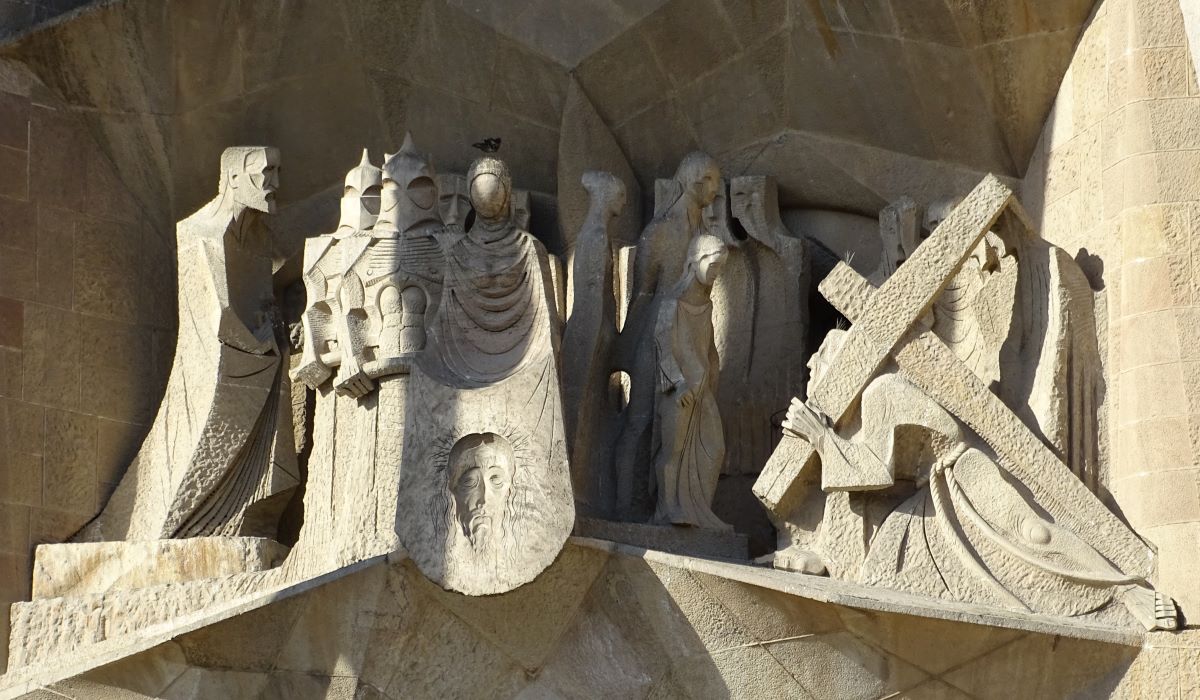
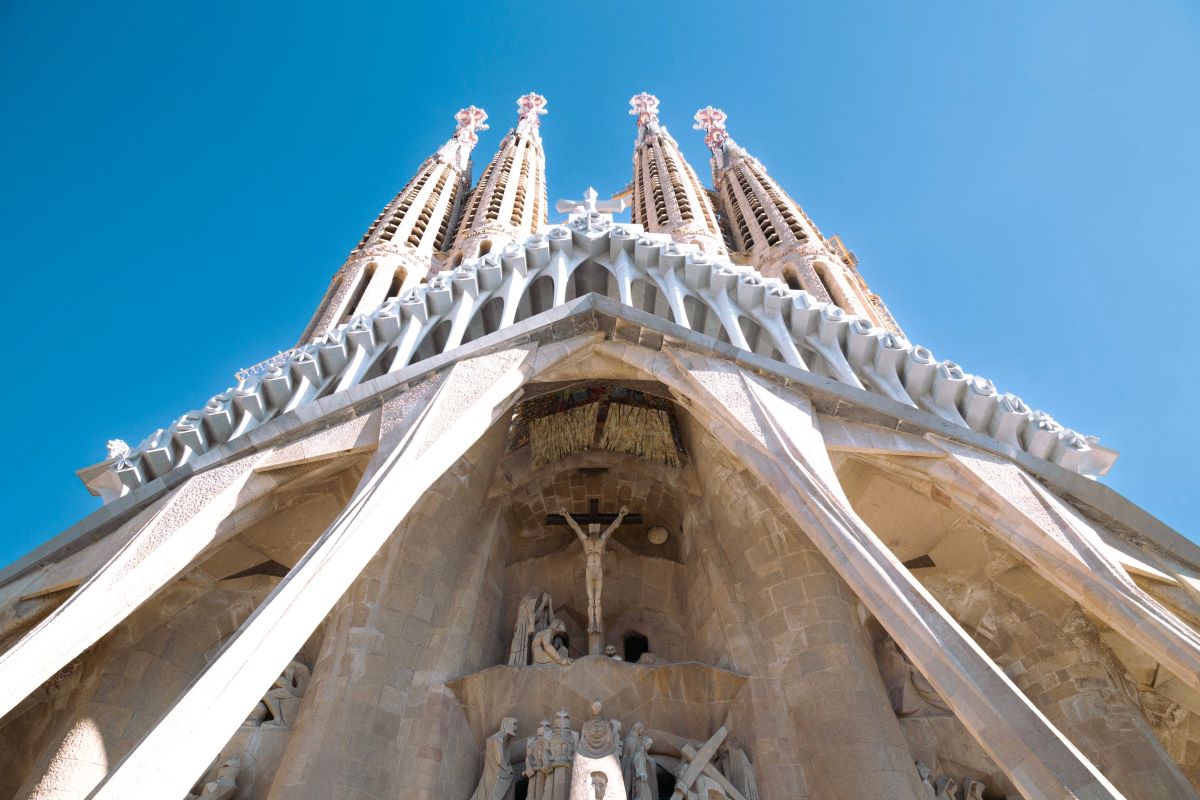
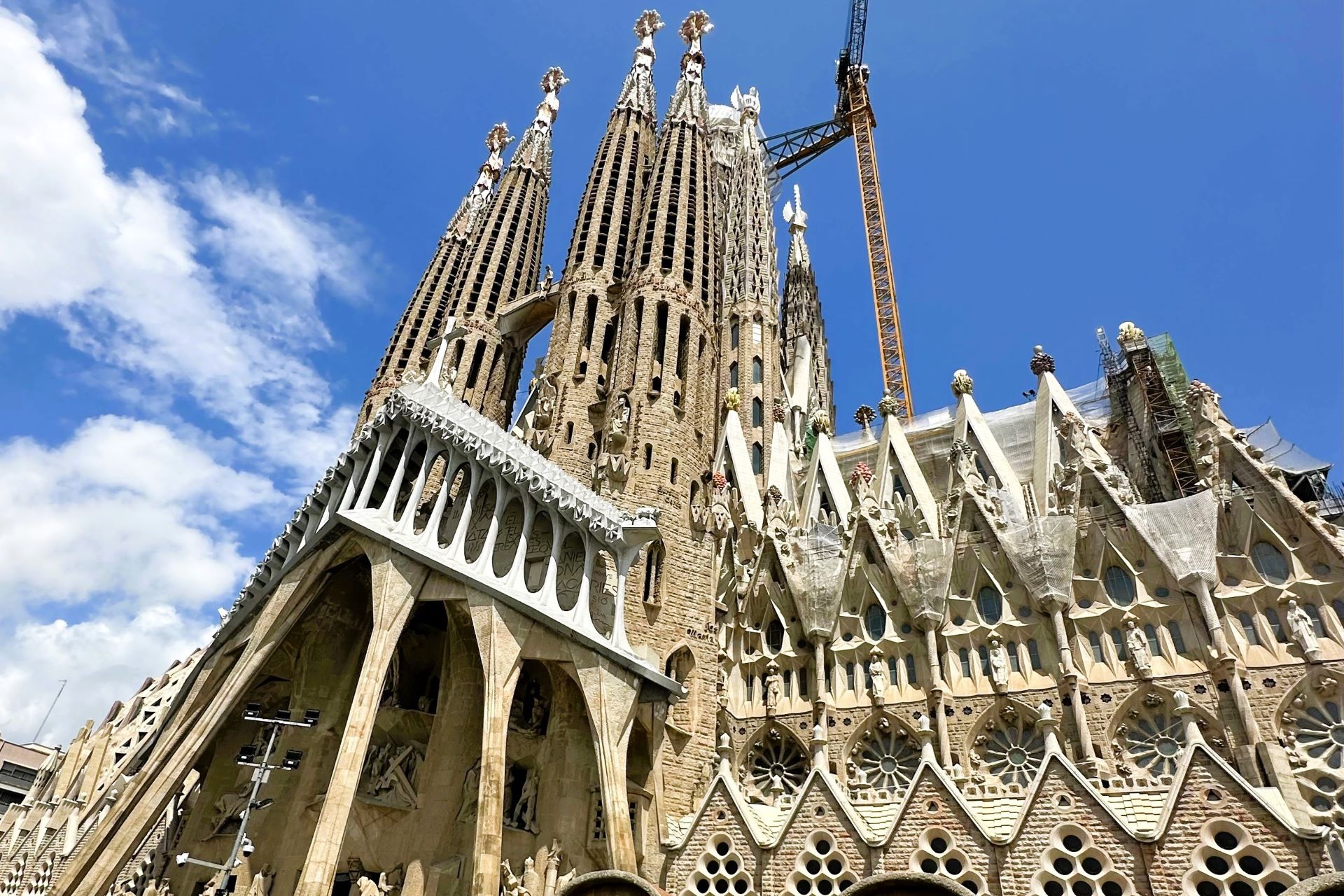
The Joyous Nativity Facade overflows with life — birds, fruit, flowers carved before Gaudí died. The Passion Facade is its opposite: bare, angular, bone-dry stone telling the crucifixion with almost cruel restraint. Circle the building outside as well as in; the contrast is the biography.
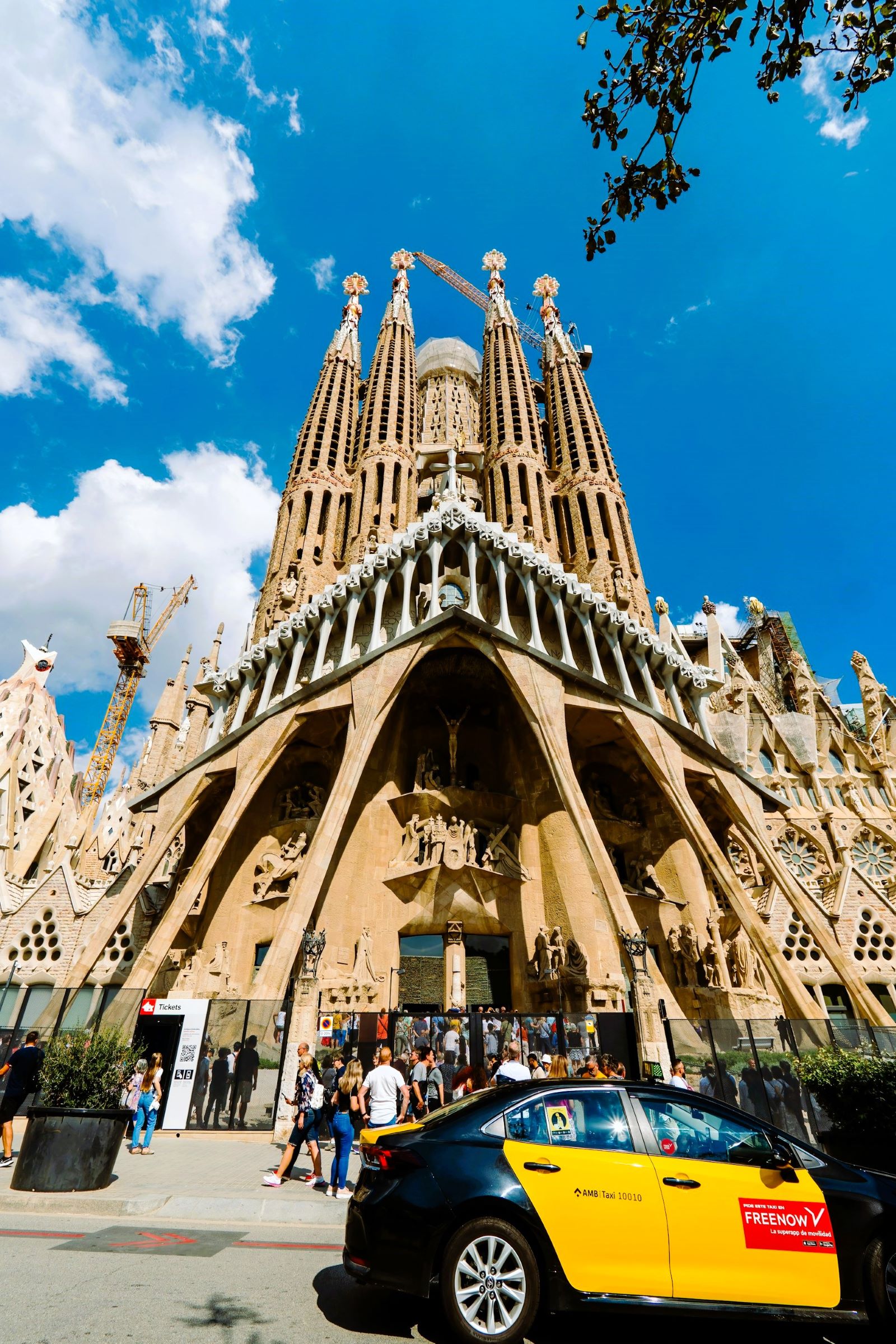
Add a tower ticket and an elevator carries you up one of the spires for the closest look at Gaudí's skyline of stone — mosaic pinnacles at eye level and Barcelona laid flat below. Note the descent is by narrow spiral staircase, and tower tickets sell out fastest of all.
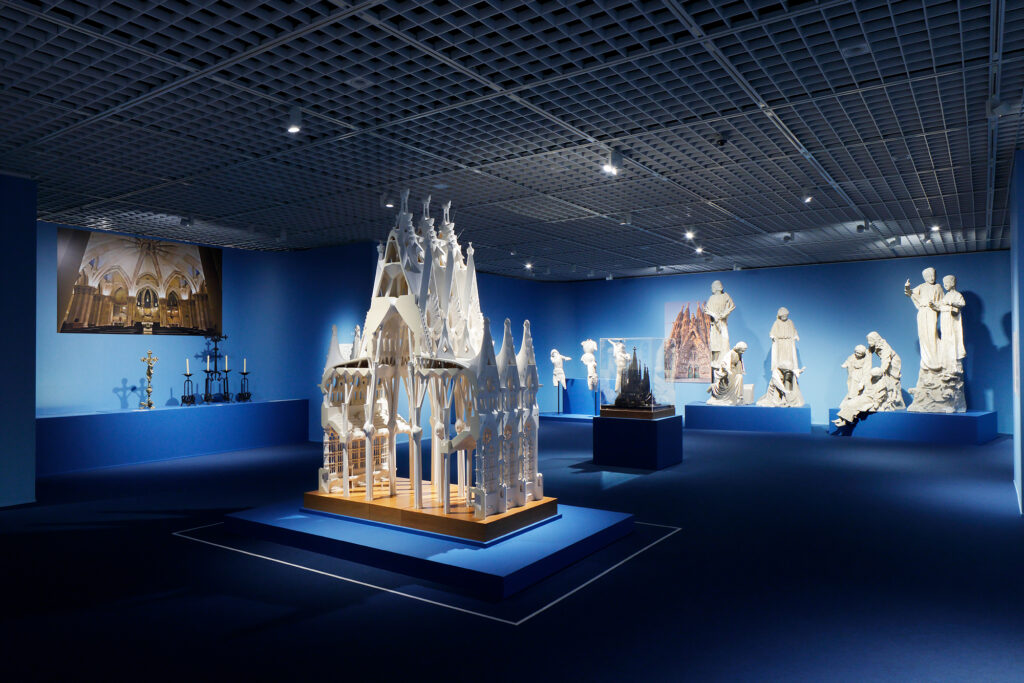
Down in the crypt-level museum, the method becomes visible: hanging-chain models, plaster studies, and the workshop where the geometry is still decoded. It reframes everything above — you exit understanding that the building is not decoration, it is mathematics with a soul.
04 · Check dates & book
Entry runs on fixed time slots and the good hours — especially morning light and tower combinations — sell out days ahead in season. Check live availability below and lock your slot before you fly.
05 · Traveler voices
Photos cannot prepare you. I have stood in cathedrals all over Europe — nothing else feels like walking into a living kaleidoscope.
Booked the first slot of the morning and had the blue light almost to ourselves. By the time we left, the queues were around the block.
Worth every cent — but read the rules first. Strict security, no big bags, shoulders covered. The audio guide made the architecture make sense.
The tower add-on is the upgrade you did not know you needed — the city from up there, with Gaudí's pinnacles at eye level, was unreal.
Quotes are condensed and paraphrased from recent Tripadvisor traveler reviews; names shortened for privacy.
06 · Field notes
Guides, itineraries and notes on the Sagrada Família and Barcelona — newest first.
The Sagrada Família is often called a “Stone Bible” because Antoni Gaudí designed the basilica to teach the Christian faith through architecture,…
Read more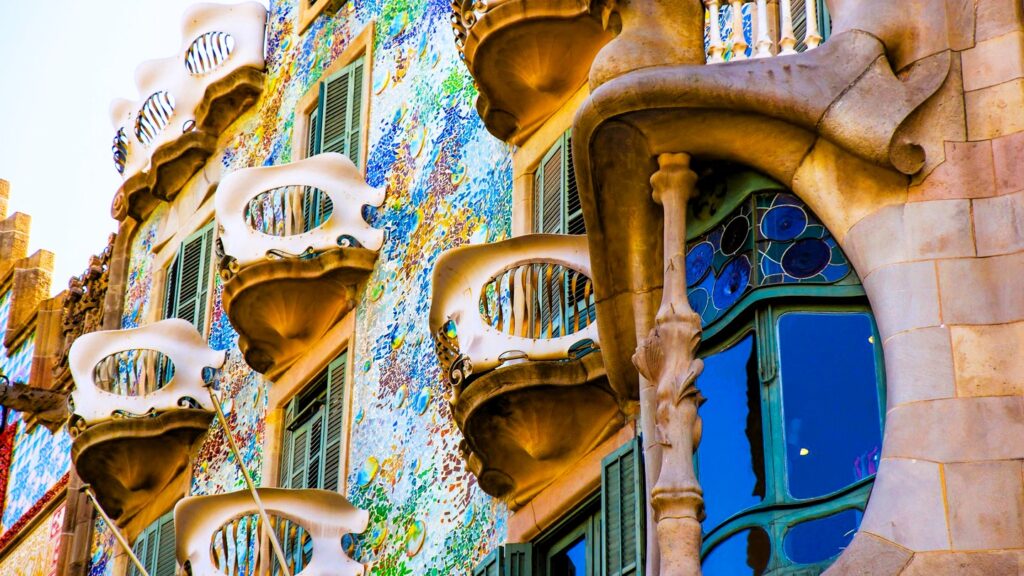
Discover Antoni Gaudí's architectural genius in Barcelona. Complete guide to Sagrada Família, Park Güell, Casa Batlló, Casa Milà & more. Expert tips…
Read more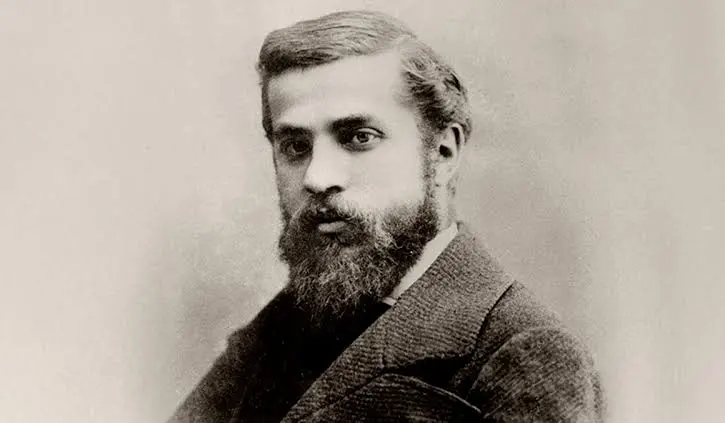
Discover Antoni Gaudí's revolutionary architectural vision and unique style. Learn to recognize his nature-inspired designs, symbolic details, and masterpieces in Barcelona. Essential…
Read more
Discover the fascinating 140+ year history of Sagrada Família. From 1882 construction beginnings to Gaudí's vision and modern-day completion. Essential guide for…
Read more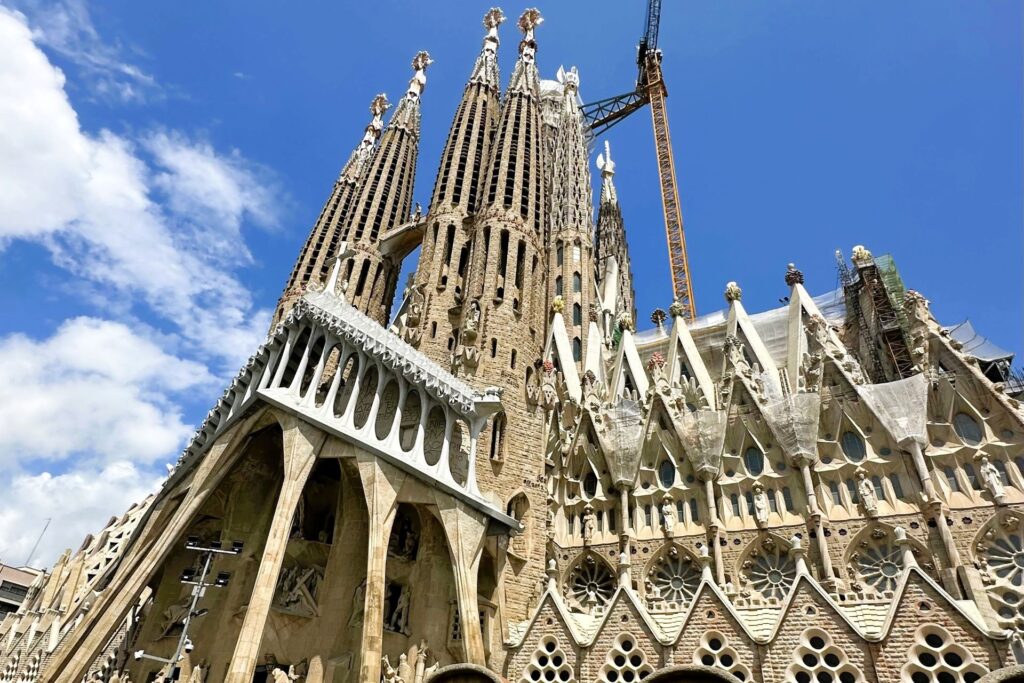
Explore the key construction milestones of Sagrada Família from 1882 to present. Discover completion dates, technological breakthroughs, and what to look for…
Read more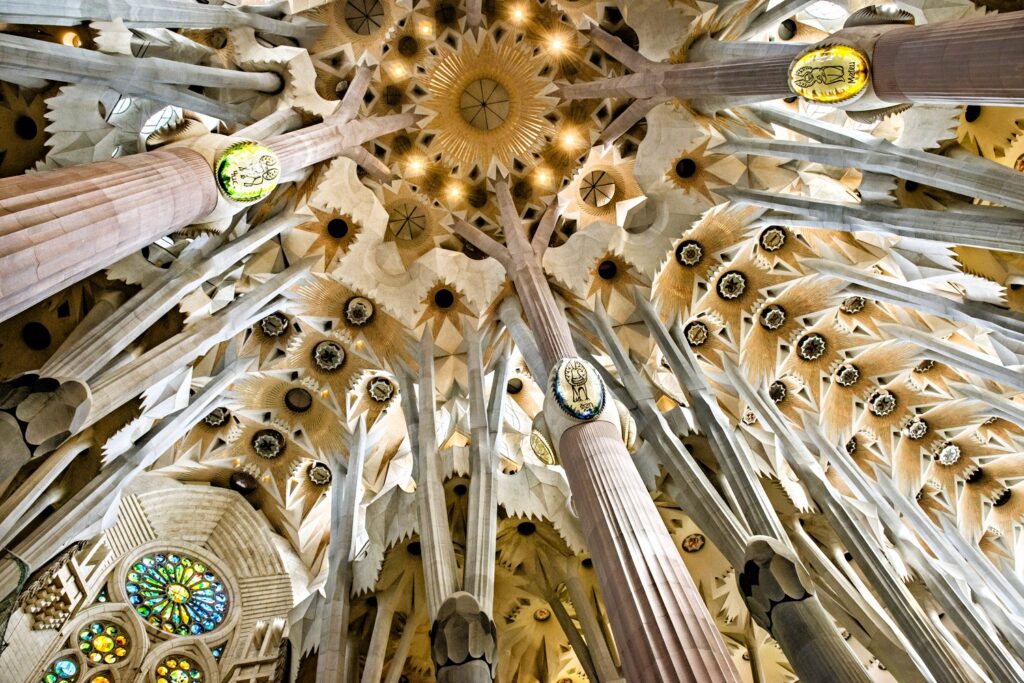
Discover the best photography spots at Sagrada Família. Expert guide to interior & exterior shots, optimal lighting, camera settings, and secret angles…
Read more07 · Plan your visit
Getting there
Line 2 or Line 5 to Sagrada Família station — the exit puts you almost under the towers. Buses and the Hop-On Hop-Off routes stop nearby too. Open in Google Maps
Circle the full perimeter outside first — the Nativity and Passion facades face opposite directions, and the best photography corners sit on the quiet streets east and south of the square.
Pair the basilica with Park Güell, Casa Batlló or Casa Milà — guided Gaudí trails connect them in one afternoon. Browse Gaudí tours on Viator
A perfect visit
Security moves in waves — an early slot means shorter lines and calmer nave photos.
Head straight for the center aisle while the east glass burns blue. Look up, then stand still.
Descend to the crypt-level exhibits while your legs are fresh — the models reframe everything.
If you added a tower, take the elevator up and let the spiral stairs bring you slowly back to earth.
Exit through the Passion side, then walk around to the Nativity for the full contrast.
If you can, return another day for a late slot — the west windows set the nave on fire at dusk.
Open daily with timed slots; hours stretch in summer and shorten in winter. Dress code applies — shoulders and knees covered — and security is airport-style, so travel light.
First slots for the blue light and calm, or the last slots for the red. Tower tickets and morning slots sell out furthest ahead.
Timed tickets, tower add-ons and guided visits with instant confirmation — book before the slots go.
08 · Good to know
Six questions every first-timer asks — answered honestly, so nothing surprises you at the door.
Yes — this is the one rule that matters. Entry is by timed slot, capacity is limited, and the desirable hours (early morning, late afternoon, tower combinations) routinely sell out days ahead in season. Check the availability widget above or compare platforms before your trip; walk-up availability is luck, not a plan.
Both. It is a working basilica: shoulders and knees covered, hats off inside, and airport-style security at the entrance — large bags, luggage and glass are not allowed. Travel light and you will breeze through; arrive with a suitcase and you may be turned away.
For most visitors, yes — the elevator ride up a spire puts mosaic pinnacles at eye level and Barcelona at your feet. Two honest caveats: it is a separate ticket, and the way down is a narrow spiral staircase that is hard work for anyone with knee or mobility issues. Pick one tower, not both.
Morning slots catch the east (Nativity-side) glass in cool blues; late afternoon sets the west windows burning red and gold. Midday is the most even — and the busiest. Photographers consistently vote early morning: the best colors with the smallest crowds.
About 90 minutes for the nave, museum and facades at a happy pace; add 30–45 minutes for a tower visit. The audio guide is included with most tickets and is genuinely worth following — the architecture reveals itself in stories, not just shapes.
Metro Line 2 or Line 5 to Sagrada Família station drops you beside the church; numerous city buses and sightseeing routes stop within a block. It sits in the Eixample grid, an easy walk or short ride from much of central Barcelona. Open in Google Maps
One last thing
Timed tickets · Tower add-ons · Traveler reviews