
Introduction: Walking Through a Dream – Gaudí’s Barcelona
Step onto the streets of Barcelona, and you enter a world where stone breathes, walls ripple like water, and buildings seem to grow from the earth rather than being built upon it. This is the legacy of **Antoni Gaudí i Cornet **(1852-1926)—the visionary architect who transformed Barcelona into the world’s greatest open-air museum of organic architecture.
Gaudí didn’t just design buildings; he reimagined what architecture could be. Rejecting the rigid geometry of his era, he looked to nature as his ultimate teacher. Trees became columns. Bones inspired structures. Light became a building material. The result is a collection of masterpieces so extraordinary that seven of his works have been designated UNESCO World Heritage Sites.
For tourists, Barcelona offers a unique opportunity: to walk through the mind of a genius. From the soaring spires of the Sagrada Família to the whimsical mosaics of Park Güell, from the bone-like balconies of Casa Batlló to the undulating stone of Casa Milà—each site tells a chapter in Gaudí’s extraordinary story.
But with so much to see and limited time, planning is essential. Which Gaudí buildings are must-visits? How do you avoid crushing crowds? What’s the best order to experience them? How do you photograph these extraordinary spaces?
This comprehensive guide answers everything you need to know about exploring Gaudí’s architecture in Barcelona in 2026:
- 🏛️ The Masterpieces: Detailed guides to all 7 UNESCO Gaudí sites + key lesser-known works
- 🎨 Understanding Gaudí: His philosophy, innovations, and symbolic language decoded
- 🎫 Ticket Strategies: How to book, save money, and skip lines at every site
- 📸 Секреты фотографии: Best angles, light, and settings for each location
- 🗓️ Smart Itineraries: Half-day, full-day, and multi-day plans for every traveler type
- ⏰ Timing Guide: When to visit each site for optimal light and minimal crowds
- 🚶 Советы по навигации: Getting between sites, walking routes, and transport options
- 🌱 Sustainable Tourism: How to visit respectfully and support preservation
- ❓ FAQs: Common questions about Gaudí’s Barcelona answered
Whether you’re an architecture enthusiast, a photography lover, a family with children, or simply a curious traveler seeking beauty—this guide ensures your journey through Gaudí’s Barcelona is as extraordinary as the buildings themselves.
Let’s begin the adventure.
Chapter 1: Who Was Antoni Gaudí? The Man Behind the Magic
📜 A Life Dedicated to Vision
Born in Reus, Catalonia, in 1852, Antoni Gaudí was a sickly child who found solace in observing nature. This early connection to the natural world would become the foundation of his revolutionary architectural philosophy.
Key Life Milestones:
| Year | Event | Significance |
|---|---|---|
| 1852 | Born in Reus, Catalonia | Roots in Catalan culture and landscape |
| 1878 | Graduates Barcelona Architecture School | Director remarks: “We’ve given this title to a fool or a genius. Time will show.” |
| 1878 | Meets patron Eusebi Güell | Begins lifelong partnership enabling creative freedom |
| 1883 | Takes over Sagrada Família project | Commits to the work that would define his legacy |
| 1900-1914 | Builds Park Güell | Creates his most whimsical, nature-integrated work |
| 1906-1912 | Constructs Casa Milà (La Pedrera) | Peak of his mature organic style |
| 1926 | Dies after tram accident | Buried in Sagrada Família crypt; work continues |
🌿 Gaudí’s Architectural Philosophy
Gaudí’s work rests on three foundational beliefs:
1. “Nature is the Art of God”
“Оригинальность заключается в возвращении к истокам”.”
Gaudí believed nature was the ultimate designer. He didn’t copy natural forms—he studied their engineering principles:
- Tree trunks → Branching columns that distribute weight efficiently
- Honeycombs → Hexagonal tiles and structural cells
- Seashell spirals → Helical staircases and decorative motifs
- Bone structures → Lightweight, load-optimized frameworks
- Light through leaves → Stained glass that filters color like a forest canopy
2. Faith as Foundation
A devout Catholic, Gaudí viewed architecture as worship. Every curve, color, and symbol carried spiritual meaning:
- Саграда Фамилия: A “Bible in stone” telling the story of salvation
- Symbolic numbers: 12 apostles, 4 evangelists, 3 theological virtues represented in towers
- Light as divine presence: Stained glass designed to create transcendence
3. Craftsmanship as Devotion
In an age of industrialization, Gaudí championed the handmade. He collaborated with:
- Stonemasons who carved organic forms by eye
- Ceramicists who created custom trencadís mosaics
- Ironworkers who forged fluid, plant-like railings
- Glassmakers who developed unique color palettes
Result: Every Gaudí building is a symphony of artisanal skills, making each one utterly unique.
🎨 Signature Elements to Recognize Anywhere
Once you know what to look for, Gaudí’s style becomes instantly recognizable:
| Element | What to Look For | Where to Find It |
|---|---|---|
| Нет прямых линий | Walls that undulate, columns that curve, balconies shaped like masks | Casa Batlló facade, Casa Milà roof |
| Trencadís mosaics | Shimmering surfaces made from broken ceramic tiles | Park Güell bench, Sagrada Família towers |
| Organic columns | Tree-like supports that branch at the top | Sagrada Família interior, Park Güell hypostyle hall |
| Гиперболоидные структуры | Double-curved surfaces like cooling towers or hourglasses | Sagrada Família windows, Colònia Güell crypt |
| Symbolic details | Animals, plants, numbers with hidden meanings | All sites—look closely! |
| Light as material | Stained glass that transforms space with color | Sagrada Família nave, Casa Batlló light well |
Tourist Challenge: Pick one element (like trencadís) and hunt for it across multiple Gaudí sites. You’ll see how he wove a cohesive visual language throughout Barcelona.
Chapter 2: The UNESCO Seven – Gaudí’s World Heritage Masterpieces
In 2005, UNESCO designated seven Gaudí works as World Heritage Sites, citing:
“The exceptional contribution of Gaudí’s work to the development of architecture and building technology… representing an eclectic style that is personally distinctive.”
Let’s explore each one in detail.
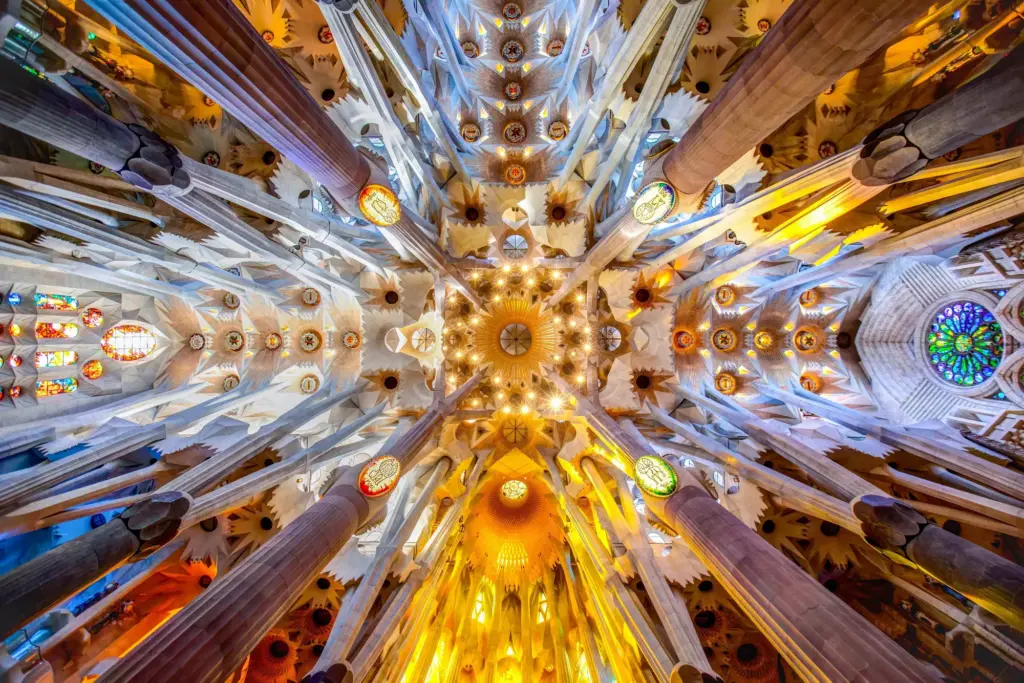
🏛️ 1. Sagrada Família (Basílica i Temple Expiatori de la Sagrada Família)
Location: Carrer de Mallorca, 401, Eixample
Built: 1882-present (Gaudí worked 1883-1926)
Style: Organic Gothic / Nature-inspired sacred architecture
UNESCO Inscription: 2005 (Nativity Facade and Crypt)
Why It’s Essential
The Sagrada Família is Gaudí’s life work and magnum opus—a basilica under construction for over 140 years. It’s the only Gaudí site that combines:
- Sculptural facades telling biblical stories in stone
- A forest-like interior with branching columns and colored light
- Ongoing construction you can witness firsthand
- Tower access for panoramic Barcelona views
Must-See Elements
✅ **Nativity Facade **(East): The only facade Gaudí saw completed; ornate carvings celebrating birth and life
✅ **Passion Facade **(West): Stark, angular depiction of Christ’s suffering by sculptor Subirachs
✅ Внутренний неф: Tree-like columns, hyperboloid vaults, and gradient stained glass (cool east, warm west)
✅ Museum & Crypt: Gaudí’s tomb, original models, and construction history
✅ Башни: Elevator ascent + spiral staircase descent for unique views (book upgrade)
Practical Information
| Detail | Information |
|---|---|
| Tickets | Basic €26-32; +Towers €38-45; Guided €45-60 |
| Booking | Essential: Book 3-6 weeks ahead via sagradafamilia.org |
| Best Time | Tuesday/Wednesday, 9 AM or 4 PM for light/crowds |
| Duration | 1.5-2.5 hours (longer with towers) |
| Доступность | Interior fully accessible; towers not wheelchair accessible |
| Photography | Allowed without flash; tripods discouraged during peak hours |
Полезные советы
🔹 Choose tower type wisely: Nativity (morning light, ornate details) vs. Passion (afternoon light, city views)
🔹 Download audio guide app before arrival for seamless experience
🔹 Visit museum after nave to understand engineering behind what you’ve seen
🔹 End at Plaça de Gaudí for iconic reflection pool photos at blue hour
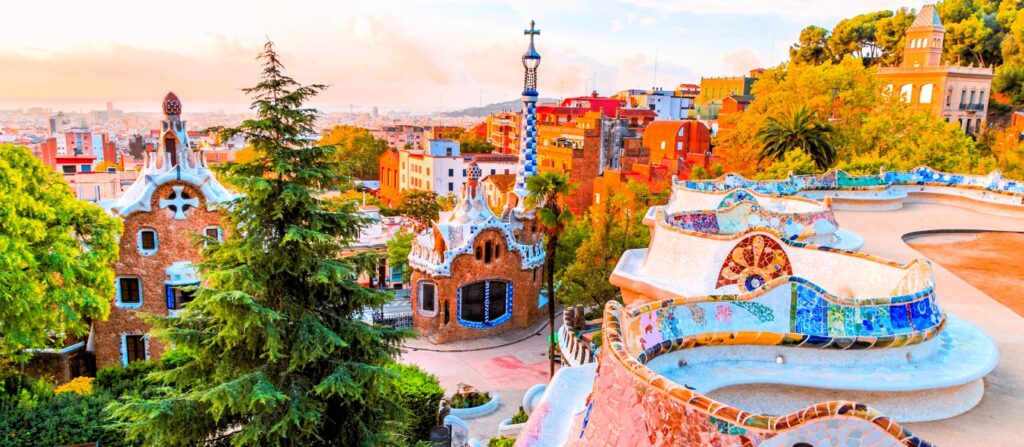
🦎 2. Park Güell (Parc Güell)
Location: Carrer d’Olot, s/n, Gràcia
Built: 1900-1914
Style: Garden city / Organic public space
UNESCO Inscription: 1984 (expanded 2005)
Why It’s Essential
Park Güell was conceived as a residential garden city but became Barcelona’s most whimsical public park. It showcases Gaudí’s playful side and his mastery of integrating architecture with landscape.
Must-See Elements
✅ Monumental Core Entrance: Gingerbread-style gatehouses with trencadís roofs
✅ Dragon Stairway: Iconic mosaic lizard/fountain guarding the entrance
✅ Hypostyle Hall: 86 Doric columns that double as drainage for the plaza above
✅ Serpentine Bench: World’s longest bench, covered in vibrant trencadís mosaics
✅ Nature Square: Panoramic terrace with city views and undulating bench
✅ Gaudí House Museum: The architect’s former home (separate ticket)
Practical Information
| Detail | Information |
|---|---|
| Tickets | Monumental Core €10; +Gaudí House €16; Free for outer park areas |
| Booking | Timed entry required for Monumental Core; book 2-4 weeks ahead |
| Best Time | Opening (8 AM) or late afternoon; avoid 11 AM-3 PM crowds |
| Duration | 1.5-2 hours for Monumental Core; 3+ hours for full park |
| Доступность | Outer park accessible; Monumental Core has steep paths, limited wheelchair access |
| Photography | Allowed everywhere; sunrise/sunset best for light and fewer people |
Полезные советы
🔹 Enter via Carretera del Carmel for easier access and fewer crowds than main entrance
🔹 Наденьте удобную обувь.—park is hilly with uneven paths
🔹 Bring water and sun protection—limited shade in Monumental Core
🔹 Combine with Gràcia neighborhood for authentic post-visit tapas and atmosphere
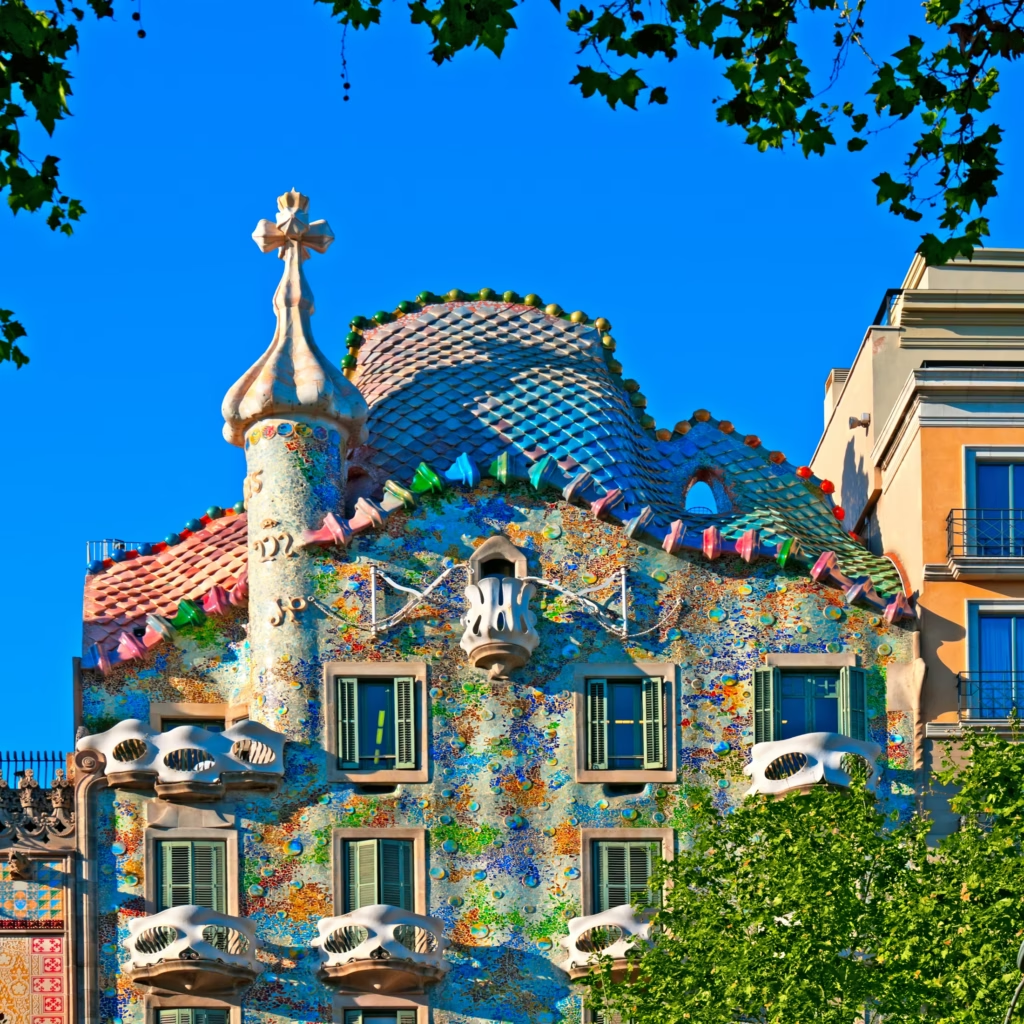
🐉 3. Casa Batlló
Location: Passeig de Gràcia, 43, Eixample
Built: 1904-1906 (renovation of existing building)
Style: Organic Modernisme / Marine-inspired fantasy
UNESCO Inscription: 2005
Why It’s Essential
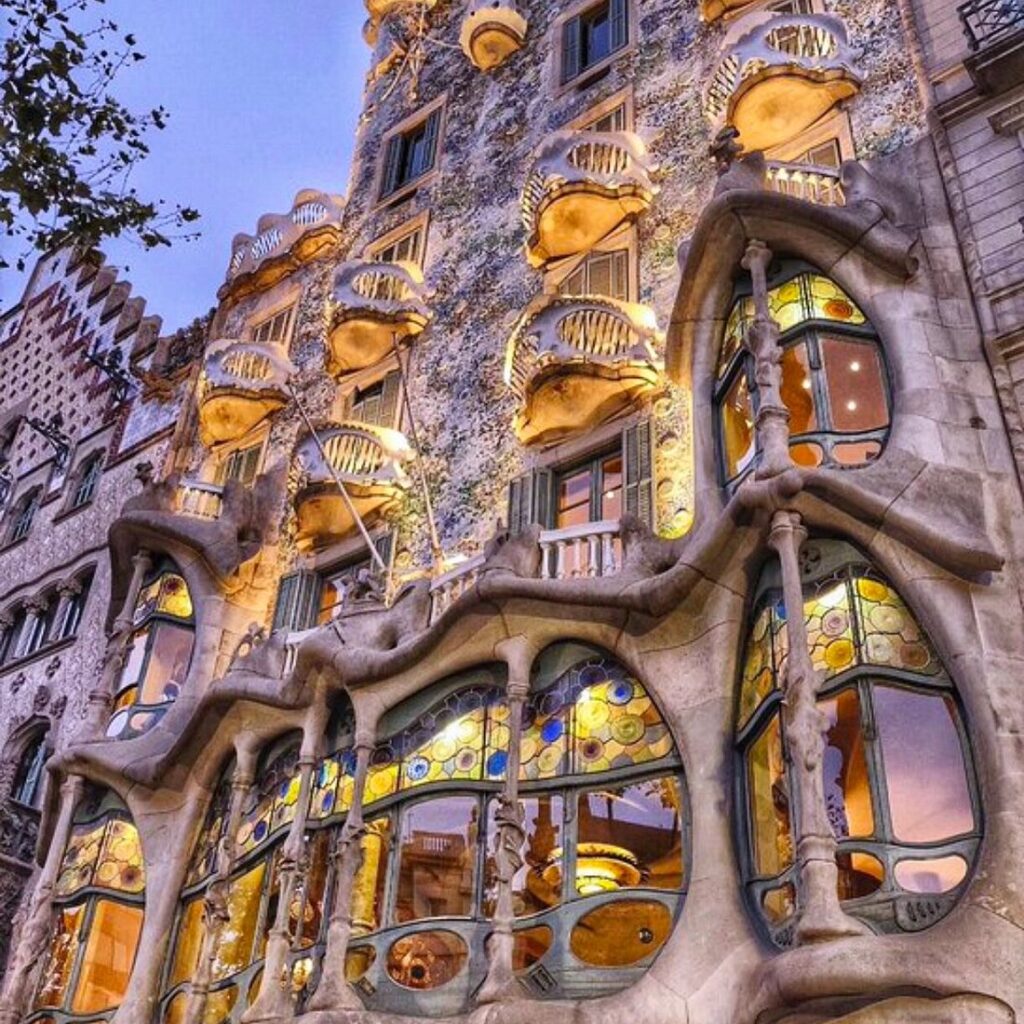
Casa Batlló is Gaudí at his most imaginative—a building that looks like it’s made of bones, scales, and sea foam. Nicknamed “The House of Bones,” it’s a masterclass in transforming an ordinary structure into a living organism.
Must-See Elements
✅ Facade: Scaled roof like a dragon’s back; balconies shaped like masks or bones; colorful trencadís
✅ Noble Floor: Organic forms, mushroom-shaped fireplace, wave-like ceilings
✅ Light Well: Gradient blue tiles that brighten from bottom to top, maximizing natural light
✅ Attic: Catenary arches resembling an animal’s ribcage; now an exhibition space
✅ Rooftop: Dragon-back chimney with four-armed cross; panoramic city views
Practical Information
| Detail | Information |
|---|---|
| Tickets | Basic €35; Blue Experience €39 (AR guide); Gold Experience €45 (skip line + rooftop) |
| Booking | Essential: Book online; timed entry; book 2-3 weeks ahead for peak season |
| Best Time | First entry (9 AM) or last entry (6-7 PM) for fewer crowds; sunset for rooftop photos |
| Duration | 1-1.5 hours with audio guide |
| Доступность | Elevator to all floors; wheelchair accessible; audio guide has accessibility features |
| Photography | Allowed without flash; AR features in premium tickets enhance photo opportunities |
Полезные советы
🔹 Choose Blue or Gold experience for augmented reality insights that decode Gaudí’s symbolism
🔹 Start at the rooftop if your ticket allows—work downward to avoid crowds
🔹 Look for marine symbolism: Dragon scales, whale bones, sea foam colors throughout
🔹 Visit at sunset for magical light on the facade and rooftop views
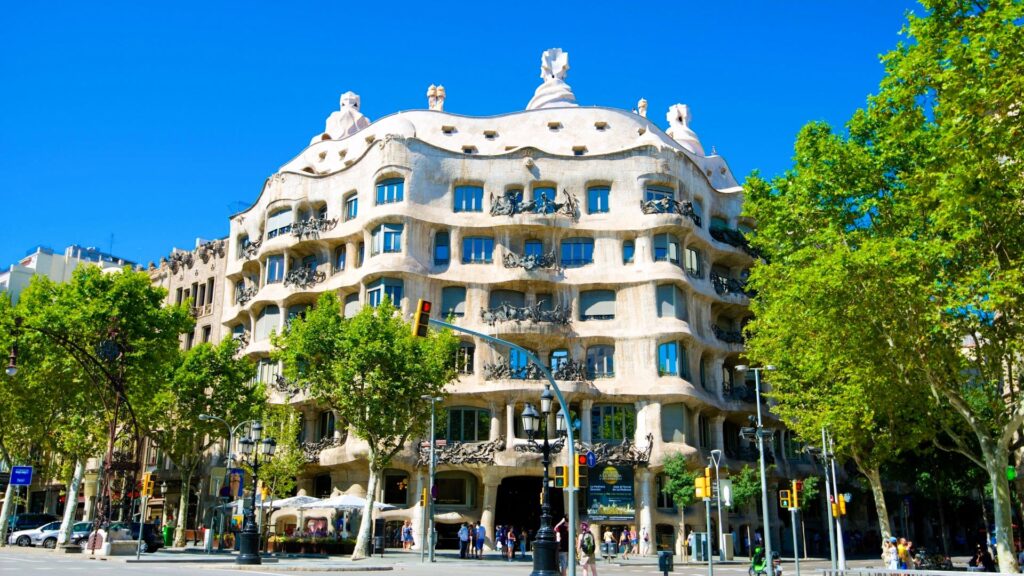
🌊 4. Casa Milà (La Pedrera)
Location: Passeig de Gràcia, 92, Eixample
Built: 1906-1912
Style: Organic Modernisme / Stone quarry aesthetic
UNESCO Inscription: 2005
Why It’s Essential
Casa Milà—nicknamed “La Pedrera” (The Stone Quarry)—is Gaudí’s last residential masterpiece. Its undulating stone facade and surreal rooftop make it one of Barcelona’s most photographed buildings.
Must-See Elements
✅ Facade: Wave-like stone exterior with wrought-iron balconies resembling seaweed
✅ Courtyard: Innovative light wells with gradient tilework (like Casa Batlló but more subtle)
✅ **Apartment **(The Pedrera Experience) Period-furnished flat showing bourgeois life in 1910s Barcelona
✅ Rooftop: Surreal chimneys and ventilation towers that look like warriors or abstract sculptures
✅ Exhibition Space: Rotating exhibits on Gaudí, Modernisme, and Barcelona history
Practical Information
| Detail | Information |
|---|---|
| Tickets | Basic €25; Night Experience €35 (projections + rooftop); Essential Experience €30 (audio guide) |
| Booking | Recommended: Book online; timed entry; less crowded than Casa Batlló but still popular |
| Best Time | Morning (9-10 AM) or late afternoon (5-6 PM); Night Experience for magical projections |
| Duration | 1-1.5 hours; 2 hours for Night Experience |
| Доступность | Elevator to most areas; rooftop has some steps; wheelchair-accessible route available |
| Photography | Allowed without flash; rooftop is spectacular at sunset or during Night Experience |
Полезные советы
🔹 Don’t skip the apartment—it provides crucial context for Gaudí’s residential work
🔹 Spend time on the rooftop—the chimneys are among Gaudí’s most imaginative sculptures
🔹 Consider Night Experience if you’ve already seen Gaudí sites by day—projections transform the space
🔹 Combine with Casa Batlló (both on Passeig de Gràcia) but visit at different times of day for varied light
🏡 5. Casa Vicens
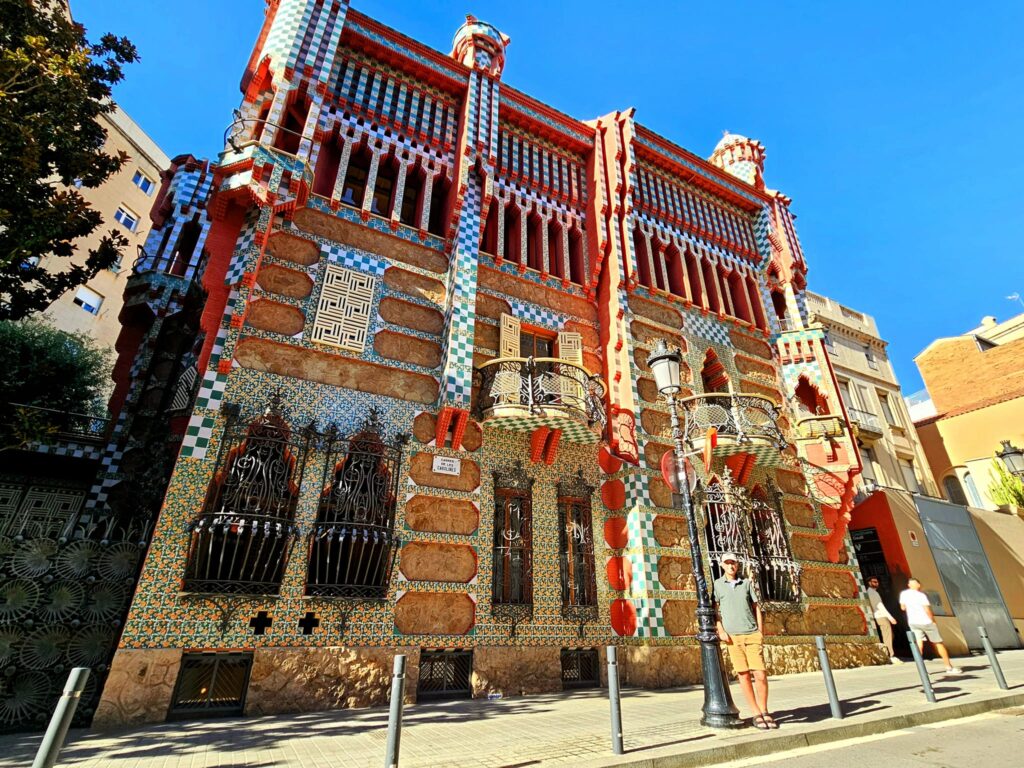
Location: Carrer de les Carolines, 23, Gràcia
Built: 1883-1888 (Gaudí’s first major work)
Style: Orientalist / Neo-Mudéjar with early organic elements
UNESCO Inscription: 2005
Why It’s Essential
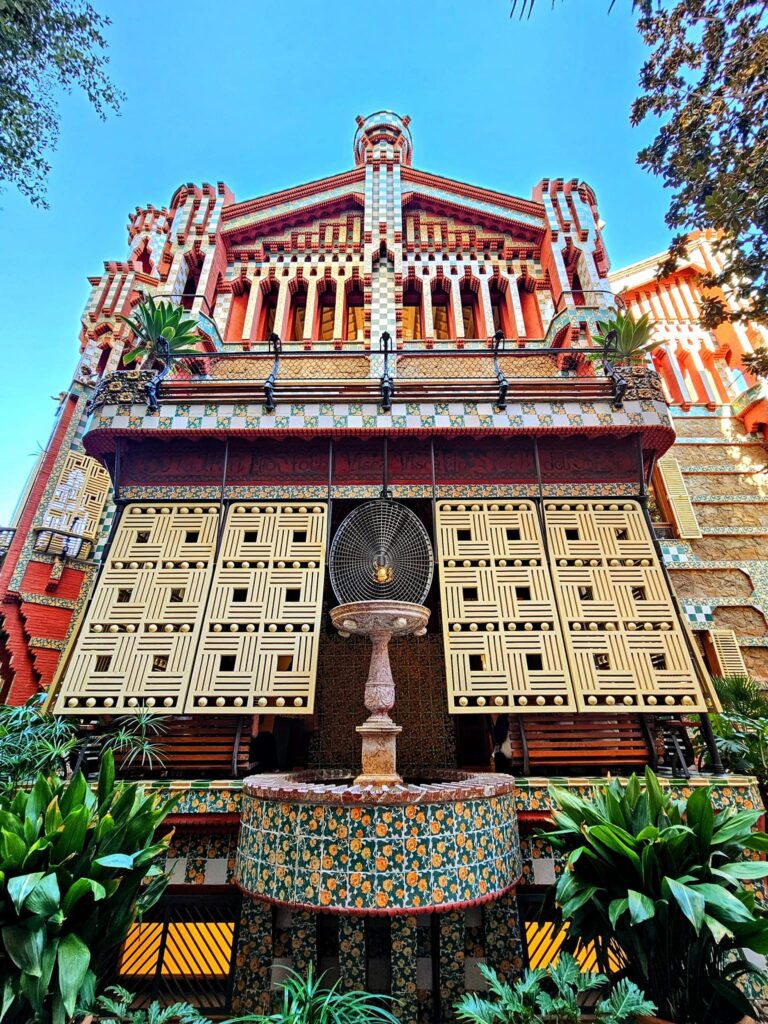
Casa Vicens is where Gaudí’s genius first emerged. Built as a summer home for a tile manufacturer, it showcases his early experimentation with color, pattern, and cultural influences before his mature organic style fully developed.
Must-See Elements
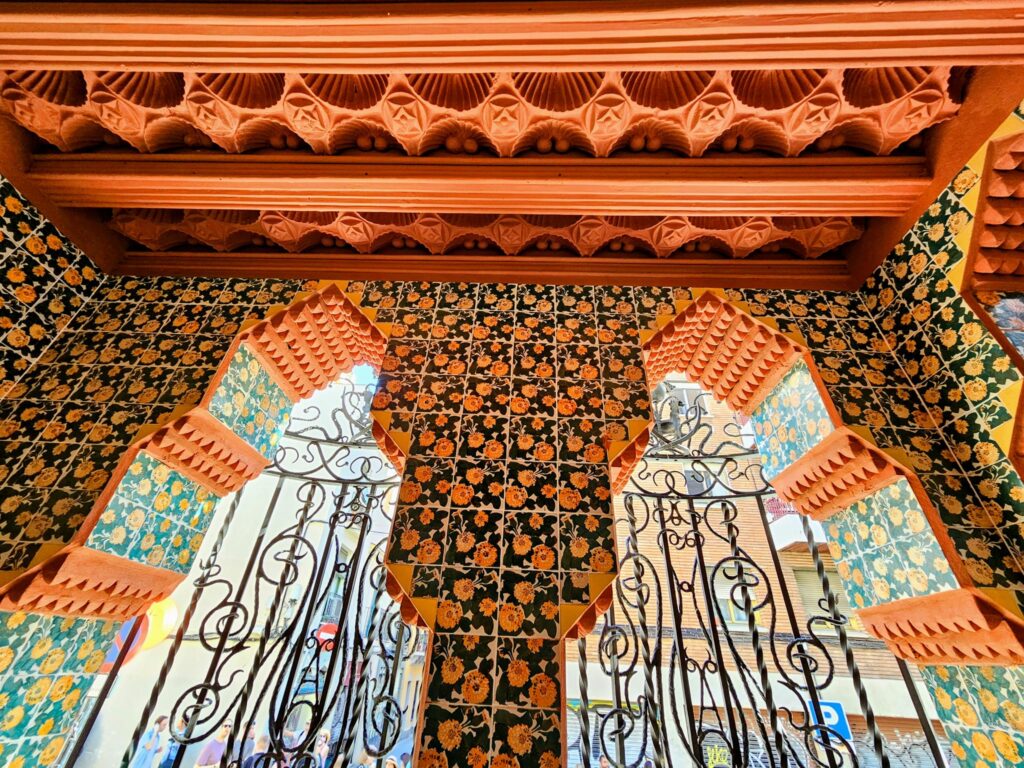
✅ Facade: Green-and-white checkered tiles inspired by marigold flowers; ornate ironwork
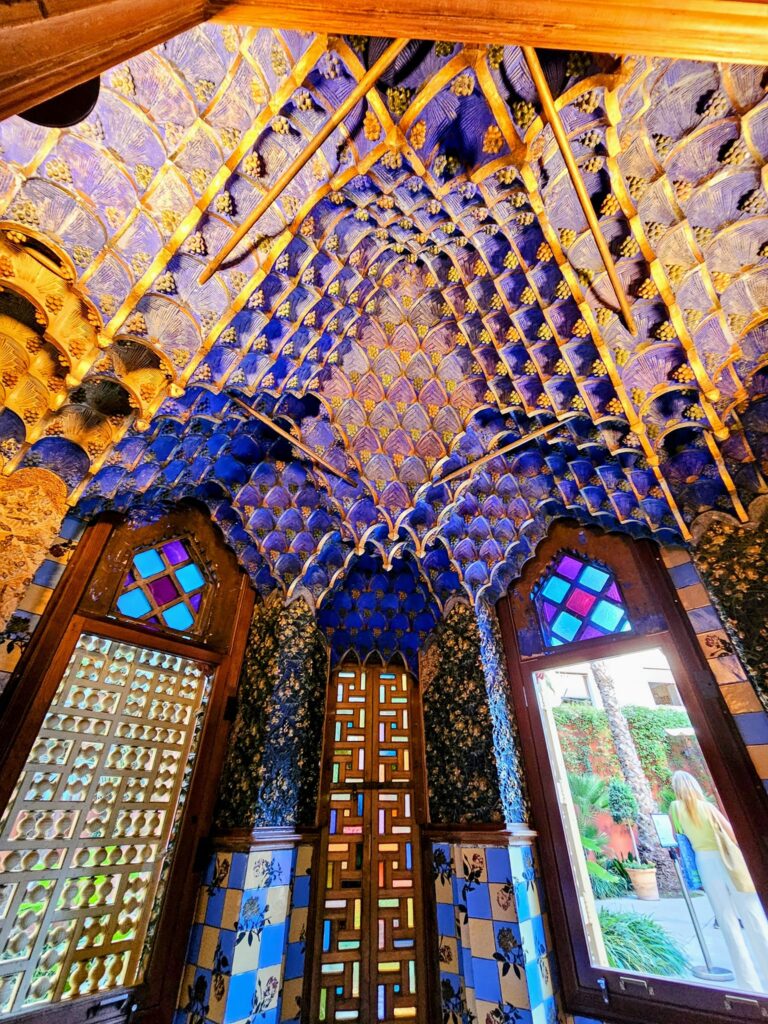
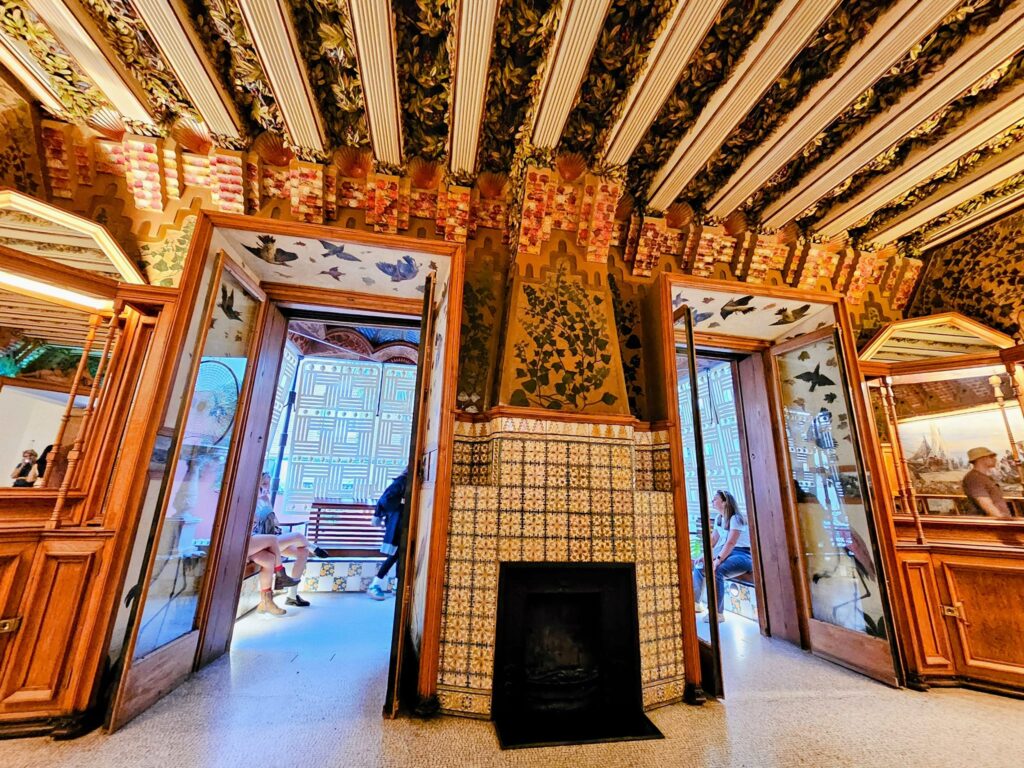
✅ Interior: Smoking room with honeycomb ceiling; dining room with waterfall motif
✅ Garden: Restored outdoor space with fountain and Gaudí-designed elements
✅ Rooftop Terrace: Panoramic views of Gràcia and early examples of trencadís
✅ Exhibition: Multimedia displays on Gaudí’s early career and the house’s history
Practical Information
| Detail | Information |
|---|---|
| Tickets | Basic €16; +Garden €19; Guided €25 |
| Booking | Recommended: Book online; less crowded than major sites but timed entry |
| Best Time | Morning (10 AM) or late afternoon; weekdays less busy than weekends |
| Duration | 1-1.5 hours |
| Доступность | Elevator to all floors; fully wheelchair accessible; garden paths mostly accessible |
| Photography | Allowed throughout; beautiful light in garden areas; less crowded for photos |
Полезные советы
🔹 Visit early in your Gaudí journey to see his stylistic evolution from ornate to organic
🔹 Look for marigold motifs throughout—the flowers that inspired the tile patterns
🔹 Combine with Gràcia neighborhood for authentic tapas and local atmosphere post-visit
🔹 Less crowded alternative to Casa Batlló/Milà if you want Gaudí without the crowds
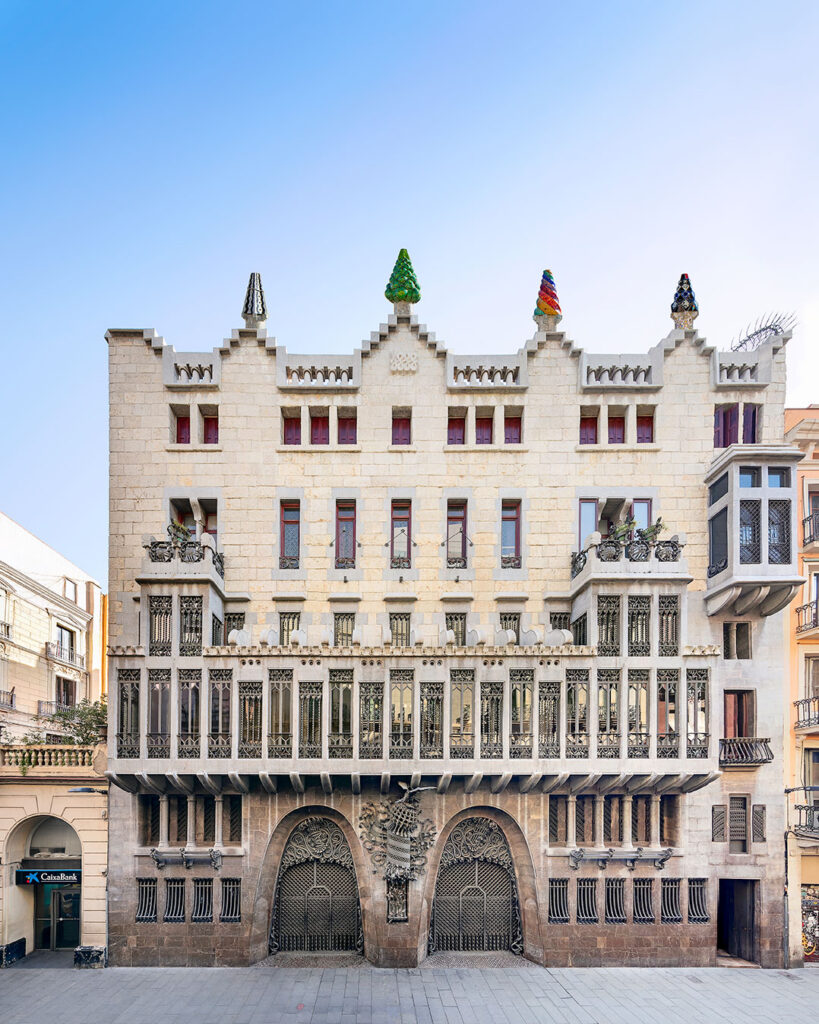
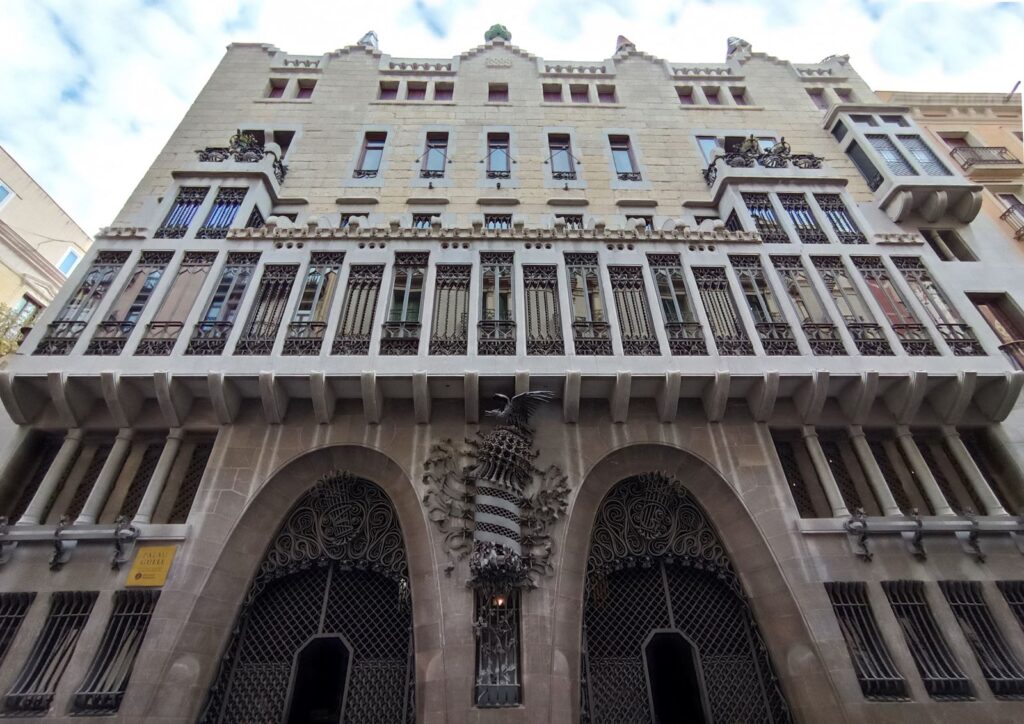
🏰 6. Palau Güell
Location: Carrer Nou de la Rambla, 3-5, Raval
Built: 1886-1890
Style: Early Modernisme / Urban palace
UNESCO Inscription: 2005
Why It’s Essential
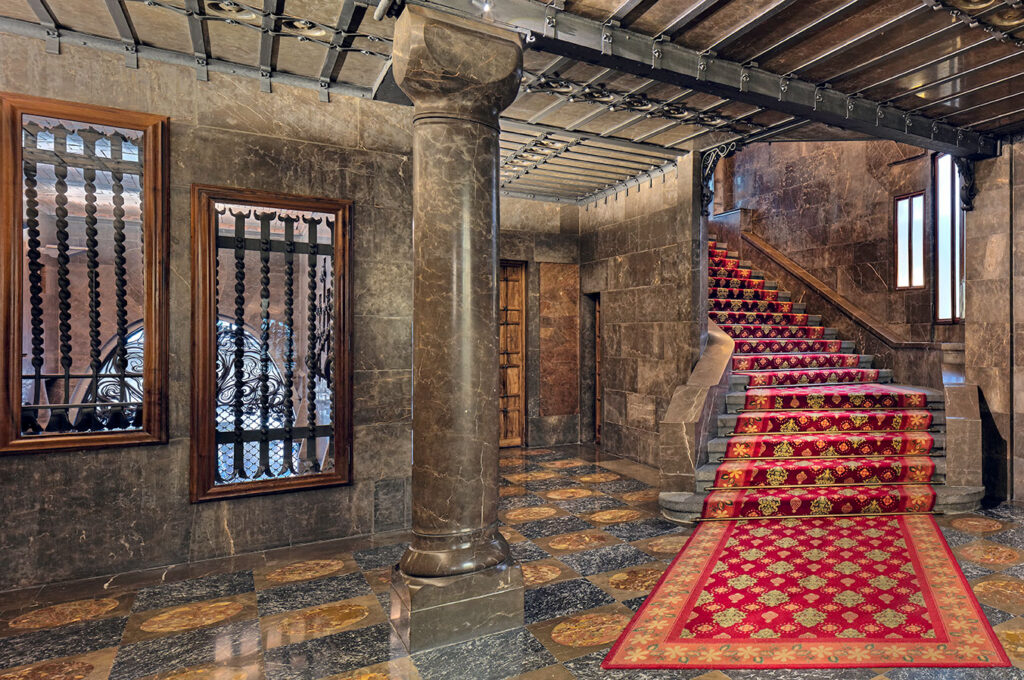
Palau Güell was Gaudí’s first major commission from patron Eusebi Güell. This urban mansion showcases his early mastery of space, light, and innovative structural solutions within a traditional city-block footprint.
Must-See Elements
✅ Facade: Parabolic arch entrance designed for horse carriages; ornate iron gates
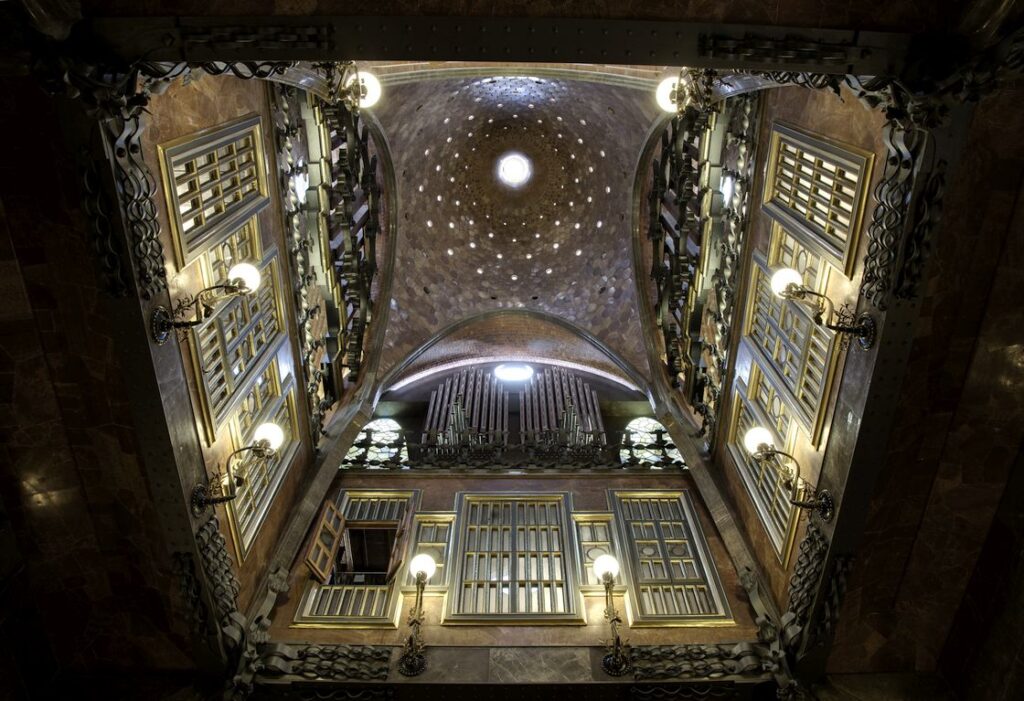
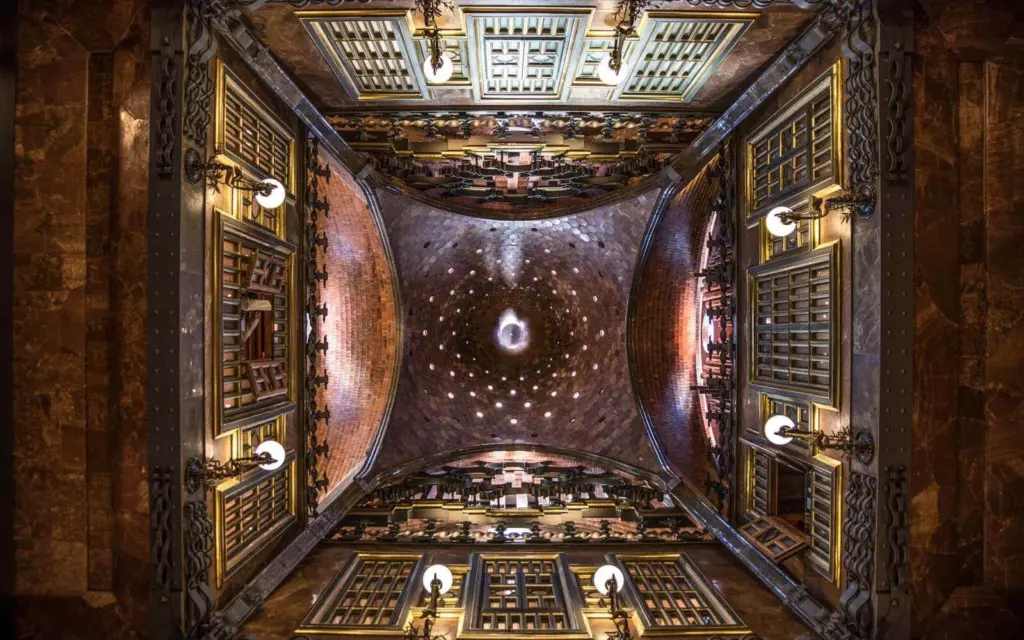
✅ Central Salon: Starry ceiling with holes for lanterns to create a celestial effect
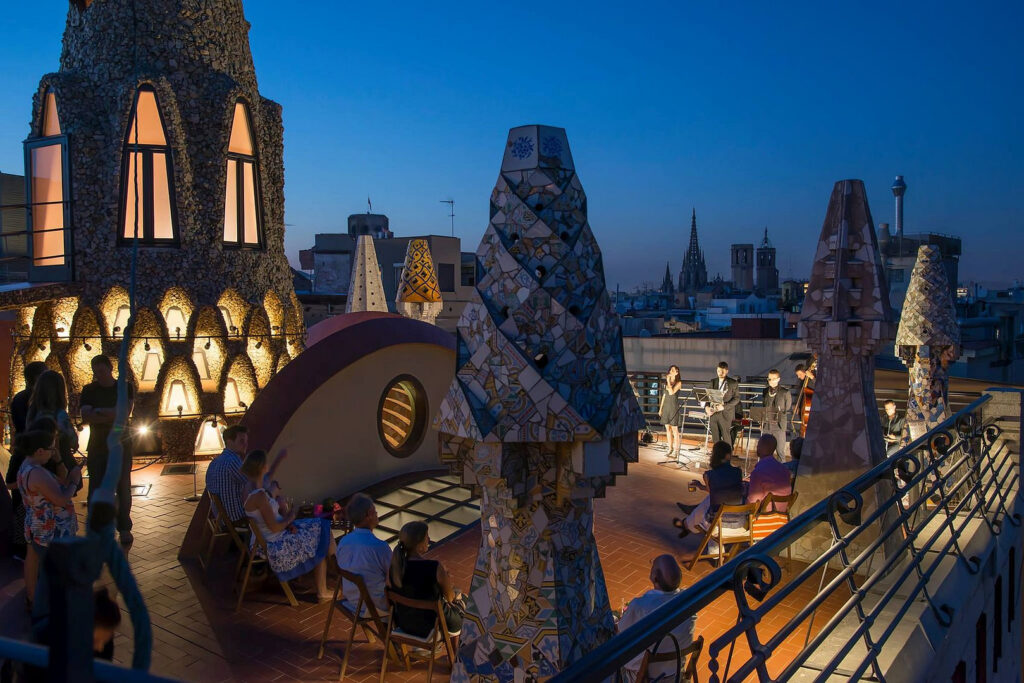
✅ Rooftop: Sculptural chimneys and ventilation towers (precursor to Casa Milà)
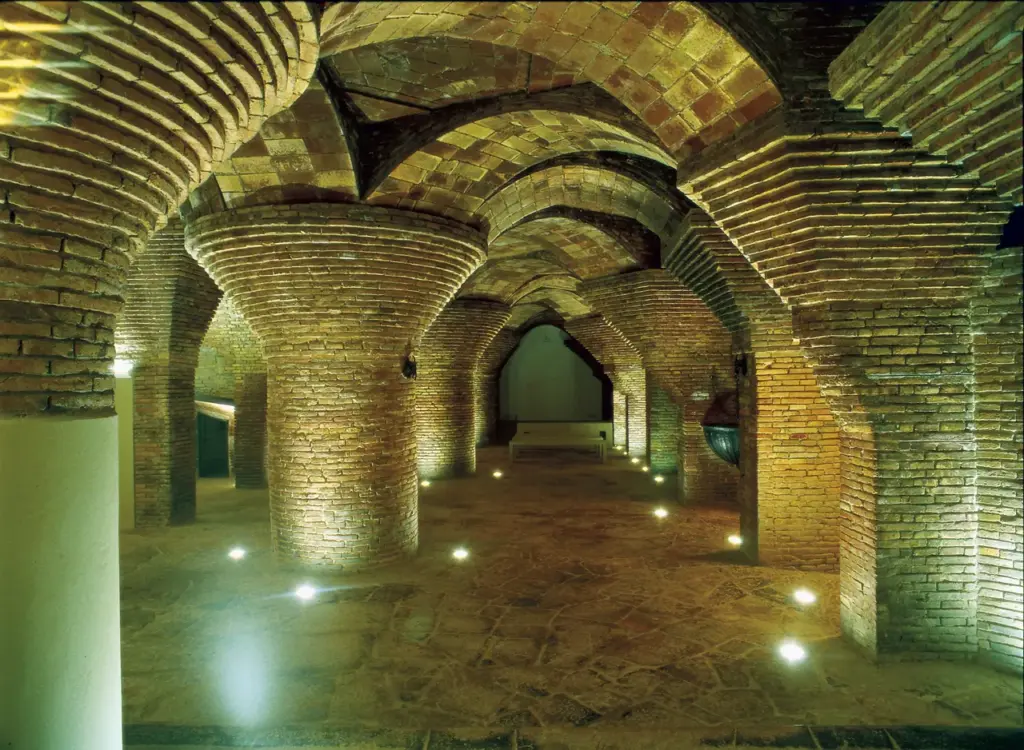
✅ Stables: Innovative underground space with catenary arches for horses and carriages
✅ Güell Family Apartments: Period rooms showing bourgeois life in 1890s Barcelona
Practical Information
| Detail | Information |
|---|---|
| Tickets | Basic €12; Guided €18; Combined with other sites €25-35 |
| Booking | Recommended but often available same-day; less crowded than major sites |
| Best Time | Morning (10 AM-12 PM) or late afternoon; weekdays quieter than weekends |
| Duration | 1-1.5 hours |
| Доступность | Elevator to most areas; some historic sections have steps; partial wheelchair access |
| Photography | Allowed without flash; central salon ceiling is spectacular; rooftop views unique |
Полезные советы
🔹 Don’t miss the stables—the catenary arches here were prototypes for Sagrada Família
🔹 Look up in the central salon—the “starry ceiling” is a magical Gaudí touch
🔹 Combine with Raval neighborhood for authentic Barcelona culture and affordable dining
🔹 Great value option for experiencing Gaudí without the crowds or high prices of major sites
⛪ 7. Crypt of Colònia Güell
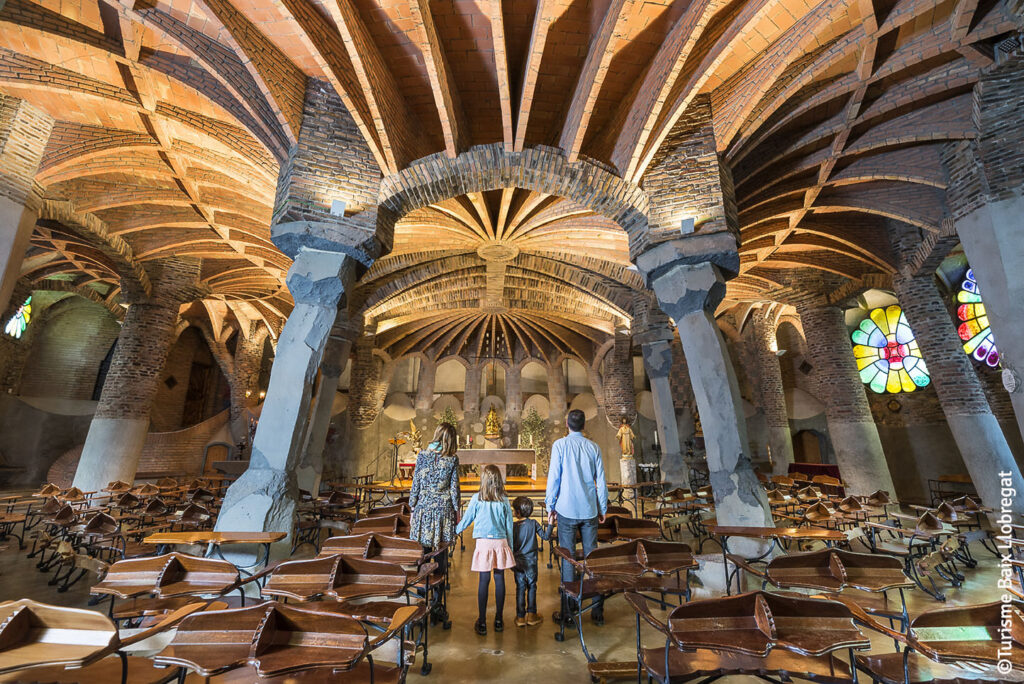
Location: Santa Coloma de Cervelló (20-min train from Barcelona)
Built: 1898-1914 (unfinished)
Style: Experimental organic / Structural laboratory
UNESCO Inscription: 2005
Why It’s Essential
The Crypt of Colònia Güell was Gaudí’s “laboratory”—where he tested the structural innovations later used in Sagrada Família. Though unfinished, it’s a fascinating glimpse into his creative process and engineering genius.
Must-See Elements
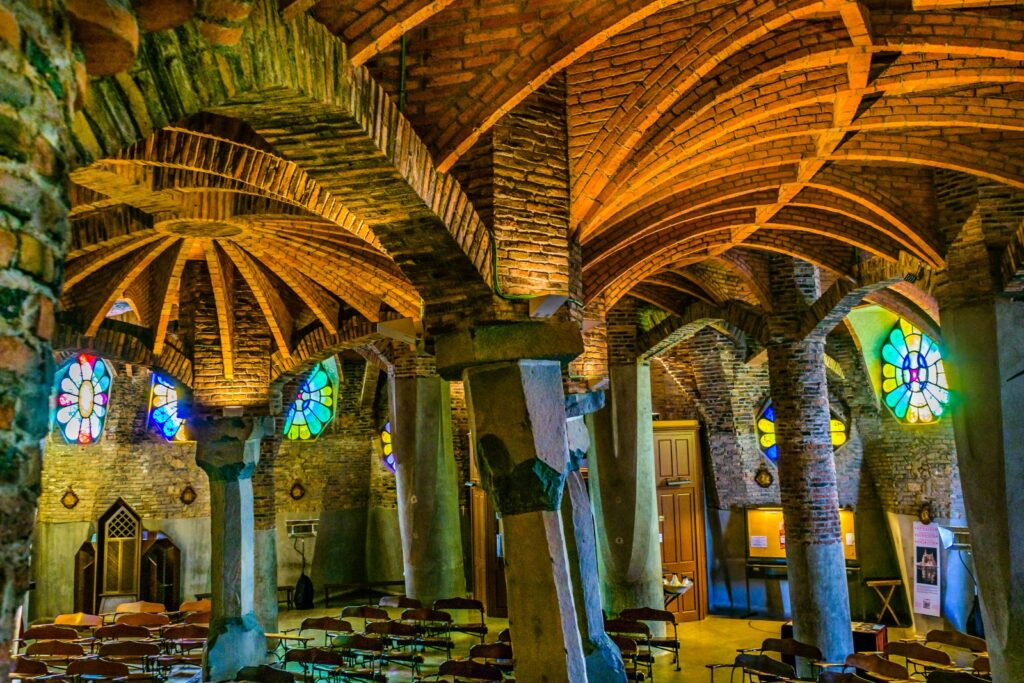
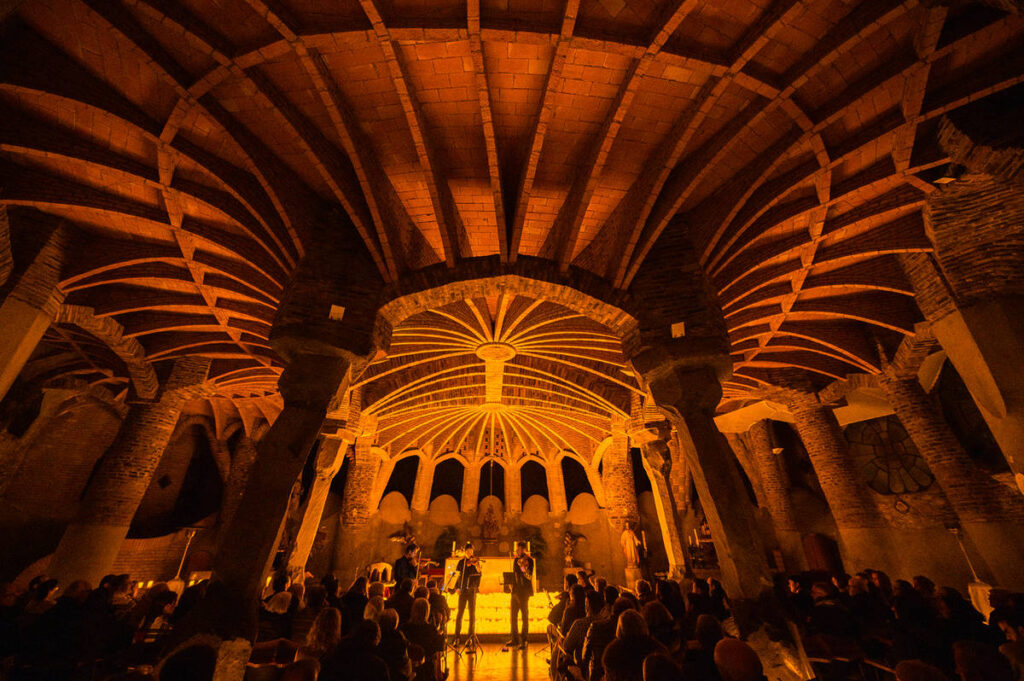
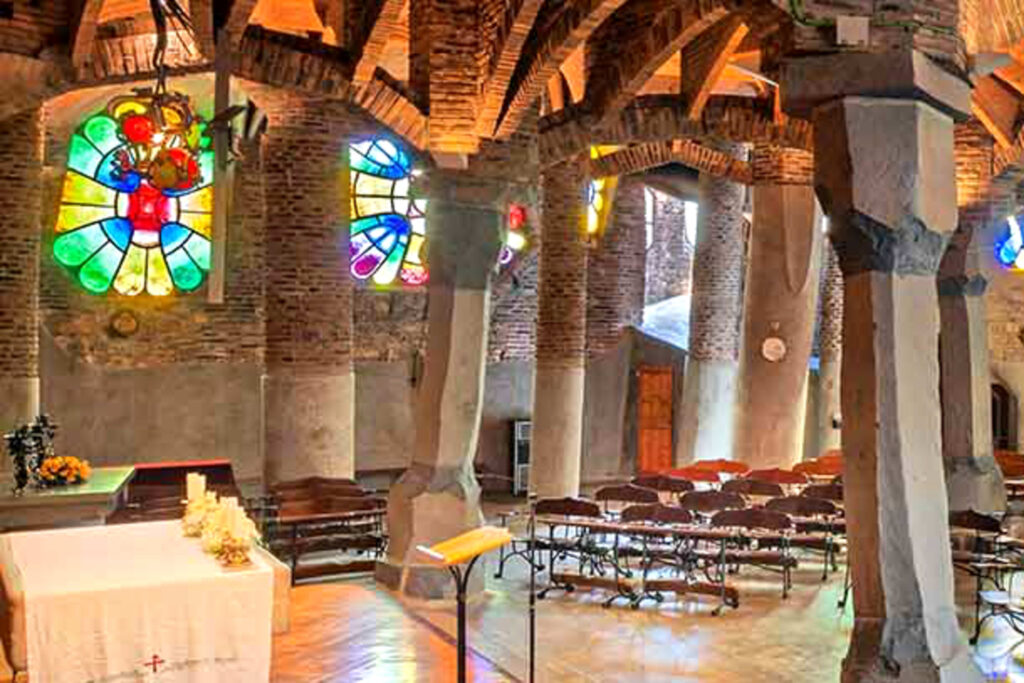
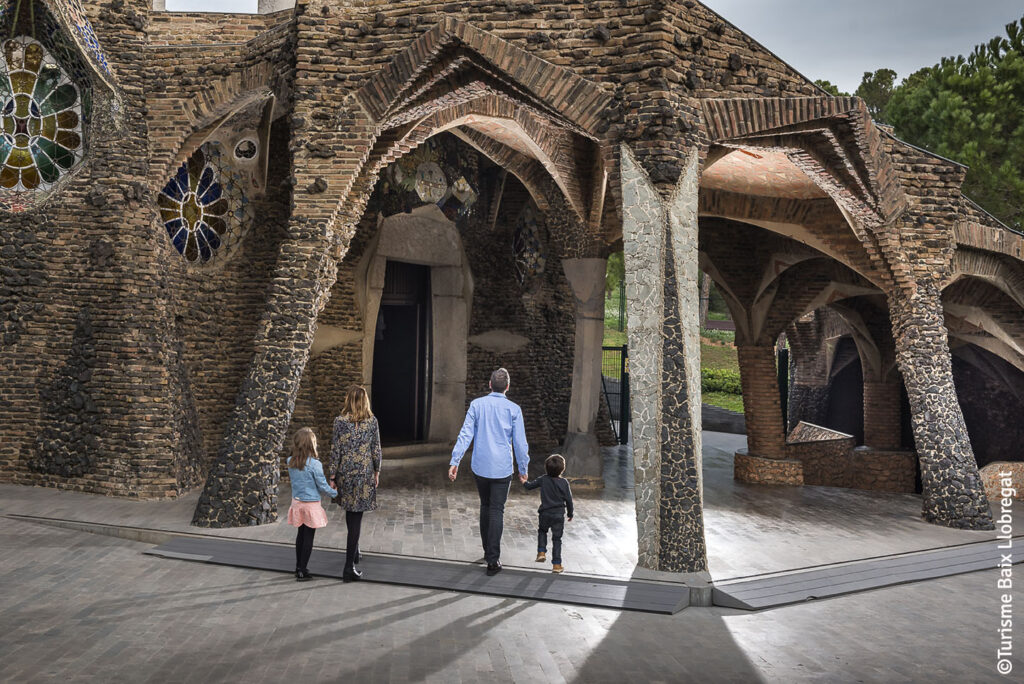
✅ Catenary Arches: First full-scale use of Gaudí’s signature structural form
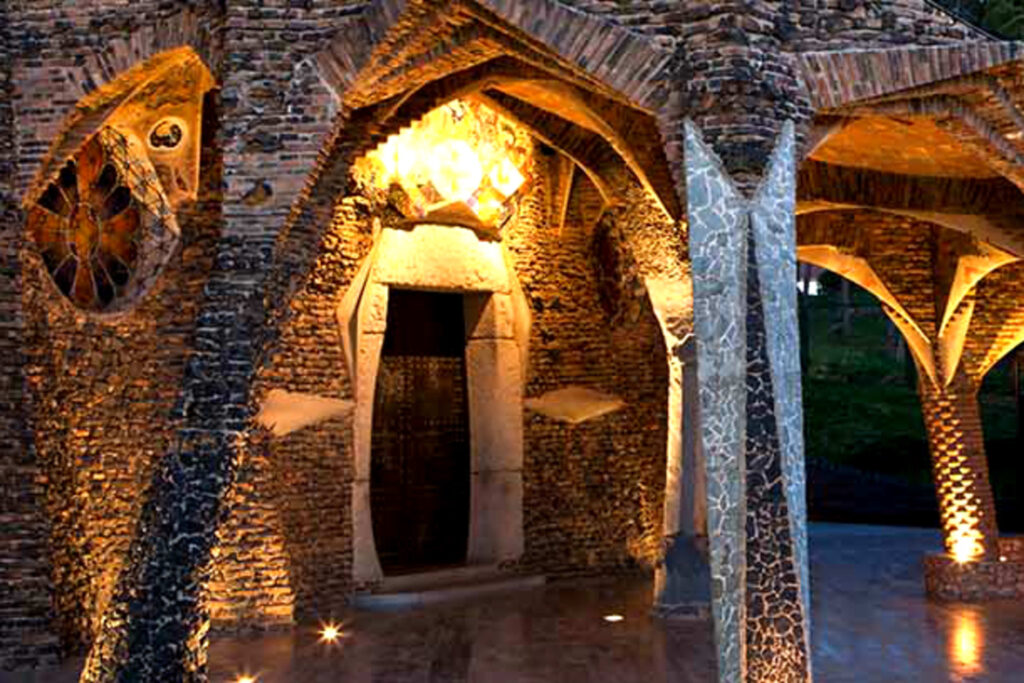
✅ Inclined Columns: Tree-like supports that lean to distribute weight efficiently
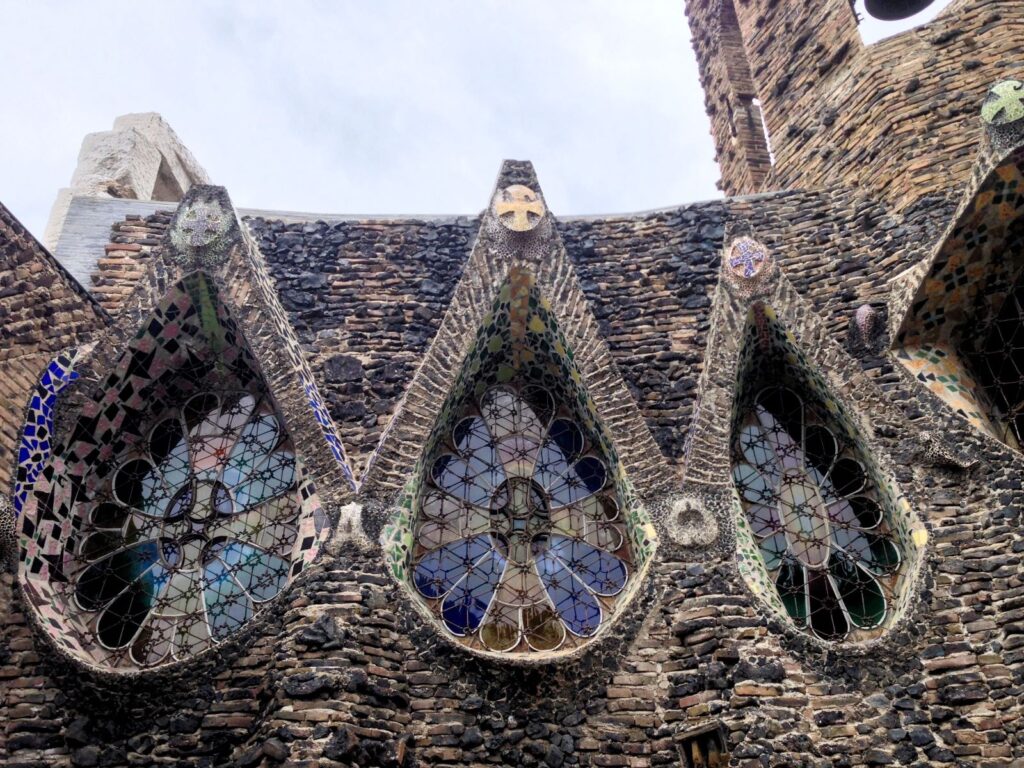
✅ Hyperboloid Windows: Double-curved openings that allow light while maintaining strength
✅ Brickwork Details: Innovative use of humble materials to create beauty
✅ Industrial Colony Context: Explore the surrounding worker community Gaudí helped design
Practical Information
| Detail | Information |
|---|---|
| Tickets | Basic €6; Combined with colony museum €9; Guided €12 |
| Booking | Not usually required; small site rarely sells out |
| Best Time | Morning (10 AM) to combine with Barcelona visit; allow 2.5-3 hours total including travel |
| Duration | 45 minutes-1 hour for crypt; 2-3 hours including colony exploration |
| Доступность | Crypt partially accessible; colony paths mostly accessible; check ahead for specific needs |
| Photography | Allowed throughout; unique architectural details; fewer tourists for photos |
Полезные советы
🔹 Visit if you’re a Gaudí enthusiast—it’s the “missing link” between early work and Sagrada Família
🔹 Take the train from Plaça Espanya (L1 to Santa Coloma de Cervelló); scenic 20-minute ride
🔹 Combine with a Gràcia or Sants neighborhood visit to minimize travel time
🔹 Less crowded alternative for experiencing Gaudí’s structural innovations up close
Chapter 3: Beyond the Seven – Other Gaudí Works Worth Visiting
While the UNESCO Seven are essential, Gaudí’s footprint in Barcelona extends further. These additional sites offer deeper context and fewer crowds.
🏠 Casa Calvet (Carrer de Casp, 29)
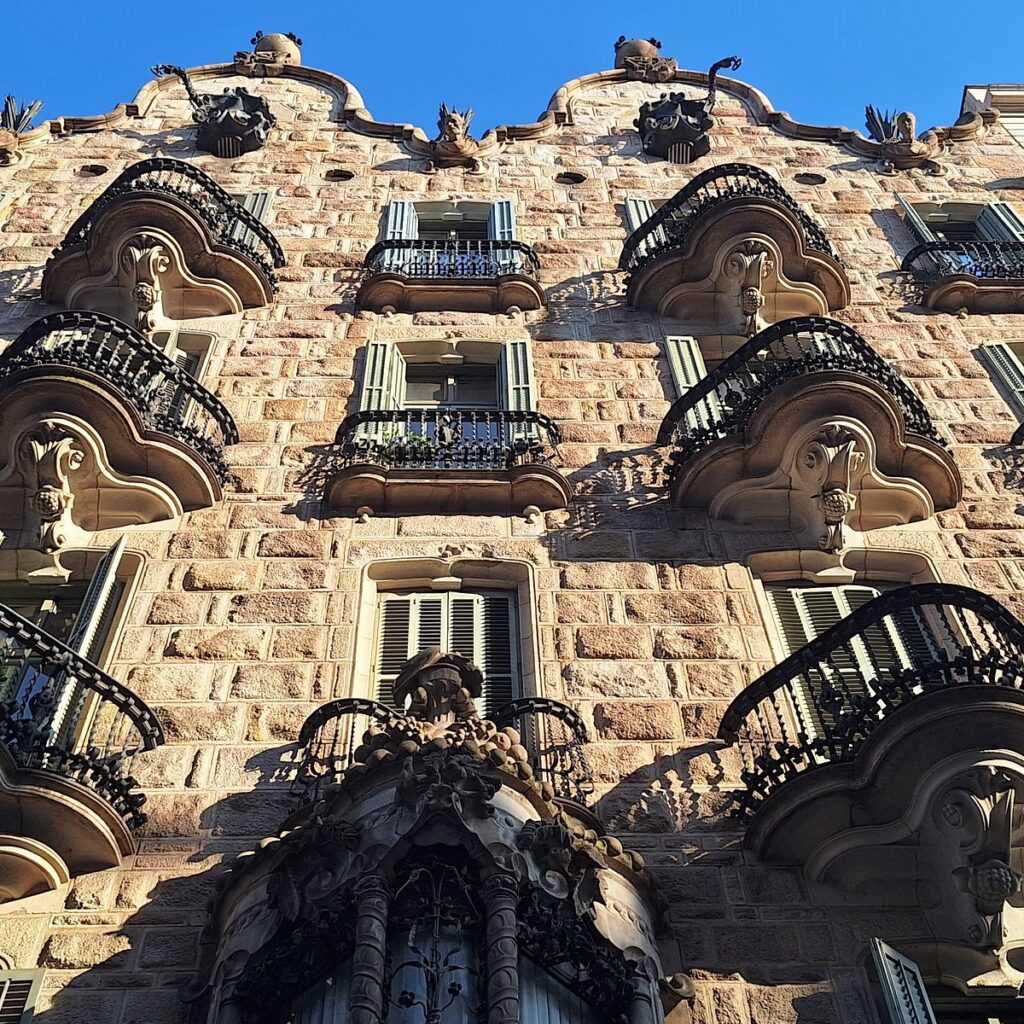
Built: 1898-1899 | Style: Early Modernisme with subtle organic elements
Gaudí’s most conventional building—designed to win a city architecture prize (which it did). Look for:
- Subtle organic details in the facade ornamentation
- Innovative interior layout with central light well
- Period furniture designed by Gaudí (some still in place)
Visit Tip: Now houses a restaurant; you can dine in a Gaudí-designed space without a museum ticket.
🏢 Bellesguard (Carrer de Bellesguard, 20)

Built: 1900-1909 | Style: Neo-Gothic with organic elements
A lesser-known Gaudí house built on the site of a medieval castle. Features:
- Stone facade with Gothic arches and Gaudí’s signature curves
- Stunning stained glass windows
- Beautiful gardens with panoramic city views
Visit Tip: Requires guided tour; book ahead. Perfect for Gaudí completists seeking off-the-beaten-path experiences.
🎓 Gaudí House Museum (Inside Park Güell)
Built: 1884 (by Francesc Berenguer); Gaudí lived here 1906-1925
Not designed by Gaudí, but his home for nearly 20 years. Now a museum displaying:
- Gaudí’s personal belongings, furniture, and design objects
- Models and drawings of his projects
- Intimate glimpse into the architect’s daily life
Visit Tip: Separate ticket from Park Güell Monumental Core; worth it for devoted fans.
🕊️ Sagrada Família Schools
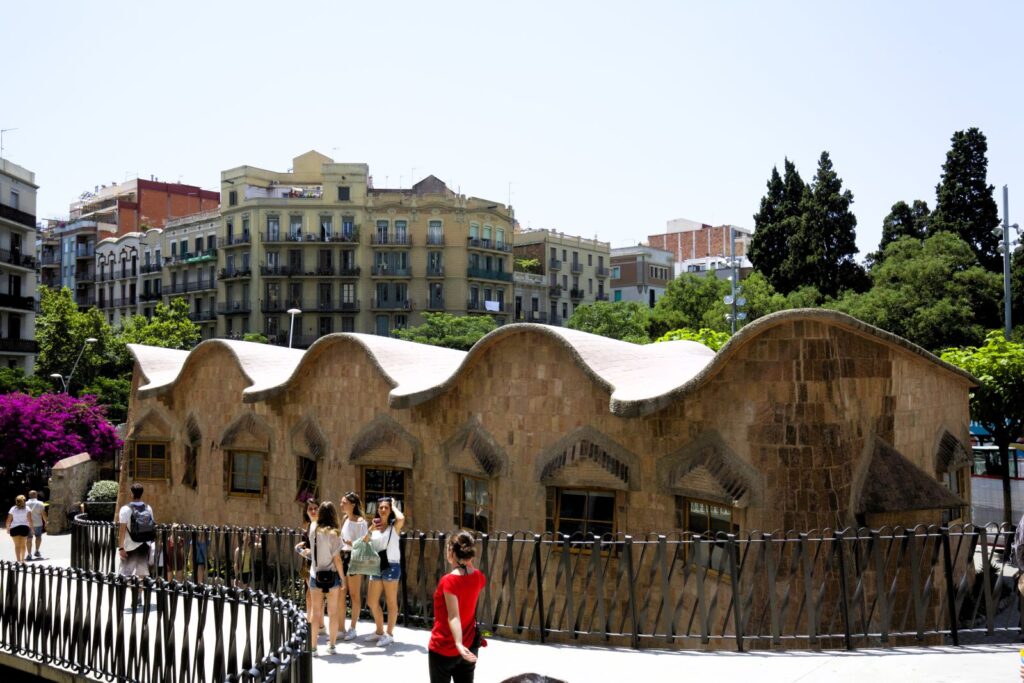
Built: 1909 | Style: Simple brick organic forms
A small building Gaudí designed for the children of construction workers. Features:
- Wavy brick walls demonstrating beauty with minimal materials
- Innovative structural solutions on a tiny budget
- Symbol of Gaudí’s social conscience
Visit Tip: Exterior viewing only; located on Passion Facade side of Sagrada Família. Quick photo stop.
Chapter 4: Understanding Gaudí’s Style – A Tourist’s Decoder Ring
To truly appreciate Gaudí’s buildings, learn to “read” his architectural language. Here are the key elements to recognize anywhere.
🌿 Nature as Blueprint
Gaudí didn’t imitate nature—he studied its engineering principles:
| Natural Element | Gaudí’s Architectural Translation | Where to See It |
|---|---|---|
| Tree trunk | Columns that branch to support vaults | Sagrada Família interior, Park Güell hypostyle hall |
| Honeycomb | Hexagonal tiles and structural cells | Casa Batlló floors, Park Güell ceiling |
| Seashell spiral | Helical staircases and decorative motifs | Sagrada Família towers, Casa Milà stairwells |
| Bone structure | Lightweight, load-optimized frameworks | Casa Batlló balconies, Passion Facade columns |
| Light through leaves | Stained glass that filters color like forest canopy | Sagrada Família nave, Casa Batlló light well |
| Cave formations | Organic, undulating interior spaces | Sagrada Família crypt, Park Güell pathways |
Tourist Exercise: At each site, identify one natural element Gaudí translated into architecture. You’ll start seeing patterns across his work.
🎨 Trencadís: The Mosaic Magic
Trencadís (Catalan for “chopped”) is Gaudí’s signature technique: assembling broken ceramic tiles, glass, and pottery into shimmering mosaics.
Why It’s Genius:
- Recycles waste materials (sustainable before it was trendy)
- Creates dazzling light effects as sun hits different angles
- Allows complex curves impossible with uniform tiles
- Adds texture and color to architectural forms
Where to See It Best: ✅ Park Güell’s serpentine bench (longest in the world)
✅ Sagrada Família’s tower spires
✅ Casa Batlló’s roof and facade details
✅ Palau Güell’s rooftop chimneys
Photo Tip: Visit trencadís-covered areas at golden hour—low-angle sunlight makes the mosaics glow like jewels.
🔶 Symbolism in Every Detail
Gaudí embedded meaning everywhere. Learn to “read” his buildings:
| Symbol | Meaning | Where to Find It |
|---|---|---|
| Dragon | Evil defeated by faith | Casa Batlló roof (St. George legend) |
| Cross with 4 arms | Four cardinal directions / Gospels | Sagrada Família towers |
| Pine cone | Fertility, eternal life | Park Güell entrance pavilions |
| Pelican | Self-sacrifice (feeds young with own blood) | Sagrada Família Nativity Facade |
| Snail | Patience, slow progress | Decorative elements throughout |
| Turtle/Chameleon | Time/eternity vs. change/transformation | Column bases at Sagrada Família |
Tourist Challenge: Pick one symbol and hunt for it across multiple Gaudí sites. You’ll see how he wove a cohesive visual language.
💡 Light as a Building Material
Gaudí didn’t just add windows—he choreographed light:
Techniques to Notice:
- Graduated Color: Sagrada Família’s east side uses cool blues/greens (morning light); west side uses warm reds/oranges (afternoon light)
- Световые колодцы: Interior courtyards that funnel sunlight deep into buildings (Casa Milà, Casa Batlló)
- Perforated Stone: Facades that filter light like lace (Sagrada Família)
- Reflective Surfaces: Trencadís and polished stone that bounce light dynamically
Best Times to Visit for Light:
- **Morning **(9-11 AM): East-facing spaces glow with cool, serene light
- **Late Afternoon **(4-6 PM): West-facing areas burst with warm, dramatic hues
- Overcast Days: Actually enhance stained-glass colors by reducing harsh exterior glare
Chapter 5: Ticket Strategies – How to Book Smart & Save Money
🎫 Understanding Gaudí Ticket Types
Most Gaudí sites offer similar ticket tiers:
| Тип билета | What’s Included | Лучше всего подходит для | Price Range |
|---|---|---|---|
| Basic Entry | Site access + basic audio guide | Budget travelers, return visitors | €10-35 |
| Audio Guide Upgrade | Multilingual commentary + app | First-timers, history lovers | +€5-10 |
| Guided Tour | Expert-led small group | Deep context, skip-the-line access | +€15-25 |
| Premium Experience | AR features, rooftop access, exclusive areas | Photography enthusiasts, special occasions | +€10-20 |
| Combined Tickets | Multiple Gaudí sites + transport | Multi-site itineraries | €40-85 |
💰 Money-Saving Strategies
✅ Book Online in Advance: Avoid third-party markups (often 20-50% higher)
✅ Choose Basic + Audio: Skip expensive guided tours if you’re self-motivated
✅ Visit Off-Peak: January-February tickets sometimes have slight discounts
✅ Combine Wisely: Only buy combo tickets if you’ll actually use all components
✅ Bring ID: Don’t miss eligible discounts (student, senior, child) due to forgotten documentation
✅ Free Exterior Viewing: Many Gaudí buildings can be admired from the street for free
Avoid These “Savings” Traps: ❌ “Last-minute discount” websites (often scams or expired inventory)
❌ Street vendors selling “cheap tickets” (almost always fraudulent)
❌ Skipping audio guides to save €5—you’ll miss crucial context
❌ Buying combo tickets you won’t fully use (do the math first)
🚨 Critical Booking Rules
- Саграда Фамилия: Book 3-6 weeks ahead for tower access; timed entry strict
- Парк Гуэль: Timed entry required for Monumental Core; book 2-4 weeks ahead
- Casa Batlló/Casa Milà: Book 2-3 weeks ahead for peak season; timed entry
- Casa Vicens/Palau Güell: Less crowded; booking recommended but often available same-day
- Colònia Güell: Rarely sells out; booking not usually required
Полезный совет: Create accounts on official websites before your trip to speed up booking. Save confirmation emails + screenshot QR codes as backup.
🎁 Discount Eligibility
Most sites offer reduced pricing for:
| Category | Discount | Requirements |
|---|---|---|
| Students | ~10-15% off | Valid student ID (international accepted) |
| **Seniors **(65+) | ~10-15% off | Government-issued ID showing age |
| **Children **(under 11) | FREE at most sites | Must still reserve timed ticket |
| Disabled Visitors | ~15% off + companion free | Disability certification |
| Barcelona Residents | Special rates | Proof of local address |
Important: Discounts require valid ID at entry. Without ID, you’ll pay standard adult rate.
Chapter 6: Photography Guide – Capturing Gaudí’s Genius
📷 Best Times for Photography by Site
| Site | Best Light | Best for | Полезный совет |
|---|---|---|---|
| Саграда Фамилия | Morning (east), Afternoon (west) | Stained glass, interior columns | Book tower access for unique angles |
| Парк Гуэль | Sunrise or sunset | Trencadís bench, city views | Enter via Carretera del Carmel for fewer crowds |
| Дом Батльо | Late afternoon/sunset | Facade scales, rooftop dragon | Choose Gold ticket for rooftop access |
| Дом Мила | Golden hour or Night Experience | Rooftop chimneys, facade waves | Night projections create magical photos |
| Дом Виченс | Morning light | Tile patterns, garden details | Less crowded = more photo freedom |
| Палау Гуэль | Midday for interior, sunset for rooftop | Central salon ceiling, chimneys | Combine with Raval street photography |
| Colònia Güell | Overcast days for even light | Structural details, brickwork | Fewer tourists = uninterrupted shooting |
🎨 Composition Strategies for Gaudí Architecture
1. Embrace Curves Over Straight Lines Gaudí rejected right angles. Your compositions should celebrate curves:
- Frame branching columns as they split toward the ceiling
- Follow the undulating facade lines
- Use curved staircases as leading lines
2. Capture Light as Subject Don’t just photograph architecture illuminated by light—photograph the light itself:
- Capture colored light projected on stone floors
- Show light shafts penetrating the space
- Frame silhouettes against glowing stained glass
3. Highlight Symbolic Details Gaudí embedded meaning everywhere. Zoom in on:
- Animal sculptures with symbolic meaning
- Numerical patterns (like the Magic Square)
- Plant motifs that reference nature
4. Use Scale to Show Monumentality Include people (respectfully) to show scale:
- Tiny figures beneath massive columns
- Silhouettes against stained glass
- Worshippers in prayer (with permission)
⚙️ Technical Settings Guide
**For Stained Glass Interiors **(Sagrada Família)
Mode: Aperture Priority (A/Av)
Aperture: f/2.8-f/4 (maximum light)
ISO: 1600-3200 (don't fear high ISO)
Shutter: 1/60s minimum (handheld)
White Balance: Cloudy or Shade (enhances warmth)
Format: RAW (essential for dynamic range)
**For Exterior Facades **(Daylight)
Mode: Aperture Priority or Manual
Aperture: f/8-f/11 (sharpness across facade)
ISO: 100-200 (base ISO for quality)
Shutter: 1/125s or faster (handheld)
White Balance: Daylight or Cloudy
Format: RAW + JPEG
For Trencadís Mosaics:
Mode: Aperture Priority
Aperture: f/4-f/5.6 (balance detail and background)
ISO: 200-400 (good light conditions)
Shutter: 1/250s or faster (freeze detail)
Polarizing Filter: Reduces glare on ceramic tiles
Format: RAW for editing flexibility
📱 Smartphone Photography Masterclass
You don’t need expensive gear. Modern smartphones can capture stunning Gaudí images:
iPhone Pro Tips:
- Use ProRAW for maximum editing flexibility
- Enable Smart HDR for high-contrast scenes (common with stained glass)
- Tap to focus on details, then slide to adjust exposure
- Use Night mode for blue hour shots (hold steady)
- Shoot in Portrait mode for architectural details (creates pleasing blur)
Android Pro Tips:
- Use Pro mode for manual ISO, shutter, and focus control
- Enable HDR+ (Pixel) or Scene Optimizer (Samsung) for dynamic range
- Tap to focus and adjust exposure; lock AE/AF for consistency
- Use Night Sight for low-light blue hour photography
- Shoot in RAW if available for post-processing flexibility
Universal Smartphone Techniques:
- Clean your lens before shooting (dust reduces sharpness)
- Use grid lines for composition (enable in camera settings)
- Tap and hold to lock focus/exposure for consistent shots
- Use volume buttons as shutter release (reduces camera shake)
- Edit in Lightroom Mobile or Snapseed for professional results
Chapter 7: Smart Itineraries – Maximizing Your Gaudí Experience
🕐 Half-Day Express (4-5 hours)
Perfect for: First-time visitors with limited time
**Morning Option **(Start 8:30 AM)
- 8:30 AM: Sagrada Família (first entry; 2 hours)
- 10:30 AM: Walk to Park Güell (20 min) or take Metro L5
- 11:00 AM: Park Güell Monumental Core (1.5 hours)
- 12:30 PM: Lunch in Gràcia neighborhood
- 2:00 PM: Optional: Casa Vicens (1 hour) if energy allows
**Afternoon Option **(Start 2 PM)
- 2:00 PM: Casa Batlló (1 hour)
- 3:15 PM: Walk to Casa Milà (5 min)
- 3:30 PM: Casa Milà (1 hour)
- 4:45 PM: Coffee break on Passeig de Gràcia
- 5:30 PM: Sagrada Família exterior photos at golden hour
Полезный совет: Book timed entries in advance; allow buffer time between sites.
🌞 Full-Day Deep Dive (8-9 hours)
Perfect for: Gaudí enthusiasts wanting comprehensive experience
**Morning **(8 AM-1 PM)
- 8:00 AM: Sagrada Família (first entry; 2.5 hours with towers)
- 10:30 AM: Walk to Park Güell or take Metro L5
- 11:00 AM: Park Güell Monumental Core + Gaudí House (2 hours)
- 1:00 PM: Lunch in Gràcia neighborhood
**Afternoon **(3-8 PM)
- 3:00 PM: Casa Vicens (1 hour) OR Palau Güell (1 hour)
- 4:15 PM: Metro to Passeig de Gràcia
- 4:45 PM: Casa Batlló (1 hour)
- 6:00 PM: Casa Milà (1 hour; consider Night Experience if available)
- 7:30 PM: Dinner on Passeig de Gràcia or in Eixample
Полезный совет: Wear comfortable shoes; Barcelona is hilly. Stay hydrated; carry water.
🗓️ Multi-Day Gaudí Pilgrimage (2-3 days)
Perfect for: Architecture students, photographers, devoted fans
Day 1: The Masterpieces
- Morning: Sagrada Família (interior + towers + museum)
- Afternoon: Park Güell (full park exploration)
- Evening: Dinner in Gràcia; sunset photos at Bunkers del Carmel
Day 2: Passeig de Gràcia & Early Works
- Morning: Casa Batlló (Blue/Gold experience)
- Midday: Casa Milà (including apartment + rooftop)
- Afternoon: Casa Vicens (early Gaudí context)
- Evening: Tapas crawl in Eixample
Day 3: Hidden Gems & Context
- Morning: Palau Güell + Raval neighborhood exploration
- Afternoon: Colònia Güell excursion (train + crypt + colony)
- Evening: Farewell dinner with Sagrada Família illuminated views
Полезный совет: Purchase Barcelona Card or Hola Barcelona transport pass for unlimited Metro/bus travel.
🎯 Tailored Itineraries by Traveler Type
For Families with Children:
- Focus on Park Güell (playful, interactive) + Sagrada Família (visual spectacle)
- Include breaks in parks; choose sites with elevators and restrooms
- Allow flexible timing; don’t overschedule
For Photography Enthusiasts:
- Prioritize golden hour/sunset visits
- Book tower access at Sagrada Família for unique angles
- Allow extra time at each site for composition experimentation
For Architecture Students:
- Include Colònia Güell for structural context
- Visit museum spaces at each site for technical insights
- Sketch on-site; bring measuring tools if permitted
For Budget Travelers:
- Focus on free exterior viewing + 1-2 paid interior visits
- Choose Casa Vicens or Palau Güell for affordable Gaudí experiences
- Picnic in Park Güell’s free outer areas
Chapter 8: Practical Logistics – Getting Around Gaudí’s Barcelona
🚇 Metro & Transport Guide
Barcelona’s Metro is the fastest way to reach Gaudí sites:
| Site | Nearest Metro | Линии | Walking Time |
|---|---|---|---|
| Саграда Фамилия | Саграда Фамилия | L2 (Purple), L5 (Blue) | 2 min |
| Парк Гуэль | Lesseps / Vallcarca | L3 (Green) | 15-20 min uphill |
| Дом Батльо | Пасео де Грасия | L2, L3, L4 | 1 min |
| Дом Мила | Diagonal / Passeig de Gràcia | L3, L5 / L2, L3, L4 | 3-5 min |
| Дом Виченс | Fontana / Lesseps | L3 (Green) | 5-8 min |
| Палау Гуэль | Liceu / Paral·lel | L3 (Green) / L2, L3 | 5-8 min |
| Colònia Güell | Santa Coloma de Cervelló | L1 (Red) from Plaça Espanya | 20-min train + 5 min walk |
Transport Pass Recommendations: ✅ T-Casual: 10 rides for €11.35; shareable; best value for most tourists
✅ Hola Barcelona: Unlimited travel for 48-120 hours; includes airport Metro
✅ Карта Барселоны: Unlimited transport + museum discounts; best for culture-focused itineraries
🚶 Walking Routes Between Sites
**Passeig de Gràcia Circuit **(Casa Batlló → Casa Milà)
- Distance: 600m | Time: 8 minutes
- Route: Walk north on Passeig de Gràcia; admire Modernisme buildings en route
- Bonus: Stop at Apple Store (former Casa Morera) for free Modernisme architecture
**Gràcia Triangle **(Park Güell → Casa Vicens → Sagrada Família)
- Distance: 2.5km total | Time: 30 minutes walking or 15 min Metro
- Route: Park Güell → Carrer de Larrard → Travessera de Dalt → Carrer de les Carolines (Casa Vicens) → Carrer de Sardenya → Sagrada Família
- Bonus: Explore Gràcia’s charming plazas and local cafés
**Raval to Eixample **(Palau Güell → Sagrada Família)
- Distance: 2km | Time: 25 minutes walking or 10 min Metro
- Route: Palau Güell → Carrer Nou de la Rambla → Plaça Catalunya → Passeig de Gràcia → Sagrada Família
- Bonus: Experience Barcelona’s neighborhood diversity
♿ Accessibility Considerations
Wheelchair Access by Site:
| Site | Accessibility Level | Примечания |
|---|---|---|
| Саграда Фамилия | ✅ Excellent | Elevators to all levels except towers; accessible restrooms |
| Парк Гуэль | ⚠️ Limited | Outer park accessible; Monumental Core has steep paths; shuttle available |
| Дом Батльо | ✅ Excellent | Elevator to all floors; accessible audio guide |
| Дом Мила | ✅ Good | Elevator to most areas; rooftop has some steps |
| Дом Виченс | ✅ Excellent | Elevator to all floors; accessible garden paths |
| Палау Гуэль | ⚠️ Partial | Elevator to most areas; some historic sections have steps |
| Colònia Güell | ⚠️ Partial | Crypt partially accessible; colony paths mostly accessible |
Pro Tips for Accessible Visiting:
- Contact sites directly 48h ahead to arrange assistance
- Request wheelchair loan at Sagrada Família (limited supply)
- Use TMB app for accessible Metro route planning
- Для удобства передвижения посетите это место в непиковые часы.
Chapter 9: Sustainable Tourism – Visiting Gaudí’s Legacy Responsibly
🌱 Why Responsible Tourism Matters
Gaudí’s buildings are not just tourist attractions—they are:
- Living heritage requiring ongoing conservation
- Active spaces (Sagrada Família is a working basilica)
- Cultural treasures belonging to Barcelona’s community
- Fragile artworks vulnerable to over-tourism
Your choices as a visitor directly impact their preservation.
✅ Do’s for Responsible Gaudí Tourism
✅ Book through official channels: Ensures revenue supports conservation
✅ Follow all site rules: No flash, no touching, respect dress codes
✅ Visit during off-peak times: Reduces crowd pressure on fragile spaces
✅ Use public transport: Minimizes carbon footprint and congestion
✅ Support local businesses: Eat at neighborhood restaurants, buy from local artisans
✅ Learn before you visit: Understanding Gaudí’s vision deepens appreciation and respect
✅ Share thoughtfully: Post photos with educational captions; inspire respectful tourism
❌ Don’ts to Avoid
❌ Don’t touch sculptures or stained glass: Skin oils damage stone and glass over time
❌ Don’t use flash photography: Damages artwork and disturbs other visitors
❌ Don’t ignore dress codes: Sagrada Família enforces shoulders/knees covered
❌ Don’t buy from street vendors: Often sell counterfeit tickets or overpriced souvenirs
❌ Don’t block pathways for photos: Be mindful of other visitors and site flow
❌ Don’t leave trash: Carry out what you carry in; use designated bins
💰 How Your Visit Supports Preservation
The Sagrada Família receives no government funding. All construction and conservation costs come from:
- Ticket sales (~80%)
- Private donations (~15%)
- Merchandise and publications (~5%)
Your ticket purchase directly funds:
- Ongoing construction of unfinished elements
- Conservation of completed sections
- Research and documentation
- Educational programs
- Staff salaries
This makes you a patron—contributing to the continuation of Gaudí’s vision.
Chapter 10: Frequently Asked Questions – Gaudí in Barcelona
❓ Which Gaudí building should I visit first?
A: Саграда Фамилия offers the most complete introduction to Gaudí’s vision: nature-inspired structure, spiritual symbolism, technical innovation, and breathtaking beauty. Pair it with Дом Батльо for a contrasting, more intimate experience.
❓ How many Gaudí sites can I realistically visit in one day?
A: 2-3 major sites is comfortable for most visitors:
- Morning: Sagrada Família (2-2.5 hours)
- Afternoon: Park Güell OR Casa Batlló + Casa Milà (2-3 hours total)
- Evening: Exterior photos or one smaller site
Attempting more than 3 major sites in one day leads to “Gaudí fatigue”—diminishing appreciation due to overload.
❓ Do I need to understand architecture to appreciate Gaudí?
A: Absolutely not! Gaudí designed for emotional impact first. If a space makes you pause, wonder, or feel awe—you’re experiencing it exactly as intended. Use this guide to deepen your appreciation, not as a test.
❓ Are Gaudí’s buildings safe with ongoing construction (especially Sagrada Família)?
A: Yes. All visitor areas are rigorously inspected and separated from construction zones. At Sagrada Família, you may see cranes—but this is part of the living history. Safety protocols are strict.
❓ Can I visit Gaudí sites without a guide?
A: Yes, but highly recommended to use an audio guide or app. Gaudí’s symbolism and engineering aren’t always obvious. The investment (~€5-10) transforms your visit from “pretty building” to “profound experience.”
❓ What if I can’t get tickets to Sagrada Família?
A: Sold out for your dates? Try these alternatives:
- Check for cancellations: Refresh official website daily; last-minute slots sometimes open
- Adjust timing: Try early morning (9 AM) or late afternoon (5+ PM) slots—less popular
- Visit exterior only: Photograph facades from public streets; experience the scale without entry
- Explore other Gaudí sites: Park Güell, Casa Batlló, or Casa Milà may have better availability
- Book for next trip: If in Barcelona long-term, plan Sagrada Família for your final days
❓ Is it worth visiting lesser-known Gaudí sites like Casa Vicens or Colònia Güell?
A: If you have time, absolutely. These sites show Gaudí’s creative process and are far less crowded. Casa Vicens reveals his early experimentation; Colònia Güell is the “laboratory” for Sagrada Família. Perfect for repeat visitors or architecture enthusiasts.
❓ What’s the one thing I shouldn’t miss at any Gaudí site?
A: Look up. Gaudí designed ceilings, vaults, and rooftop details with extraordinary care. The “fifth facade” (the roof) is often his most imaginative work. Also, pause to feel the light—how it moves, changes color, and creates atmosphere. This is Gaudí’s true magic.
Chapter 11: Your Pre-Visit Planning Checklist
✅ 2 Weeks Before Your Trip
Research & Booking:
- Identify priority Gaudí sites based on interests and time
- Book timed tickets for Sagrada Família, Park Güell, Casa Batlló
- Reserve guided tours if desired (book early for small groups)
- Download official apps: Sagrada Família, Park Güell, TMB (transport)
- Save ticket QR codes + print backups; screenshot for offline access
Accommodation Strategy:
- Choose lodging near Metro lines L2, L3, or L5 for easy Gaudí access
- Consider Eixample for central location; Gràcia for neighborhood charm
- Verify hotel has elevator if mobility is a concern
✅ 1 Week Before Your Trip
Practical Prep:
- Check weather forecast; pack accordingly (layers, rain gear, sun protection)
- Charge all devices; pack portable batteries for phones/cameras
- Format memory cards; ensure sufficient photo storage
- Pack comfortable walking shoes (Barcelona is hilly; you’ll walk 8-15km/day)
- Prepare dress code items: scarf/shawl for Sagrada Família (shoulders/knees covered)
Cultural Prep:
- Watch a Gaudí documentary or read a short biography
- Learn 5 basic Catalan phrases: Bon dia (good day), Gràcies (thank you), Si us plau (please), Perdó (excuse me), Adéu (goodbye)
- Review symbolism guide to enhance on-site appreciation
✅ Day Before Your Gaudí Day(s)
Final Logistics:
- Confirm ticket times and entry requirements
- Plan transport routes using TMB app or Google Maps offline
- Set phone alarms for departure times + buffer
- Pack day bag: ticket backups, water bottle, sunscreen, hat, camera gear, light layer
- Eat a good dinner; rest well—Gaudí exploration is mentally and physically engaging
✅ Day Of – Morning Routine
Before Leaving Hotel:
- Check real-time Metro status via TMB app
- Предусмотрите резервное время на случай непредвиденных задержек.
- Have ticket QR codes ready (phone brightness up)
- Dress appropriately for first site (consider Sagrada Família dress code if visiting early)
- Stay hydrated; eat breakfast (no food inside most Gaudí sites)
Your Journey Through Genius
Visiting Gaudí’s Barcelona isn’t just sightseeing—it’s stepping into the mind of a visionary who saw the world differently. Every curve, every color, every beam of light was intentional. Every building tells a story of faith, nature, and human creativity.
When you stand beneath the branching columns of the Sagrada Família, you’re not just seeing stone—you’re witnessing a prayer in architecture. When you run your hand along the serpentine bench at Park Güell, you’re touching a mosaic of hope. When you gaze up at the dragon-back roof of Casa Batlló, you’re reading a fairy tale carved in tile and iron.
Gaudí didn’t just build structures. He built invitations—to wonder, to contemplate, to see the sacred in the everyday.
So plan wisely. Arrive with curiosity. Look up. Breathe. And let Barcelona’s genius work its magic on you.
Your journey through Gaudí’s world awaits.