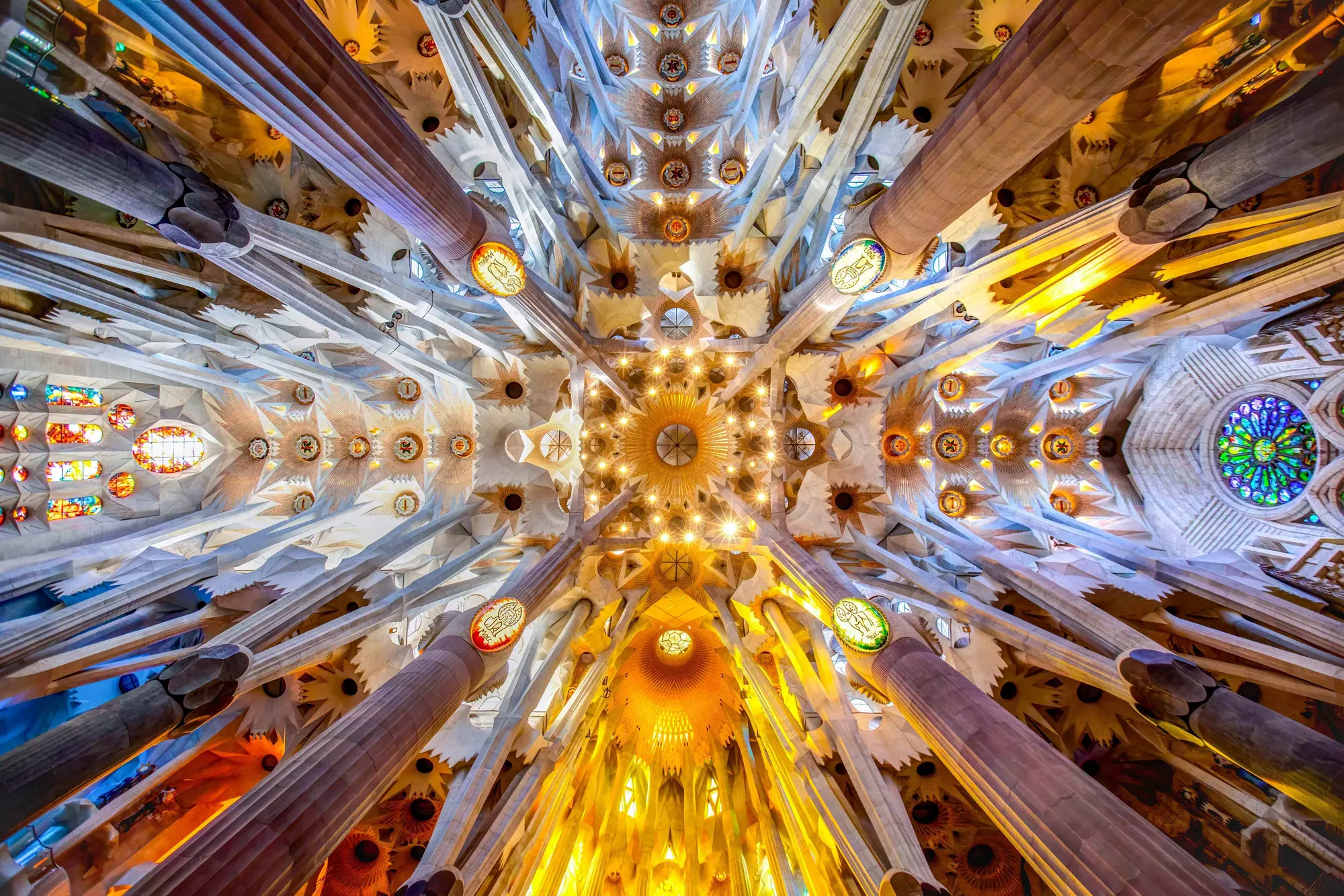
The Sagrada Família is often called a “Stone Bible” because Antoni Gaudí designed the basilica to teach the Christian faith through architecture, sculpture, and light—making the story of salvation visible, tangible, and accessible to everyone, regardless of literacy or language.
Just as a Bible uses words to convey spiritual truth, Gaudí used stone, color, geometry, and symbolism to create a three-dimensional catechism that visitors can “read” with their eyes.
📖 The Facades: Chapters in Stone
Each of the Sagrada Família’s three grand facades represents a major “chapter” in the life of Christ:
1. Nativity Façade (East) – The Book of Birth
- Theme: Joy, life, hope, incarnation
- Scenes depicted: The Annunciation, Nativity, Adoration of the Shepherds, Flight into Egypt
- Symbolism: Abundant flora and fauna represent God’s creation; the pelican symbolizes Christ’s self-sacrifice; the Tree of Life connects heaven and earth
- Light: Cool blues and greens of the eastern stained glass evoke dawn and new beginnings
2. Passion Façade (West) – The Book of Suffering
- Theme: Sacrifice, redemption, death
- Scenes depicted: The Last Supper, Kiss of Judas, Crucifixion, Resurrection
- Symbolism: Stark, angular forms convey pain; the Magic Square (all rows add to 33, Christ’s age at death) hides numerological meaning; bare stone reflects austerity
- Light: Warm reds and oranges of the western stained glass evoke sunset and sacrifice
3. Glory Façade (South, under construction) – The Book of Eternal Life
- Theme: Resurrection, judgment, glory, humanity’s path to God
- Planned scenes: Death, Final Judgment, Heaven, Hell, the virtues and vices
- Symbolism: Will be the largest and most ornate facade, representing the ultimate hope of Christian faith
- Light: Will face the midday sun, symbolizing divine illumination
Together, the three facades tell the complete Gospel narrative—from incarnation to resurrection—just as the Bible does through text.
🔤 Symbolic Language: Reading the Details
Gaudí embedded meaning into every element, creating a visual vocabulary that rewards close observation:
| Symbol | Meaning | Biblical Connection |
|---|---|---|
| **12 Apostles **(towers) | Foundation of the Church | Matthew 10:2-4 |
| **4 Evangelists **(towers) | Authors of the Gospels | Matthew, Mark, Luke, John |
| **Virgin Mary **(tower) | Mother of Christ, intercessor | Luke 1:26-38 |
| **Jesus Christ **(central tower) | Head of the Church, Light of the World | John 8:12 |
| Pelican | Self-sacrifice (feeds young with its own blood) | Christ’s atonement |
| Turtle/Chameleon | Eternity vs. transformation | Ecclesiastes 3:1; 2 Corinthians 5:17 |
| Pine cone | Fertility, eternal life | Resurrection hope |
| Snail | Patience, slow progress | “Be still, and know” (Psalm 46:10) |
| **Magic Square **(33) | Age of Christ at crucifixion | Historical/theological significance |
| Gradient stained glass | Spiritual journey from birth (cool) to sacrifice (warm) to glory (light) | Romans 8:18-25 |
Tourist Tip: Bring binoculars or use your phone’s zoom to spot these details. The more you look, the more you “read.”
💡 Light as Divine Revelation
Gaudí didn’t just illuminate the Sagrada Família—he used light as a theological tool:
- **East windows **(cool blues/greens): Morning light symbolizes birth, hope, and the dawn of salvation
- **West windows **(warm reds/oranges): Afternoon light represents sacrifice, passion, and the fire of the Spirit
- Central light wells: Flood the altar area with white light, symbolizing Christ as “the Light of the World” (John 8:12)
As sunlight moves through the day, the interior transforms—just as spiritual understanding deepens over time. Gaudí wanted visitors to feel the presence of the divine through light, not just see it.
🎓 A Catechism for All People
In Gaudí’s era (late 19th–early 20th century), many people were illiterate or lacked access to religious education. The Sagrada Família was designed to be inclusive teaching:
✅ Visual storytelling: Biblical scenes in sculpture require no reading ability
✅ Universal symbols: Animals, plants, and numbers convey meaning across cultures
✅ Emotional impact: Light, space, and form evoke awe and contemplation
✅ Progressive revelation: The building’s layout guides visitors from birth (Nativity) to sacrifice (Passion) to hope (Glory)
Gaudí himself said:
“The Sagrada Família is a temple of atonement. Its purpose is to make people think about God, about the meaning of life, about eternity.”
🌳 Nature as God’s First Book
Gaudí believed that nature is God’s greatest masterpiece, and that studying it reveals divine wisdom. The Sagrada Família reflects this belief:
- Columns branch like trees, teaching that faith grows and bears fruit
- Hyperboloid windows mimic natural forms, showing that divine geometry underlies creation
- Organic curves reject rigid human logic in favor of God’s flowing design
In this sense, the “Stone Bible” doesn’t just recount scripture—it invites visitors to read the “book of nature” alongside the written Word.
🔍 How to “Read” the Stone Bible as a Tourist
- Start with the facades: Walk around the exterior and identify the Nativity (ornate, joyful) vs. Passion (stark, dramatic) styles.
- Look for symbols: Hunt for animals, plants, and numbers with hidden meanings.
- Notice the light: Visit at different times of day to see how colored glass transforms the space.
- Ascend the towers: Gain perspective on how the whole “story” fits together.
- Visit the museum: See Gaudí’s original models and sketches to understand his intentions.
- Pause and reflect: The Stone Bible isn’t meant to be rushed. Allow time for contemplation.
Conclusion: A Living Scripture in Stone
The Sagrada Família is called a “Stone Bible” because it does what scripture does: it reveals truth, invites reflection, and points toward the divine. But unlike a book that sits on a shelf, this Bible is alive—under construction, visited by millions, illuminated by the sun, and experienced with all the senses.
When you walk through its doors, you’re not just entering a building. You’re opening a sacred text carved in stone, written in light, and still being completed by generations of faithful artisans.
That is the miracle of the Stone Bible: it doesn’t just tell the story of faith—it invites you to become part of it.
Have you “read” the Sagrada Família’s Stone Bible? What symbol or scene moved you most? Share your discoveries in the comments below! 🙏✨