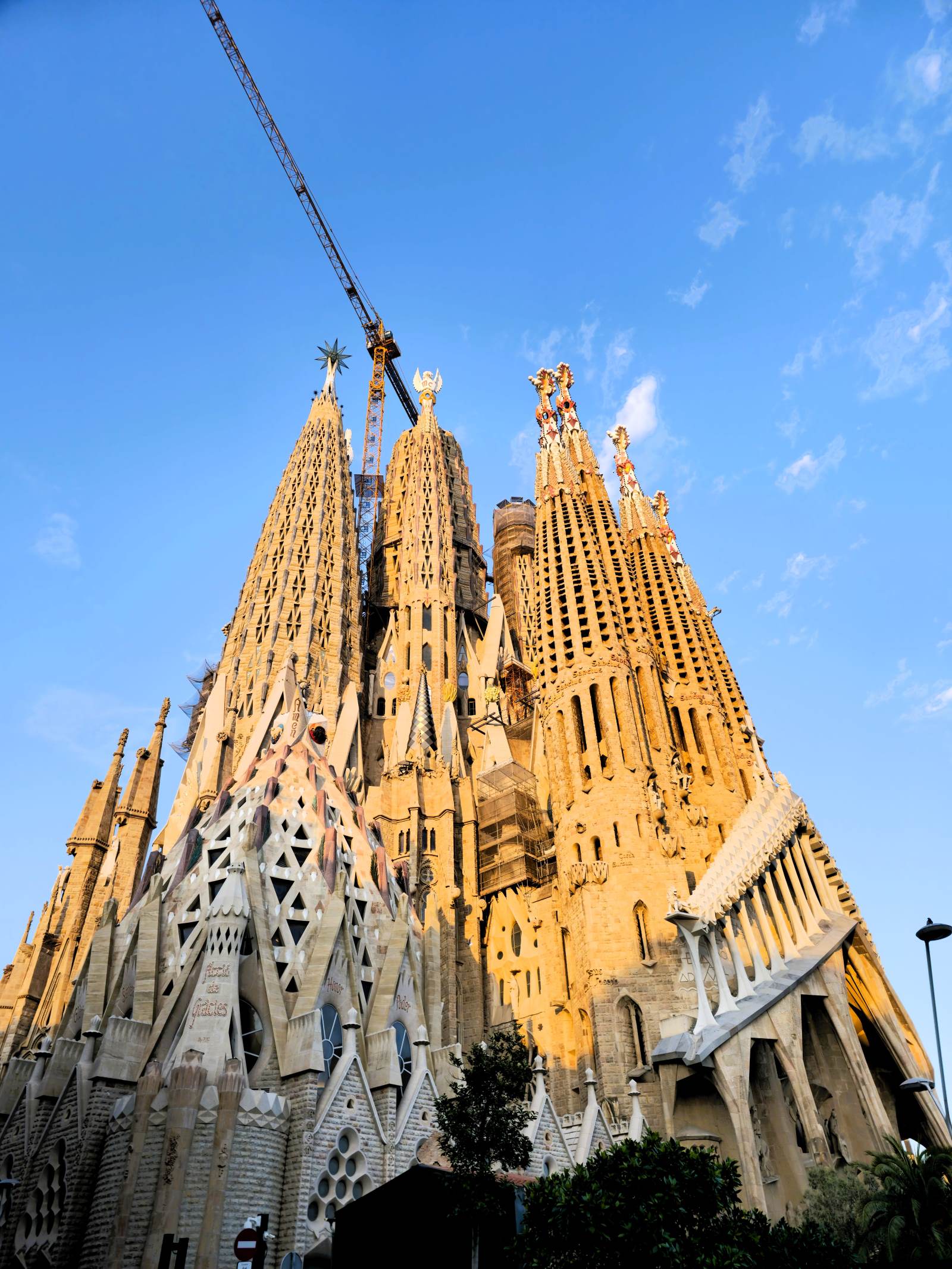
Introduction: An Unfinished Symphony in Stone
When you stand beneath the soaring columns of the Sagrada Família, looking up at light filtering through stained glass like jewels, you’re witnessing more than 140 years of devotion, innovation, and perseverance. This extraordinary basilica, unlike any other on Earth, has been under construction since September 18, 1882 – making it one of the longest-running architectural projects in human history.
But here’s what makes it truly remarkable: Antoni Gaudí, the genius architect who transformed a simple neo-Gothic design into an organic masterpiece of nature-inspired architecture, knew he would never see it completed. When asked about the seemingly impossible timeline, he famously said: “My client is not in a hurry.” He was referring to God.
For tourists visiting Barcelona, understanding the history of Sagrada Família adds profound depth to your visit. Each stone tells a story spanning three centuries, two world wars, a civil war, and generations of artisans who dedicated their lives to realizing one man’s visionary dream.
This comprehensive guide walks you through every major milestone from 1882 to present day, helping you appreciate what you’re seeing when you explore this UNESCO World Heritage Site.
Chapter 1: Humble Beginnings (1882-1883)
The Original Vision: A Different Sagrada Família
September 18, 1882 marks the official start of construction, but the Sagrada Família you see today bears little resemblance to the original plans. The project began under architect Francisco de Paula del Villar, who designed a conventional neo-Gothic church – think pointed arches, flying buttresses, and traditional religious architecture common in 19th-century Europe.
Key Tourist Insight: When you visit, look for remnants of Villar’s original crypt design in the lower church level. This is the only part of the basilica that reflects the initial vision.
The Foundation Stone Ceremony
On March 19, 1882 (Saint Joseph’s Day, hence “Sagrada Família” or Holy Family), the first stone was laid in a modest ceremony. The project was funded entirely by private donations from faithful Catholics and Barcelona residents – a funding model that continues today. This explains why construction pace has always depended on visitor ticket sales and donations.
Why This Matters for Tourists: The Sagrada Família receives NO government funding. Your ticket purchase directly funds ongoing construction, making you part of this historic continuation.
Chapter 2: Gaudí Takes the Helm (1883-1926)
The Architectural Revolution Begins
In November 1883, just one year after construction began, Antoni Gaudí i Cornet took over as chief architect at age 31. Villar had resigned due to disagreements with the project’s promoters. What followed was nothing short of an architectural revolution.
Who Was Gaudí?
- Born June 25, 1852, in Reus, Catalonia
- Deeply religious Catholic
- Pioneer of Catalan Modernism (Art Nouveau)
- Believed nature was God’s greatest creation
- Developed unique structural techniques based on natural forms
Gaudí’s Radical Redesign (1884-1892)
Gaudí completely scrapped Villar’s neo-Gothic plans, keeping only the already-built crypt. His new vision was revolutionary:
Nature as Architecture:
- Columns designed like tree trunks that branch to support the “canopy”
- No straight lines – “The straight line belongs to men, the curved line to God”
- Hyperboloid structures inspired by natural geometry
- Organic facades telling biblical stories through stone
The Three Grand Facades:
- Nativity Facade (East) – Birth of Jesus, life, nature (built during Gaudí’s lifetime)
- Passion Facade (West) – Death of Jesus, suffering, stark angular forms
- Glory Facade (South, main entrance) – Resurrection, humanity’s path to God (under construction)
Construction Progress Under Gaudí (1892-1926)
1891-1900: Nativity Facade Begins Gaudí focused on the Nativity Facade first, knowing he might not live to complete the entire project. He wanted to leave at least one facade finished as a guide for future generations.
Tourist Highlight: The Nativity Facade is the ONLY facade Gaudí saw substantially completed. Look for:
- Intricate stone carvings of plants and animals
- The “Tree of Life” sculpture at the center
- Four towers representing the apostles
- Scenes from Jesus’s birth
1900-1914: The Park Güell Interlude Construction slowed as Gaudí worked on other projects (Park Güell, Casa Batlló, Casa Milà). Wealthy patron Eusebi Güell funded many of these works, but the Sagrada Família remained his passion project.
1914-1926: Total Dedication At age 62, Gaudí made a life-changing decision: he abandoned all other commissions to dedicate himself exclusively to the Sagrada Família. He moved into the workshop on-site, living simply and working obsessively.
What Tourists Can See from This Period:
- The completed Nativity Facade towers
- The crypt where Gaudí is buried
- Original plaster models and drawings in the museum
- The apse (exterior semi-circular end)
Gaudí’s Innovative Construction Techniques
The Hanging Chain Model: Gaudí created an upside-down model using chains, strings, and weights to calculate perfect structural loads. When flipped, it showed the ideal arch shapes for the church. This catenary arch system allowed for:
- Thinner, lighter columns
- Greater height without buttresses
- Natural weight distribution
Tourist Tip: Visit the Sagrada Família Museum in the basement to see photographs and remnants of these models (destroyed in 1936, but documented).
Daily Life: Gaudí the Ascetic
During his final 12 years, Gaudí:
- Wore only simple, worn clothing
- Ate minimal food (often just vegetables and water)
- Slept in the workshop
- Devoted himself to prayer and work
- Became known as “God’s Architect” around Barcelona
Tragic End: June 7, 1926 At age 73, Gaudí was struck by a tram while walking to confession. Initially mistaken for a homeless beggar due to his disheveled appearance, he was eventually recognized and taken to a hospital, where he died three days later on June 10, 1926.
His funeral drew massive crowds. He was buried in the Sagrada Família crypt, where he rests today.
Pilgrimage Site: Tourists can visit Gaudí’s tomb in the crypt – a simple marker for a man who created one of the world’s most extraordinary buildings.
Chapter 3: Darkness and Destruction (1926-1944)
The Challenge of Continuation (1926-1936)
After Gaudí’s death, his assistants – led by Domènec Sugrañes i Gras – faced an enormous challenge: continue construction with only partial plans and models. Gaudí worked intuitively, often creating designs as he went. He left:
- Detailed plans for the Nativity Facade
- Rough sketches for other facades
- The famous (but incomplete) hanging model
- Written notes and calculations
Construction Continued Slowly: Despite the challenges, work progressed on the Nativity Facade towers through the late 1920s and early 1930s, following Gaudí’s established vision.
The Spanish Civil War Catastrophe (1936-1939)
July 1936: The Spanish Civil War erupted, bringing catastrophe to the Sagrada Família.
Anarchist Destruction: Revolutionary anarchists, targeting religious symbols, broke into the workshop and:
- Burned Gaudí’s original plans and drawings
- Smashed the hanging chain model into thousands of pieces
- Damaged the crypt and nativity facade
- Destroyed photographs and documentation
The Loss Was Incalculable: Gaudí’s three-dimensional models contained crucial structural information that couldn’t be fully captured in two-dimensional drawings. This destruction set the project back decades.
How They Recovered:
- Workers secretly salvaged model fragments from the debris
- Photographs taken before the war became invaluable
- Gaudí’s assistants worked from memory
- Fragments were painstakingly reassembled (some pieces still being matched today)
Tourist Note: The museum displays some of these reconstructed fragments – a testament to the dedication of Gaudí’s followers.
World War II Impact (1939-1945)
While Spain was officially neutral during WWII, the aftermath of the civil war meant:
- Severe economic hardship
- Material shortages (stone, steel, skilled labor)
- Political repression under Franco’s dictatorship
- Limited international tourism or funding
Construction Essentially Halted: From 1936 to the mid-1940s, work progressed minimally, focused mainly on repairs and preservation.
Chapter 4: Rebirth and Reconstruction (1944-1990)
Post-War Revival (1944-1960)
New Leadership: Architect Francesc Quintana took charge, working with other architects who had known Gaudí. Their mission: interpret Gaudí’s vision from fragments, photographs, and memory.
Major Decisions:
- Start the Passion Facade: They chose to build the stark, angular Passion Facade next, as it required less ornate decoration and could be built more quickly.
- Modern Materials: Use of reinforced concrete alongside traditional stone
- Improved Techniques: Application of modern engineering while respecting Gaudí’s organic forms
The Passion Facade Controversy: When construction began in 1954, the design sparked debate. Sculptor Josep Maria Subirachs created angular, expressionist figures (1987-2009) that contrasted sharply with the ornate Nativity Facade.
Tourist Observation: Compare the two facades:
- Nativity (East): Ornate, flowing, celebratory, covered in natural motifs
- Passion (West): Bare, angular, somber, skeletal forms
Both reflect Gaudí’s intention: the Nativity shows life and joy; the Passion shows suffering and death.
Technological Advances (1960-1990)
Computer-Aided Design (1980s): The introduction of computers revolutionized the project:
- 3D modeling software helped interpret Gaudí’s complex geometries
- CAD allowed precise calculations for hyperboloid structures
- Digital simulations tested structural integrity
Stone-Cutting Technology:
- Diamond wire saws cut stone with millimeter precision
- CNC machines carved complex shapes based on digital models
- Traditional hand-carving continued for decorative elements
Funding Growth: As Barcelona’s tourism industry boomed in the 1970s-80s, visitor numbers increased, providing more construction funds. The 1992 Barcelona Olympics brought international attention.
Milestones:
- 1976: Completion of Passion Facade structure
- 1986: Subirachs begins sculptural work
- 1987: Construction begins on the nave vaults
Chapter 5: Accelerating Toward Completion (1990-Present)
The Modern Era (1990-2010)
New Generation of Architects: Under Jordi Bonet i Armengol (chief architect 1985-2012), construction accelerated dramatically. His team included specialists in:
- Structural engineering
- Stone masonry
- Stained glass design
- Acoustic engineering
Major Achievements:
1992: Installation of the first nave vaults using Gaudí’s catenary arch system
2000: Construction of the central towers begins
2005: UNESCO World Heritage Site designation (Gaudí’s works in Barcelona)
2010: Pope Benedict XVI consecrates the basilica, declaring it a Minor Basilica
Tourist Impact of Consecration: The 2010 consecration meant the Sagrada Família could officially function as a place of worship, not just a construction site. Mass is now celebrated regularly, and tourists must respect religious services.
The Digital Revolution (2010-Present)
3D Printing and Robotics:
- 3D printers create scale models of complex stone pieces
- Robotic arms cut stone with unprecedented precision
- Drones survey construction progress
- Laser scanning documents every detail
Building Information Modeling (BIM): This technology creates a complete digital twin of the basilica, allowing architects to:
- Test structural modifications virtually
- Coordinate thousands of workers and materials
- Predict potential conflicts before construction
- Preserve documentation for future generations
Sustainable Practices:
- Solar panels installed on roof sections
- Rainwater collection systems
- Energy-efficient LED lighting
- Natural ventilation based on Gaudí’s original designs
Recent Milestones (2015-2026)
2015: Completion of the main nave structure
2016: Installation of the central lantern tower (138 meters / 453 feet)
2020: Despite COVID-19 pandemic, construction continued with safety protocols
2021: Completion of the Virgin Mary tower (first of the six central towers)
2023-2024: Ongoing work on the Jesus Christ tower (will be the tallest at 172.5m / 566ft)
2025-2026 (Current): Final towers under construction; Glory Facade planning advances
Chapter 6: What You’ll See Today – A Timeline in Stone
When you visit Sagrada Família in 2026, you’re experiencing different historical periods simultaneously:
1880s Neo-Gothic Elements
- The Crypt: Villar’s original design, where Gaudí is buried
- Look for: Traditional Gothic arches, simpler decoration
1890s-1920s Gaudí Originals
- Nativity Facade: Completely designed and partially built by Gaudí
- The Apse: Exterior semi-circular end with Gaudí’s organic forms
- Museum: Original models, drawings, and personal items
1950s-1980s Interpretations
- Passion Facade Structure: Built post-Gaudí but following his concepts
- Nave Columns: Based on Gaudí’s tree-like designs
- Stained Glass: Modern interpretations of Gaudí’s color theories
1990s-2020s Modern Completion
- Central Towers: Using cutting-edge technology
- Glory Facade: Currently under construction (main entrance)
- Interior Vaults: Completed using computer-aided design
Chapter 7: The Future – When Will It Be Finished?
Official Timeline: 2026-2032
2026: Target completion of the six central towers (including Jesus Christ tower)
2028-2030: Completion of the Glory Facade (main entrance)
2030-2032: Final decorative elements, landscaping, and finishing touches
Important Note: These dates depend on:
- Continued funding from ticket sales and donations
- No major economic crises
- Regulatory approvals from Barcelona city council
- Technical challenges that may arise
What Remains to Be Built:
- Glory Facade: The largest and most important facade (south entrance)
- Will depict humanity’s path to God
- Includes scenes of death, judgment, glory, and hell
- Requires demolition of surrounding blocks (controversial)
- Four Central Towers:
- Jesus Christ (172.5m – tallest)
- Virgin Mary
- Four Evangelists
- Cupola and Lanterns: Final roof structures
- Decorative Sculptures: Thousands of figurative elements
- Interior Finishing: Detailed ornamentation
Chapter 8: Essential Tourist Information
Planning Your Visit
Best Time to Visit:
- Morning (9-11 AM): Best light through eastern stained glass
- Late Afternoon (3-5 PM): Western light illuminates Passion Facade
- Avoid: Midday crowds (12-2 PM), Sundays during Mass
Ticket Types (2026):
- Basic Entry: Basilica access only
- With Towers: Includes elevator to Nativity or Passion towers
- With Audio Guide: Highly recommended for historical context
- Guided Tours: Expert historians explain Gaudí’s vision
- Combined Tickets: With Park Güell or other Gaudí sites
Booking Essential:
- Book 2-4 weeks in advance (longer for peak season: June-September)
- Tickets often sell out days ahead
- Official website: sagradafamilia.org
- Beware of third-party resellers charging premium prices
What to See: Historical Highlights
Must-Visit Spots for History Buffs:
- The Crypt (Free with entry)
- Gaudí’s tomb
- Original Villar design
- Early construction photographs
- Museum (Included)
- Gaudí’s workshop reconstruction
- Hanging model fragments
- Original drawings and plans
- Tools and construction techniques
- Nativity Facade (East)
- Gaudí’s only completed facade
- Detailed biblical scenes
- Climb towers for close-up views
- Passion Facade (West)
- Modernist interpretation
- Subirachs sculptures
- Contrast with Nativity
- Interior Nave
- Tree-like columns
- Light and color theory
- Acoustic perfection
- Towers (Additional fee)
- Breathtaking views of Barcelona
- See construction up close
- Narrow spiral staircases (not for claustrophobic)
Photography Tips
- Interior: Allowed without flash
- Best Shots: Morning light through east windows (blue/green), afternoon through west (red/orange)
- Exterior: Nativity Facade best in morning light; Passion Facade in afternoon
- Drone Use: Strictly prohibited
Respectful Visiting
Remember: This is an active place of worship
- Dress code: Shoulders and knees covered
- Silence in prayer areas
- No photography during Mass
- Remove hats inside
- Follow designated tourist routes
Chapter 9: Frequently Asked Questions
Q: Why has construction taken so long?
A: Multiple factors:
- Funding: Relies entirely on private donations and ticket sales
- Wars: Spanish Civil War (1936-39) destroyed plans and halted work
- Complexity: Gaudí’s designs are extraordinarily intricate
- Perfectionism: Craftsmen refuse to rush quality
- Regulatory: Modern building codes and permits
Q: Did Gaudí really expect it to take 140+ years?
A: Gaudí knew he wouldn’t see completion. He reportedly said the project would take 200-300 years, but accepted this, stating: “My client is not in a hurry.”
Q: Is it safe to visit with ongoing construction?
A: Yes. The basilica is fully open to visitors. Construction zones are separated, and safety measures are strict. Some areas may be temporarily closed for work.
Q: Can I see the construction work?
A: Yes! You can often see cranes and workers, especially from the towers. The contrast of ancient stone and modern equipment is striking.
Q: Will it really be finished by 2032?
A: Architects are optimistic, but dates have slipped before. The 2026 target (centenary of Gaudí’s death) is ambitious but possible for structural completion. Decorative work may continue beyond.
Q: How much does it cost to complete?
A: Estimated at €300-400 million remaining. Annual budget is approximately €25 million from ticket sales.
Q: Why don’t they just finish it faster with more money?
A:
- Stone carving cannot be rushed
- Skilled craftsmen are limited
- Gaudí’s complex geometries require precision
- Quality over speed is the philosophy
- Structural integrity cannot be compromised
Q: Is it worth visiting if it’s still under construction?
A: Absolutely! The “unfinished” nature is part of its story. You’re witnessing history in the making, just as visitors have for 140+ years. The contrast of old and new, past and future, is uniquely powerful.
Chapter 10: The Spiritual and Cultural Legacy
More Than a Building
The Sagrada Família represents:
- Faith: Fourteen decades of Catholic devotion
- Innovation: Revolutionary architectural techniques
- Resilience: Survival through war, dictatorship, and destruction
- Community: Funded by millions of visitors and donors
- Catalan Identity: Symbol of Barcelona and Catalonia
Gaudí’s Beatification
In 1992, the Catholic Church opened Gaudí’s cause for beatification. He is now titled “Venerable” (as of 2015), one step from sainthood. Many believe his extraordinary work is evidence of divine inspiration.
UNESCO World Heritage
In 2005, UNESCO designated “Works of Antoni Gaudí” as World Heritage Sites, including:
- Sagrada Família (Nativity Facade and Crypt)
- Park Güell
- Casa Batlló
- Casa Milà
- Casa Vicens
- Palau Güell
- Crypt of Colònia Güell
UNESCO Citation: “The work of Gaudí exhibits an exceptional exchange of values associated with a cultural artistic movement… which had a significant influence on the development of architecture and building technology.”
Conclusion: Your Place in History
When you walk through the doors of Sagrada Família, you’re not just another tourist checking off a Barcelona landmark. You’re participating in a story that began in 1882 and continues today.
Your ticket purchase funds the next stone to be carved, the next tower to rise, the next window to catch the light. You’re walking the same floors Gaudí walked, seeing the vision he saw, contributing to the dream he dreamed.
In an age of instant gratification and disposable construction, the Sagrada Família stands as a testament to patience, faith, and the belief that some things are worth waiting generations to perfect.
As Gaudí said: “Originality consists of returning to the origin.”
When you visit, take a moment in the crypt where he rests. Look up at the towers that reach toward heaven. Listen to the silence between the construction sounds. You’re witnessing something extraordinary: the slow, deliberate creation of beauty that will outlast us all.
Plan Your Visit Today
Ready to experience 140+ years of history?
📍 Location: Carrer de Mallorca, 401, 08013 Barcelona, Spain
🎫 Book Tickets: Visit the official website (sagradafamilia.org) to reserve your spot
⏰ Opening Hours:
- November-February: 9:00 AM – 6:00 PM
- March & October: 9:00 AM – 7:00 PM
- April-September: 9:00 AM – 8:00 PM
- December 25-26 & Jan 1 & 6: 9:00 AM – 2:00 PM
🚇 Getting There:
- Metro: L2 (Purple) or L5 (Blue) to Sagrada Família station
- Bus: Lines 19, 33, 34, 43, 44, 50, 51, B20, B24
- Walking: 20 minutes from Plaça de Catalunya
Pro Tip: Combine your visit with our other guides on “Gaudí’s Other Masterpieces in Barcelona” and “Best Photo Spots at Sagrada Família” for the complete experience.
Have you visited Sagrada Família? Share your experience in the comments below! What aspect of its history fascinated you most?