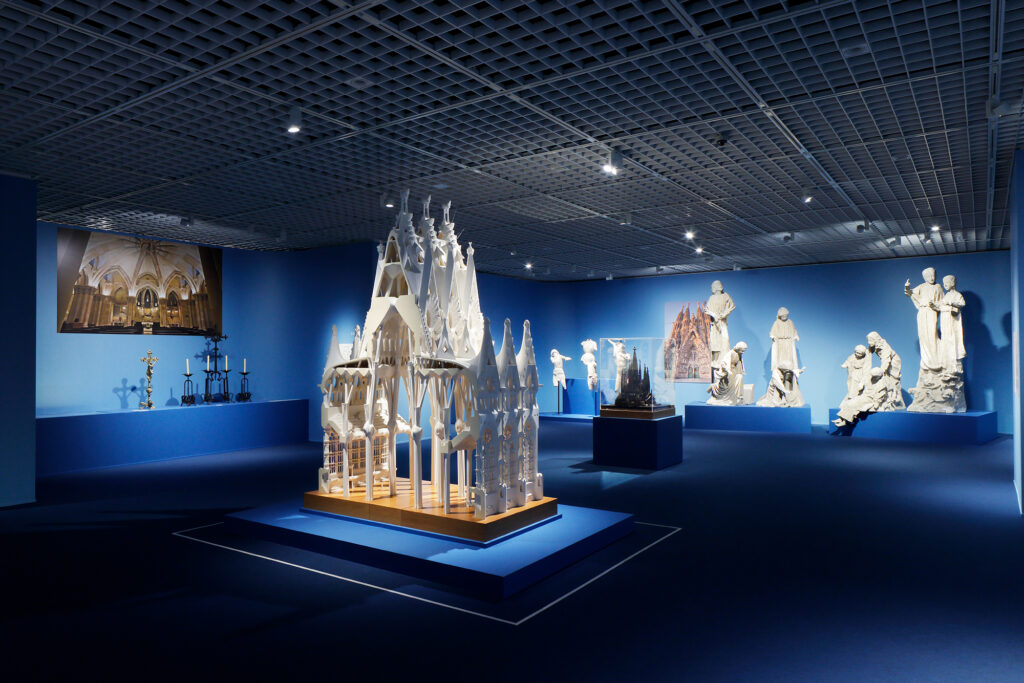
Introduction: Where Gaudí’s Mind Comes Alive
You’ve marveled at the soaring columns. You’ve photographed the stained glass. You’ve climbed the towers for panoramic views.
But to truly understand the Sagrada Família—to grasp how Antoni Gaudí envisioned a building so revolutionary that it still challenges engineers today—you must descend.
Beneath the basilica’s main floor lies Gaudí’s Museum, a hidden treasure trove that unlocks the genius behind the masterpiece. This isn’t just a collection of artifacts; it’s a window into the mind of one of history’s most innovative architects. Here, you’ll see the plaster models he shaped with his own hands, the sketches that captured his visions, the tools he used to calculate impossible structures, and even the crypt where he now rests.
For many tourists, the museum is an afterthought—a quick stop before exiting. But those who linger discover something profound: the Sagrada Família isn’t just a building; it’s the physical manifestation of a lifetime of observation, faith, and mathematical brilliance.
This comprehensive guide reveals everything you need to know about Gaudí’s Museum at the Sagrada Família in 2026:
- 🏛️ The Museum’s History: From Gaudí’s workshop to modern exhibition
- 🔍 Key Exhibits: Original models, drawings, tools, and personal items decoded
- 🧩 The Reconstructed Models: How fragments survived destruction to tell Gaudí’s story
- 🛠️ Understanding Gaudí’s Process: From hanging chains to hyperboloids
- ⛪ The Crypt: Gaudí’s tomb and the basilica’s spiritual foundation
- 📸 Fotoğrafçılık İpuçları: Capturing the museum’s intimate details
- 🎫 Pratik Bilgiler: Location, access, timing, and ticket integration
- 🎯 Pro Strategies: How to connect museum insights to your basilica experience
- ❓ Sıkça Sorulan Sorular: Common questions about the museum answered
Whether you’re an architecture student, a history buff, a curious traveler, or simply someone who wants to understand what makes the Sagrada Família so extraordinary—this guide ensures you experience Gaudí’s Museum not as a footnote, but as the key to unlocking the entire basilica.
Let’s descend into the mind of a genius.
Chapter 1: The Museum’s Story – From Workshop to World-Class Exhibition
📜 Origins: Gaudí’s On-Site Workshop (1883-1926)
The museum’s roots trace back to Gaudí himself. When he took over the Sagrada Família project in 1883, he established a workshop on-site where he:
- Developed plaster models to test structural concepts
- Sketched architectural details and symbolic elements
- Collaborated with craftsmen on stone carving and decorative work
- Stored tools, calculations, and reference materials
This workshop wasn’t just a studio; it was Gaudí’s laboratory, where he experimented with the revolutionary techniques that would define the basilica.
💥 Destruction and Survival: The 1936 Catastrophe
July 1936: The Spanish Civil War erupted, bringing devastation to the Sagrada Família.
What Was Lost:
- Revolutionary anarchists targeted religious symbols
- Gaudí’s workshop was broken into and vandalized
- Over 40 plaster models were smashed into thousands of fragments
- Drawings, plans, and photographs were burned
- Tools and personal items were scattered or destroyed
What Survived:
- İşçiler gizlice enkazdan model parçaları kurtardılar.
- Some photographs taken before the war preserved key designs
- Gaudí’s assistants retained knowledge from working with him
- Fragments were carefully stored for future reconstruction
The Loss Was Incalculable: Gaudí’s three-dimensional models contained structural information that couldn’t be fully captured in two-dimensional drawings. Their destruction set the project back decades and forced future architects to piece together his vision from fragments.
🔨 Reconstruction: Piecing Together Genius (1940s-Present)
After the war, a remarkable effort began:
1940s-1960s: Fragment Recovery
- Architects and conservators sorted through debris
- Fragments were cataloged, photographed, and stored
- Preliminary reconstruction attempts began using surviving photos
1970s-1990s: Digital Revolution
- Introduction of computers allowed 3D modeling of fragments
- Photogrammetry helped reconstruct original model shapes
- CAD software enabled precise structural calculations based on Gaudí’s principles
2000s-Present: Modern Exhibition
- The museum was redesigned to showcase both original fragments and digital reconstructions
- Interactive displays help visitors understand Gaudí’s design process
- The space now serves as both historical archive and educational resource
🏛️ The Modern Museum: Layout and Experience
Konum: Basement level of the Sagrada Família, accessible from the main nave
Size: Approximately 400 square meters of exhibition space
Layout: Chronological and thematic flow through Gaudí’s career and the basilica’s development
Key Zones:
- Entrance & Orientation: Introduction to Gaudí and the museum’s purpose
- The Workshop Recreation: Reconstructed workspace with tools and materials
- Model Gallery: Original fragments and reconstructed plaster models
- Drawing & Design: Sketches, plans, and technical calculations
- Personal Items: Gaudí’s belongings, photographs, and biographical context
- The Crypt: Gaudí’s tomb and the basilica’s spiritual foundation
- Interactive Zone: Digital displays explaining structural concepts
Visitor Flow: The museum is designed as a journey—from Gaudí’s early ideas to the basilica’s ongoing construction. Most visitors spend 30-45 minutes here, but architecture enthusiasts may linger longer.
Chapter 2: Key Exhibits – Treasures of Gaudí’s Mind
🗿 The Plaster Models: Fragments of Genius
The museum’s crown jewels are the reconstructed plaster models that reveal Gaudí’s structural innovations.
The Hanging Chain Model (Reconstructed)
What It Was: Gaudí’s most famous invention: an upside-down model made of chains, strings, and weights that calculated perfect structural loads. When flipped, it showed the ideal arch shapes for the church.
What You’ll See:
- Photographs of the original model (destroyed in 1936)
- Reconstructed fragments showing chain attachment points
- Digital animations demonstrating how the model worked
- Interactive displays letting you “flip” the model virtually
Neden Önemli?: This model allowed Gaudí to:
- Calculate weight distribution without complex mathematics
- Design columns that branch like trees
- Create vaults that seem to float without heavy buttresses
- Achieve heights and lightness impossible with traditional methods
Tourist Insight: Stand before the reconstructed model and imagine Gaudí in his workshop, adjusting weights and chains to solve problems that would stump engineers with computers. This is biomimicry before the term existed.
The Nativity Façade Model (Partial Reconstruction)
What You’ll See:
- Original plaster fragments of ornate carvings
- Reconstructed sections showing the facade’s complex geometry
- Close-up details of symbolic elements (pelican, tree of life, etc.)
- Comparison photos showing the model vs. the completed facade
Key Details to Notice:
- How Gaudí carved organic forms directly into plaster
- The precision of hyperboloid and paraboloid shapes
- The integration of sculpture and structure (no “decoration” added later)
Photography Tip: Use macro mode or a telephoto lens to capture the texture of the plaster fragments. The rough surface tells the story of hands-on creation.
The Column Branching Model
What It Demonstrates: How Gaudí designed columns that rise, split, and branch to support the nave vaults—mimicking trees in a forest.
What You’ll See:
- Cross-section models showing internal structure
- Diagrams explaining load distribution
- Physical examples of hyperboloid geometry
- Interactive displays letting you “build” a branching column virtually
Why It’s Revolutionary: Traditional columns are simple cylinders. Gaudí’s branching columns:
- Distribute weight more efficiently
- Create visual dynamism and organic beauty
- Allow for slender supports that maximize open space
- Eliminate the need for external flying buttresses
Turist Meydan Okuması: After seeing the model, look up at the actual columns in the basilica. Can you trace how they branch? The museum makes the invisible engineering visible.
📐 Drawings, Plans & Technical Calculations
Gaudí was not just an artist; he was a meticulous engineer. The museum showcases his technical brilliance.
Original Sketches and Studies
What You’ll See:
- Hand-drawn sketches of facade details, columns, and decorative elements
- Studies of natural forms (plants, bones, shells) that inspired his designs
- Symbolic diagrams explaining theological meanings
- Preliminary plans showing the evolution of his vision
Notable Examples:
- Sketches of the Tree of Life sculpture (Nativity Facade)
- Studies of animal forms (turtles, chameleons, pelicans) for symbolic carvings
- Diagrams of light patterns through stained glass windows
- Preliminary tower designs showing the hierarchical arrangement
Tourist Insight: Notice how Gaudí’s sketches blend art and science. A single drawing might show both the aesthetic form and the structural logic. This integration is key to understanding his genius.
Structural Calculations and Geometry
What You’ll See:
- Mathematical formulas for hyperboloids, paraboloids, and helicoids
- Geometric diagrams explaining complex curved surfaces
- Load distribution charts and stress calculations
- Comparisons of traditional vs. Gaudí’s structural approaches
Neden Önemli?: Gaudí didn’t rely on intuition alone. He developed sophisticated mathematical methods to:
- Calculate optimal column angles for weight distribution
- Design vaults that channel forces efficiently
- Ensure stability without heavy external supports
- Achieve unprecedented heights with minimal material
Interactive Element: Some displays let you manipulate geometric shapes digitally, helping you understand how hyperboloids distribute weight. Don’t skip these—they make abstract concepts tangible.
🛠️ Tools, Materials & Craftsmanship
Gaudí’s vision required extraordinary craftsmanship. The museum honors the artisans who brought his designs to life.
Gaudí’s Personal Tools
What You’ll See:
- Compasses, rulers, and measuring instruments he used
- Carving tools for plaster and stone work
- Notebooks with handwritten calculations and observations
- Personal items: glasses, walking stick, prayer book
Emotional Connection: Holding (visually) the tools Gaudí held creates a powerful link across time. These aren’t just artifacts; they’re extensions of his hands and mind.
Craftsmanship Demonstrations
What You’ll Experience:
- Videos showing traditional stone-carving techniques
- Examples of trencadís mosaic work (broken tile technique)
- Demonstrations of plaster modeling methods
- Explanations of how digital tools now assist traditional crafts
Neden Önemli?: Gaudí believed in the dignity of handcraftsmanship. Even today, many decorative elements are carved by hand, preserving techniques that machines can’t replicate. The museum connects past and present craftsmanship.
Turist Tavsiyesi: Watch the trencadís demonstration closely. This technique—using broken ceramic tiles to create shimmering mosaics—appears throughout the Sagrada Família, especially on tower crowns. Understanding how it’s made enhances your appreciation of the finished work.
🎨 Symbolism & Theological Context
Gaudí’s architecture is deeply symbolic. The museum decodes the meanings embedded in stone.
Symbolic Elements Explained
What You’ll Learn:
- The meaning of animals (pelican = sacrifice, turtle = eternity, chameleon = transformation)
- Plant symbolism (cypress = eternal life, palm = victory, rose = Mary)
- Numerological significance (3 = Trinity, 4 = creation, 12 = apostles, 33 = Christ’s age)
- Theological concepts expressed through architectural form
Interactive Displays:
- Touchscreens letting you explore symbols by category
- Augmented reality overlays showing meanings on facade photos
- Quizzes testing your understanding of Gaudí’s symbolic language
Turist Meydan Okuması: After learning about symbols in the museum, return to the basilica and hunt for them. Can you spot the pelican on the Nativity Facade? The Magic Square on the Passion Facade? The museum turns sightseeing into a treasure hunt.
Light as Theology
What You’ll Discover:
- How Gaudí used stained glass colors to represent spiritual concepts
- The gradient from cool (east/Nativity) to warm (west/Passion) light
- The central light wells symbolizing Christ as “Light of the World”
- How architectural form channels and filters divine light
Visual Aids:
- Light simulation displays showing how colors change throughout the day
- Diagrams explaining the theological meaning of color gradients
- Photos comparing morning vs. afternoon light in the nave
Photography Connection: Understanding Gaudí’s light theory helps you photograph the basilica more intentionally. You’ll know why morning light on the east side creates cool, serene images, while afternoon light on the west side produces warm, dramatic shots.
Chapter 3: The Crypt – Gaudí’s Final Resting Place
⛪ Location and Significance
Beneath the museum lies the crypt, the oldest part of the Sagrada Família and the final resting place of Antoni Gaudí.
Historical Context:
- Construction began in 1882 under architect Francisco de Paula del Villar
- Gaudí took over in 1883 and completed the crypt in 1891
- This is the only part of the basilica that reflects Villar’s original neo-Gothic design
- Gaudí is buried here, fulfilling his wish to rest with his masterpiece
🪦 Gaudí’s Tomb: A Simple Marker for an Extraordinary Man
What You’ll See:
- A modest stone marker inscribed with “Antoni Gaudí i Cornet”
- Fresh flowers often placed by admirers
- A quiet, contemplative atmosphere distinct from the bustling basilica above
The Inscription:
“Antoni Gaudí i Cornet / Reus 1852 – Barcelona 1926 / Architect of the Sagrada Família”
Tourist Etiquette:
- Speak in hushed tones; this is a sacred space
- No flash photography; natural light only
- Allow a moment of silence; many visitors come to pay respects
- Don’t touch the tomb or surrounding stonework
🏛️ Architectural Contrast: Crypt vs. Nave
**Villar’s Neo-Gothic Design **(Crypt)
- Traditional pointed arches and ribbed vaults
- Heavier, more conventional stone work
- Dimmer lighting typical of Gothic crypts
- Represents the “old” architectural language Gaudí would revolutionize
**Gaudí’s Organic Vision **(Nave Above)
- Branching columns and hyperboloid vaults
- Light, airy, nature-inspired forms
- Abundant colored light through stained glass
- Represents the “new” language Gaudí created
Why the Contrast Matters: Standing in the crypt and then ascending to the nave creates a powerful physical metaphor for Gaudí’s architectural revolution. You literally move from tradition to innovation, from darkness to light.
Photography Opportunity: The crypt offers intimate, low-light photography opportunities. Use a fast lens (f/1.8-f/2.8) and high ISO (1600-3200) to capture the solemn atmosphere. Focus on the tomb marker or architectural details; avoid including other visitors out of respect.
🙏 Spiritual Significance
For many visitors, the crypt is the emotional heart of the Sagrada Família experience.
Why It Moves People:
- Gaudí dedicated 43 years of his life to this project, knowing he’d never see it completed
- His simple tomb contrasts with the extraordinary building above—a reminder of humility
- The crypt connects the human story (Gaudí’s life and death) to the divine vision (the basilica’s purpose)
Reflection Prompt: Before leaving the crypt, take a moment to consider: What does it mean to dedicate your life to a vision you won’t see fulfilled? How does Gaudí’s faith inform his architecture? These questions deepen your appreciation of the entire basilica.
Chapter 4: Understanding Gaudí’s Design Process – From Idea to Stone
🧠 The Museum as Educational Experience
The museum isn’t just about displaying artifacts; it’s about teaching you to think like Gaudí. Here’s how the exhibits illuminate his creative process:
Step 1: Observation of Nature
What the Museum Shows:
- Gaudí’s sketches of plants, animals, and geological forms
- Explanations of how natural structures inspired architectural solutions
- Examples of biomimicry: tree trunks → columns, honeycombs → vaults, shells → hyperboloids
Key Insight: Gaudí didn’t copy nature; he learned its principles. He observed how trees distribute weight, how bones optimize strength, how light filters through leaves. Then he applied these principles to architecture.
Turist Egzersizi: After seeing the nature sketches, step outside and look at the basilica’s columns. Can you see the tree-like branching? The museum trains your eye to recognize Gaudí’s natural references.
Step 2: Physical Modeling
What the Museum Shows:
- Reconstructed plaster models demonstrating Gaudí’s hands-on approach
- Explanations of how hanging chain models calculated structural loads
- Examples of how small-scale models guided full-scale construction
Key Insight: Gaudí worked in three dimensions from the start. While other architects drew plans, he built models. This tactile approach allowed him to solve complex structural problems intuitively.
Interactive Element: Some displays let you manipulate virtual models, experiencing how changing one parameter affects the whole structure. Don’t skip these—they make abstract engineering tangible.
Step 3: Mathematical Precision
What the Museum Shows:
- Gaudí’s calculations for hyperboloids, paraboloids, and helicoids
- Diagrams explaining how curved surfaces distribute weight
- Comparisons of traditional vs. Gaudí’s structural efficiency
Key Insight: Gaudí’s organic forms aren’t arbitrary; they’re mathematically optimized. His “natural” curves are actually precise geometric solutions to engineering challenges.
Tourist Takeaway: When you see a branching column in the basilica, remember: it’s not just beautiful; it’s brilliant engineering. The museum reveals the science behind the art.
Step 4: Collaborative Craftsmanship
What the Museum Shows:
- Tools used by stonemasons, ceramicists, and ironworkers
- Examples of trencadís mosaic technique
- Videos showing traditional craftsmanship methods
Key Insight: Gaudí didn’t work alone. He collaborated with dozens of artisans, each bringing specialized skills. The museum honors this collective effort.
Photography Tip: Capture close-ups of tool marks on plaster models or stone samples. These details tell the story of human hands shaping extraordinary forms.
Step 5: Iterative Refinement
What the Museum Shows:
- Multiple versions of the same design element, showing evolution
- Notes and sketches revealing Gaudí’s thought process
- Examples of how models were adjusted based on testing
Key Insight: Gaudí’s genius wasn’t just in initial vision; it was in relentless refinement. He tested, adjusted, and perfected until every detail served both form and function.
Tourist Reflection: As you walk through the basilica after the museum, notice how every curve, every joint, every detail feels intentional. That’s the result of Gaudí’s iterative process.
Chapter 5: Practical Information – Visiting Gaudí’s Museum
📍 Konum ve Erişim
Where to Find the Museum:
- Entrance: Through the main basilica, follow signs for “Museum” or “Crypt”
- Level: Basement (one level below main nave)
- Erişilebilirlik: Fully wheelchair accessible via elevator
- Flow: Most visitors experience the museum after exploring the main nave, before exiting
Oraya Nasıl Gidilir?:
- Enter the Sagrada Família through your designated entrance
- Validate your ticket at turnstiles
- Explore the main nave (allow 45-60 minutes)
- Follow signs downward to the museum/crypt level
- Enjoy the museum at your own pace (30-45 minutes recommended)
🎫 Ticket Integration
Museum Access:
- ✅ Included with all Sagrada Família tickets (Basic Entry, Tower Access, Guided Tours)
- ✅ No separate ticket or fee required
- ✅ Audio guide content includes museum commentary
Tower Access Note:
- If you have tower access, you can visit the museum before or after your tower visit
- Allow extra time if combining both experiences (total 2-2.5 hours recommended)
Rehberli Turlar:
- Many guided tours include dedicated museum time
- Guides provide deeper context for exhibits
- Ask your guide questions about specific artifacts or concepts
⏰ Timing Your Museum Visit
Best Times to Visit the Museum:
| Günün Saati | Crowd Level | Experience Quality | Recommendation |
|---|---|---|---|
| 9:00-10:30 AM | Low | Excellent | Ideal for quiet contemplation |
| 10:30 AM-12:30 PM | Moderate | Good | Balanced experience |
| 12:30-2:30 PM | High | Challenging | Crowded; consider skipping if short on time |
| 2:30-4:30 PM | Moderate | Good | Afternoon light in crypt is atmospheric |
| 4:30 PM-Close | Low | Excellent | Peaceful; good for reflection |
Pro Strategy: Visit the museum after exploring the main nave but before your tower access (if applicable). This sequence lets you:
- Experience the basilica’s grandeur first
- Understand the engineering and symbolism in the museum
- Return to the nave with new appreciation
- Ascend the towers with deeper context
♿ Accessibility and Special Needs
Wheelchair Access:
- ✅ Elevator access to museum and crypt levels
- ✅ Wide pathways throughout exhibition space
- ✅ Accessible restrooms nearby
- ✅ Seating areas for resting
Visual Impairment Support:
- ✅ Tactile models available for hands-on exploration
- ✅ Braille descriptions for key exhibits
- ✅ Audio descriptions included in official app
- ✅ Staff trained to assist visually impaired visitors
Hearing Impairment Support:
- ✅ Written transcripts of audio guide content
- ✅ Visual displays with captions and diagrams
- ✅ Sign language interpretation available with 72h advance notice
Cognitive Accessibility:
- ✅ Clear, simple signage throughout
- ✅ Interactive displays with intuitive interfaces
- ✅ Quiet zones for visitors who need reduced stimulation
Booking Assistance:
- Contact accessibility team: [email protected] or +34 932 08 04 14
- Reserve at least 48 hours in advance for special arrangements
- Request detailed accessibility information when booking
🎒 What to Bring (and Leave Behind)
✅ Bring:
- Ticket QR code (for re-entry if needed)
- Camera/phone (photography allowed without flash)
- Notebook for sketching or notes (inspired by Gaudí’s practice)
- Comfortable shoes (museum involves some walking and standing)
- Light layer (basement level can be cool)
❌ Leave Behind:
- Large backpacks or luggage (no storage in museum; use main basilica cloakroom)
- Food and drinks (not permitted in exhibition spaces)
- Flash photography equipment (prohibited; damages artifacts)
- Tripods (not needed; may obstruct pathways)
🔇 Museum Etiquette
Respectful Behavior:
- Speak in hushed tones; the museum is adjacent to the crypt
- Don’t touch exhibits unless explicitly invited (some interactive displays encourage touch)
- Follow photography rules: no flash, be mindful of other visitors
- Allow space for others to view exhibits; don’t block displays for extended periods
In the Crypt:
- Maintain silence; this is a sacred burial space
- No photography of worshippers or prayer activities
- Remove hats as a sign of respect
- Limit time at Gaudí’s tomb to allow others to pay respects
Chapter 6: Photography Guide – Capturing the Museum’s Intimate Details
📷 Best Photography Opportunities
The museum offers unique photographic subjects distinct from the basilica’s grand spaces.
Exhibit Close-Ups
What to Photograph:
- Texture of plaster model fragments
- Details of Gaudí’s handwritten notes and sketches
- Tool marks on carving instruments
- Trencadís mosaic samples showing ceramic variety
Technical Settings:
- Aperture: f/2.8-f/4 for shallow depth of field (isolates details)
- ISO: 800-1600 (museum lighting is dimmer than basilica)
- Shutter: 1/60s minimum (use image stabilization or lean on display cases)
- White Balance: “Tungsten” or “Cloudy” (enhances warm museum lighting)
Composition Tips:
- Fill the frame with textures and details
- Use leading lines (tool handles, sketch edges) to guide the eye
- Include contextual elements (labels, display cases) for scale
- Shoot from low angles to emphasize three-dimensionality
The Crypt Atmosphere
What to Photograph:
- Gaudí’s tomb marker with soft, natural light
- Neo-Gothic architectural details (pointed arches, ribbed vaults)
- Candles or flowers placed by visitors (with permission)
- The contrast between crypt darkness and basilica light above
Technical Settings:
- Aperture: f/1.8-f/2.8 (maximum light gathering)
- ISO: 3200-6400 (don’t fear noise; sharp noisy photo > blurry clean one)
- Shutter: 1/30s or slower (stabilize on railing or display case)
- Focus: Manual focus often works better in low light
Composition Tips:
- Use symmetry of Gothic arches for formal compositions
- Frame the tomb marker with architectural elements
- Capture the emotional atmosphere, not just the physical space
- Respect privacy: avoid photographing other visitors in prayer
Interactive Displays and Digital Elements
What to Photograph:
- Screens showing 3D model reconstructions
- Augmented reality overlays on facade photos
- Interactive geometric demonstrations
- Before/after comparisons of model fragments
Technical Settings:
- Aperture: f/4-f/5.6 (ensures screen and surroundings are sharp)
- ISO: 400-800 (screens provide their own light)
- Shutter: 1/125s or faster (freezes screen refresh)
- White Balance: “Auto” or “Fluorescent” (matches screen color temperature)
Composition Tips:
- Include your hand interacting with touchscreens for scale
- Capture screen content at an angle to avoid glare
- Use the rule of thirds to balance digital and physical elements
- Shoot video clips of interactive animations for dynamic content
📱 Akıllı Telefon Fotoğrafçılığı Ustalık Kursu
You don’t need professional gear. Modern smartphones excel at museum photography:
iPhone Profesyonel İpuçları:
- Kullanmak Gece modu for low-light crypt shots (hold steady)
- Olanak vermek Akıllı HDR for balanced exposure on backlit displays
- Tap to focus on exhibit details, then slide to adjust exposure
- Kullanmak Portre modu for close-ups of artifacts (creates pleasing background blur)
- Çekim yapın ProRAW maksimum düzenleme esnekliği için mevcutsa
Android Profesyonel İpuçları:
- Kullanmak Profesyonel mod for manual ISO and shutter control
- Olanak vermek HDR+ (Piksel) veya Sahne Optimize Edici (Samsung) dinamik aralık için
- Tap to focus and adjust exposure; lock AE/AF for consistent shots
- Kullanmak Gece Görüşü for low-light crypt photography
- Çekim yapın ÇİĞ Eğer işlem sonrası esneklik için mevcutsa
Evrensel Akıllı Telefon Teknikleri:
- Clean lens before shooting (museum dust can reduce sharpness)
- Kompozisyon için kılavuz çizgileri kullanın (kamera ayarlarından etkinleştirin)
- Tutarlı çekimler için odak/pozlamayı kilitlemek üzere dokunup basılı tutun.
- Ses düğmelerini deklanşör olarak kullanın (kamera titremesini azaltır).
- Profesyonel sonuçlar için Lightroom Mobile veya Snapseed'de düzenleyin.
Editing Tips for Museum Photos:
- Exposure: Lift shadows to reveal details in dark exhibits
- Zıtlık: Increase slightly to make textures pop
- Color: Adjust white balance to match exhibit lighting
- Crop: Remove distracting background elements
- Sharpen: Apply modest sharpening to enhance detail
⚠️ Photography Rules and Restrictions
Allowed:
- ✅ Personal photography without flash
- ✅ Video recording for personal use
- ✅ Social media sharing of your photos
- ✅ Close-up shots of exhibits (unless marked “no photography”)
Prohibited:
- ❌ Flash photography (damages artifacts and disturbs other visitors)
- ❌ Commercial photography without advance permit
- ❌ Tripods during peak hours (obstructs pathways)
- ❌ Photography in restricted areas (clearly marked)
Respectful Practices:
- Ask permission before photographing other visitors
- Be mindful of display case reflections in your shots
- Don’t block exhibits for extended photo sessions
- Follow staff instructions regarding photography
Chapter 7: Connecting Museum to Basilica – Enhancing Your Overall Experience
🔗 The Museum as Key to Understanding
The museum isn’t a separate attraction; it’s the decoder ring for the Sagrada Família. Here’s how to connect museum insights to your basilica experience:
Before Entering the Basilica
If you visit the museum first:
- You’ll understand the engineering behind the branching columns
- You’ll recognize symbolic elements on the facades
- You’ll appreciate the light design theory in the nave
- You’ll see the crypt as the foundation, not just an add-on
Pro Strategy: Spend 20 minutes in the museum before exploring the main nave. Then, as you walk through the basilica, actively look for the concepts you learned:
- “There’s the hyperboloid window from the model!”
- “That’s the pelican symbol we saw in the museum!”
- “The light gradient matches the museum diagram!”
After Exploring the Basilica
If you visit the museum after the nave:
- You’ll have questions the museum can answer
- You’ll appreciate the models more after seeing their full-scale realization
- You’ll understand the crypt’s significance in context
- You’ll leave with a cohesive narrative of Gaudí’s vision
Pro Strategy: Take notes or photos in the basilica of elements you don’t understand. Then, use the museum to research those questions. This active learning approach deepens your appreciation.
Specific Connections to Make
| Museum Exhibit | Basilica Element to Revisit | Nelere Dikkat Edilmeli |
|---|---|---|
| Hanging chain model | Nave columns and vaults | How weight distributes through branching forms |
| Nativity Facade model | East facade exterior | How plaster details translate to stone carvings |
| Symbolism displays | Facade sculptures | Pelican, turtle, chameleon, and other symbolic animals |
| Light theory exhibits | Stained glass windows | How color gradients create spiritual atmosphere |
| Crypt architecture | Neo-Gothic elements | Contrast between Villar’s design and Gaudí’s revolution |
| Trencadís samples | Tower crowns and details | How broken tiles create shimmering mosaics |
🎯 Pro Tips for Integrated Experience
1. Use the Audio Guide Strategically
- The official app includes museum commentary
- Listen to relevant sections as you move between museum and basilica
- Pause and reflect on connections between exhibits and architecture
2. Create a Personal “Treasure Hunt”
- Before your visit, identify 3-5 symbols or concepts you want to find
- Use the museum to learn about them
- Hunt for them in the basilica
- Document your discoveries with photos or notes
3. Sketch or Journal
- Bring a small notebook (like Gaudí did)
- Sketch details that inspire you
- Write reflections on how the museum changed your understanding
- This active engagement creates lasting memories
4. Ask Questions
- Museum staff are knowledgeable and happy to help
- Ask about specific exhibits or connections to the basilica
- Inquire about conservation efforts or ongoing research
- Your curiosity enriches your experience and supports education
5. Share Thoughtfully
- Post photos with captions explaining what you learned
- Tag the Sagrada Família’s official accounts to join the conversation
- Inspire others to visit the museum, not just the basilica
- Your advocacy helps preserve and promote Gaudí’s legacy
Chapter 8: Frequently Asked Questions – Museum Edition
❓ Is the museum included with my Sagrada Família ticket?
A: Yes. The museum and crypt are included with all Sagrada Família ticket types (Basic Entry, Tower Access, Guided Tours). No separate fee or reservation is required.
❓ How long should I spend in the museum?
A: 30-45 minutes is ideal for most visitors:
- 15-20 minutes: Key exhibits (models, drawings, tools)
- 10-15 minutes: Crypt and Gaudí’s tomb
- 5-10 minutes: Interactive displays and reflection
Architecture enthusiasts or photography lovers may spend 60+ minutes.
❓ Can I take photos in the museum?
A: Yes, without flash. Personal photography is permitted throughout the museum and crypt. However:
- No flash (damages artifacts and disturbs other visitors)
- No tripods during peak hours (obstructs pathways)
- Be respectful of other visitors and sacred spaces
- Commercial photography requires advance permit
❓ Is the museum wheelchair accessible?
A: Yes. The museum and crypt are fully wheelchair accessible via elevator. Pathways are wide, and exhibits are designed for inclusive viewing. Accessible restrooms are available nearby.
❓ Can I visit the museum without entering the main basilica?
A: HAYIR. Museum access requires entry to the Sagrada Família. You must have a valid basilica ticket to reach the museum level. However, you can prioritize the museum early in your visit if that’s your main interest.
❓ Are there guided tours of the museum?
A: Yes, but they’re typically part of broader Sagrada Família guided tours. If you want dedicated museum focus:
- Book a guided tour and request extra museum time
- Use the official audio guide, which includes museum commentary
- Consider a private tour for customized museum exploration
❓ What if I’m short on time—should I skip the museum?
A: Only if absolutely necessary. The museum transforms your basilica experience from sightseeing to understanding. If pressed for time:
- Prioritize the model gallery and crypt (15 minutes)
- Use the audio guide for efficient navigation
- Focus on exhibits that connect to what you’ve already seen in the nave
❓ Can I touch the exhibits?
A: Generally no, unless explicitly invited. Most exhibits are behind glass or marked “do not touch” to protect fragile artifacts. However:
- Some interactive displays encourage touch
- Tactile models are available for visually impaired visitors
- When in doubt, ask staff before touching anything
❓ Is the museum suitable for children?
A: Yes, with engagement strategies:
- Interactive displays and digital elements appeal to tech-savvy kids
- The “treasure hunt” approach (finding symbols in the basilica) makes learning fun
- Keep visits under 30 minutes to match attention spans
- Focus on visual exhibits (models, drawings) over text-heavy displays
❓ What’s the most important exhibit not to miss?
A: The reconstructed hanging chain model. This single exhibit encapsulates Gaudí’s revolutionary approach to structure. Understanding how he used physical models to solve engineering problems transforms how you see the entire basilica.
❓ Can I buy replicas or books in the museum?
A: Yes. The museum has a small selection of:
- Books about Gaudí and the Sagrada Família (multiple languages)
- Postcards and prints of key exhibits
- Educational materials for children
- Some items may also be available in the main gift shop
❓ What if I have more questions after visiting?
A: Resources for continued learning:
- Official website: sagradafamilia.org (research section)
- Gaudí-designed buildings in Barcelona (Park Güell, Casa Batlló, etc.)
- Books: “Gaudí: The Complete Works” by Rainer Zerbst; “Antoni Gaudí” by Juan José Lahuerta
- Documentaries: “Gaudí: The Search for Paradise” (PBS); “The Mind of Gaudí” (BBC)
Chapter 9: Your Museum Visit Checklist
✅ Before Your Visit
Araştırma ve Planlama:
- Review museum highlights on official website
- Identify 3-5 symbols or concepts you want to learn about
- Download official Sagrada Família app; test audio guide
- Charge camera/phone + portable battery
- Pack small notebook and pen (inspired by Gaudí)
Yanınızda Ne Getirmelisiniz?:
- Ticket QR code (digital + printed backup)
- Comfortable shoes (museum involves walking and standing)
- Light layer (basement level can be cool)
- Camera/phone for photography (no flash)
- Water bottle (consume before entering museum)
Geride Bırakılacaklar:
- Large backpacks or luggage (use main basilica cloakroom)
- Food and drinks (not permitted in exhibition spaces)
- Tripods or selfie sticks (not needed; may obstruct)
- Flash photography equipment (prohibited)
✅ During Your Museum Visit
Entrance & Orientation:
- Follow signs to museum level after basilica entry
- Pick up audio guide device if not using app
- Review museum map; note key exhibits of interest
- Set intention: What do you hope to learn or discover?
Exhibit Exploration:
- Start with hanging chain model reconstruction
- Examine plaster fragments and reconstructed models
- Study Gaudí’s sketches and technical drawings
- Observe tools and craftsmanship examples
- Engage with interactive displays and digital content
- Note symbols and concepts to hunt for in basilica
Crypt Visit:
- Descend to crypt level; maintain hushed tones
- Observe neo-Gothic architecture contrast
- Pay respects at Gaudí’s tomb (brief, reflective moment)
- Photograph respectfully (no flash; be mindful of others)
- Reflect on Gaudí’s life and legacy
Connection Building:
- Jot down insights or questions in your notebook
- Take photos of exhibits that illuminate basilica elements
- Identify 2-3 concepts to revisit in the main nave
- Ask staff questions if something isn’t clear
✅ After Your Museum Visit
Basilica Re-Engagement:
- Return to main nave with new perspective
- Hunt for symbols and concepts learned in museum
- Notice engineering principles in columns and vaults
- Observe light design theory in stained glass windows
- Appreciate the crypt as foundation, not afterthought
Reflection & Documentation:
- Review photos; note favorites for editing/sharing
- Journal about insights or emotional responses
- Research unanswered questions online later
- Share respectful photos with educational captions
- Diğer ziyaretçilere yardımcı olmak için bir yorum bırakın.
Continued Learning:
- Explore other Gaudí buildings in Barcelona
- Read recommended books or watch documentaries
- Follow Sagrada Família social media for updates
- Consider returning to see construction progress
- Support preservation through donations if moved
Chapter 10: The Museum’s Deeper Gift – Beyond Tourism
🧠 Why the Museum Matters
In an age of instant gratification and surface-level experiences, Gaudí’s Museum offers something rare: depth.
It invites you to slow down, to look closely, to ask questions. It transforms you from passive observer to active learner. It connects you not just to a building, but to a mind, a vision, a lifetime of devotion.
💫 The Human Story
Behind the models and drawings is a human story:
- A sickly child who found solace in nature
- A young architect who revolutionized his field
- A devout Catholic who saw faith in every curve
- A humble man who lived simply while creating extraordinarily
- A visionary who trusted future generations to complete his dream
The museum honors not just Gaudí’s genius, but his humanity. It reminds us that great achievements aren’t the work of lone geniuses, but of communities—craftsmen, patrons, assistants, and now, visitors like you.
🌍 The Global Legacy
Gaudí’s influence extends far beyond Barcelona:
- Architects worldwide study his biomimetic principles
- Engineers apply his structural innovations to modern projects
- Artists draw inspiration from his integration of form and meaning
- Spiritual seekers find contemplation in his sacred spaces
The museum connects you to this global conversation. When you understand Gaudí’s process, you join a worldwide community of learners, creators, and admirers.
🙏 The Spiritual Dimension
For many visitors, the museum deepens the Sagrada Família’s spiritual impact:
- Seeing Gaudí’s faith expressed in sketches and symbols
- Understanding how architecture can elevate the soul
- Experiencing the crypt as a place of prayer and reflection
- Recognizing that beauty and meaning require patience and devotion
You don’t need to share Gaudí’s Catholic faith to appreciate this dimension. The museum invites all visitors to contemplate questions of purpose, creativity, and legacy.
Conclusion: The Key to Unlocking Wonder
Gaudí’s Museum at the Sagrada Família isn’t an appendix to your visit; it’s the key that unlocks the entire experience.
When you see the hanging chain model, you understand how columns can branch like trees. When you study the plaster fragments, you appreciate the hands-on craftsmanship behind every stone. When you stand in the crypt, you connect with the human story behind the monumental vision.
The museum transforms the Sagrada Família from a breathtaking building into a comprehensible masterpiece. It turns awe into understanding, curiosity into knowledge, tourism into pilgrimage.
So don’t rush through the basement. Don’t treat the museum as a checklist item. Linger. Look closely. Ask questions. Let Gaudí’s mind expand your own.
Then, when you ascend back to the sunlit nave, you’ll see the columns, the light, the symbols with new eyes. You’ll understand not just what you’re seeing, but why it matters.
That is the gift of Gaudí’s Museum. That is the legacy of a genius who believed that architecture should teach, inspire, and elevate.
And now, that gift is yours to receive—and to carry forward.